
The Roman Villa of Casignana
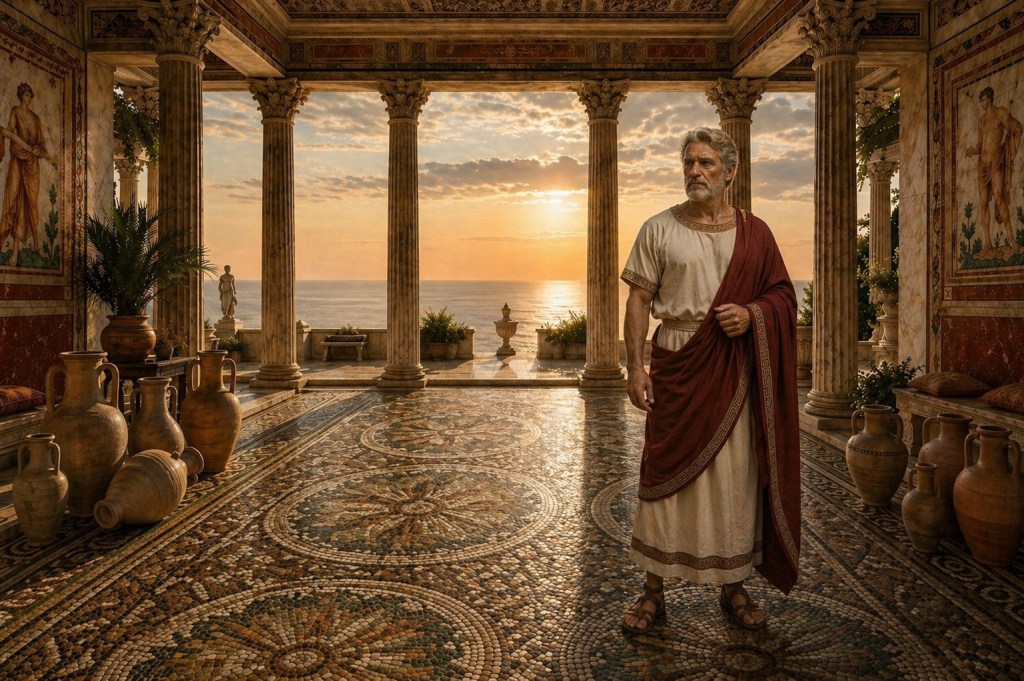
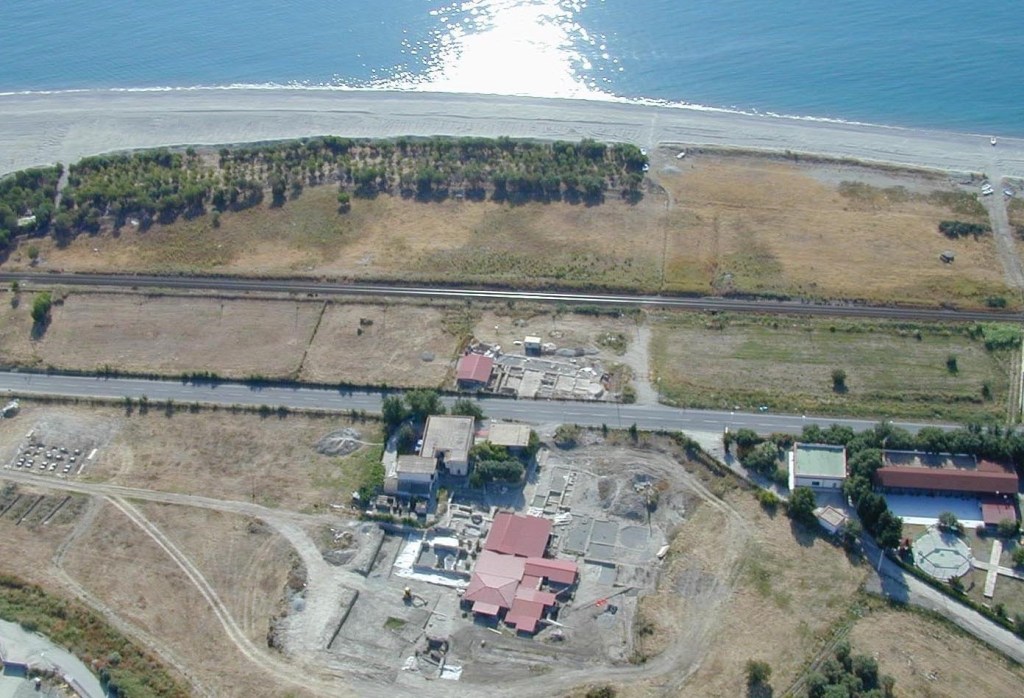
A lavish mansion by the Ionian sea: overlooking the azure waters of the Costa dei Gelsomini, on the Eastern Coast of Calabria, are the magnificent remains of the Roman Villa of Casignana, one of the most significant Roman archaeological complexes in southern Italy.
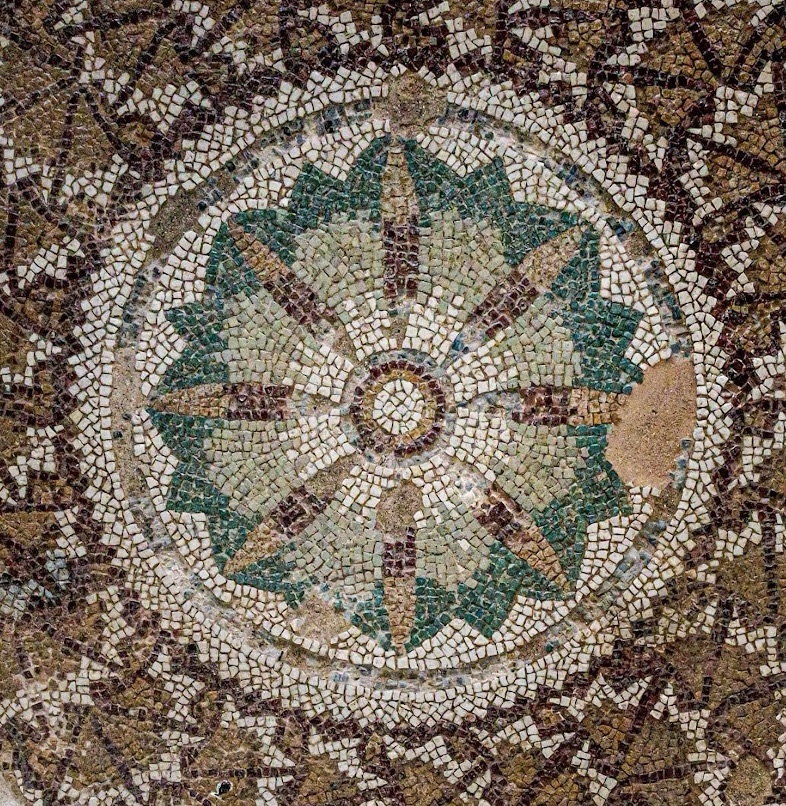
It is called the ‘Piazza Armerina of Calabria’ for the beauty of its Roman mosaics that reminds those of the Sicilian town. It is the largest collection of mosaics known to date from Roman Calabria wih over 20 mosaic floors that are among the most fascinating and best kept from the Roman Empire.
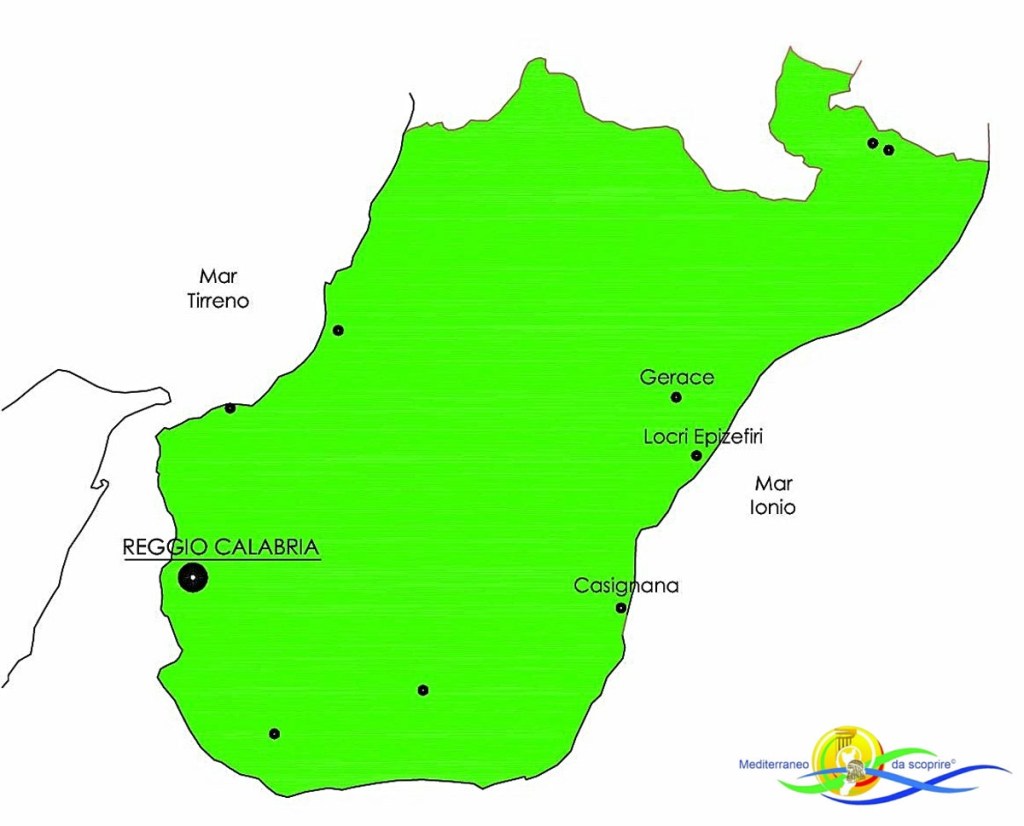
We are in Contrada Palazzi di Casignana, 15 km south of Locri, between Bianco and Bovalino, at the ‘tip of the boot’ of the Italian peninsula. The Villa was a Roman outpost along the ancient route connecting Rhegion (today Reggio Calabria) to Locri Epizephyrii. A “station”, the ‘statio’ of Altanum, developed around it as a rest stop for imperial officials travelling in the area.
Doric capitals found near the villa testify to the presence of the Greeks in the area since the 5th century BC. The original core of the villa was built in the 1st century AD and subsequently it was developed until the 4th century, when it reached its peak splendor.
It had an extension of about 15 hectares, (150,000 square meters, the equivalent of 18 football fields) but only 6,000 square meters have been excavated. It is thought that some remains of the Villa are now under the sea.
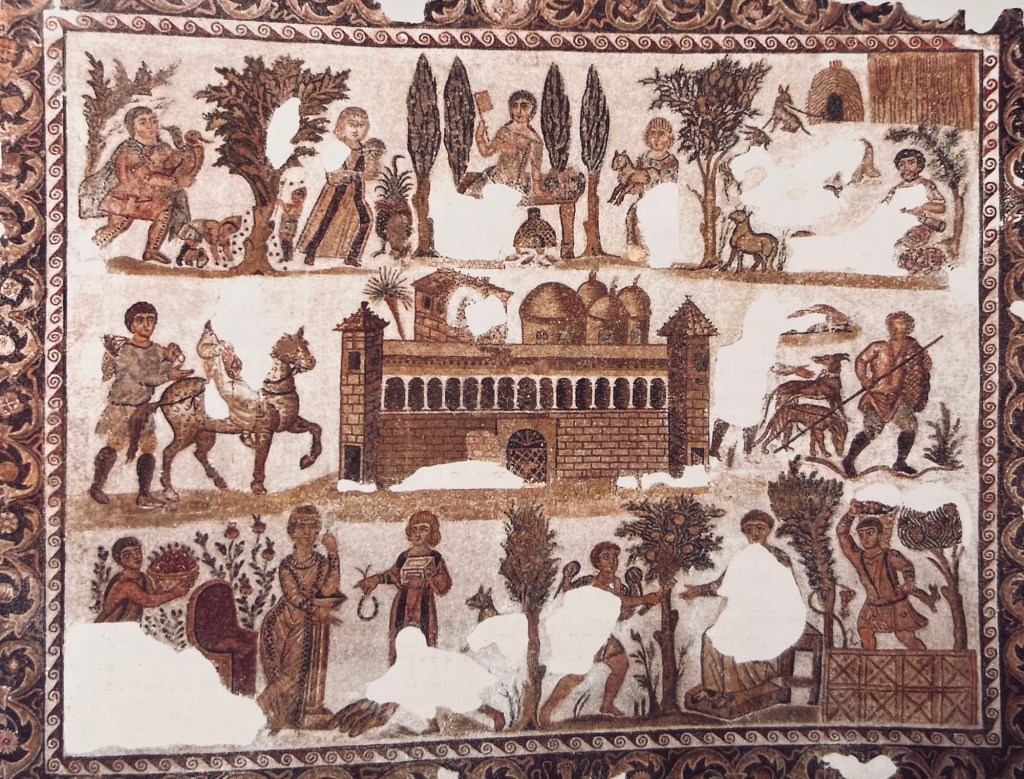
Discovered in 1963 during the construction of an aqueduct near the Ionica State Road, the Villa shows the stylistic and architectural richness and artistic refinement of noble buildings from the Later Roman Imperial period. The mosaic floors, stylistically reminiscent of North-eastern African areas such as modern-day Tunisia and Tripolitania in Libya, are unique in Calabria. Notable are also the splendid marbles, slabs and coverings from Africa and Asia Minor.
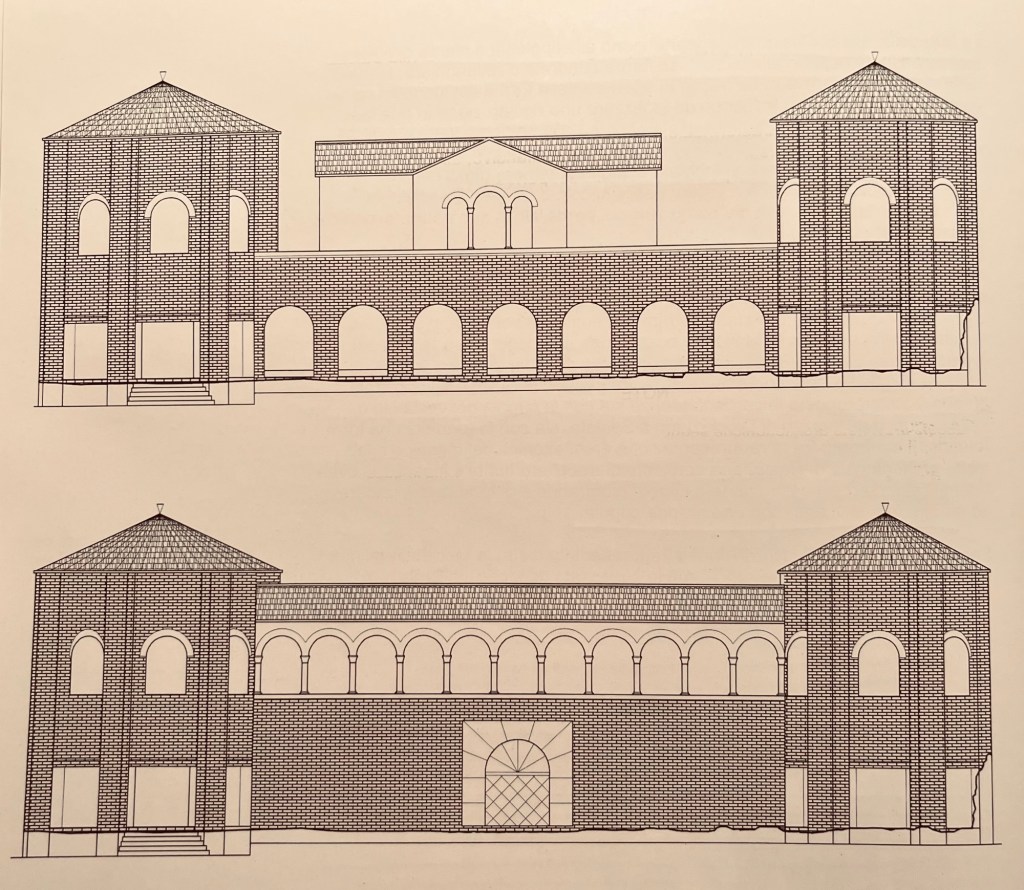
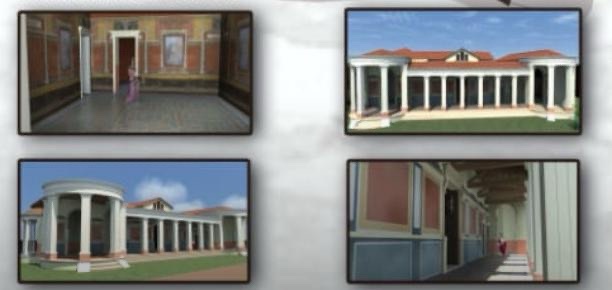
The Villa, with a residential area overlooking the sea, belonged to a very important patrician family, probably linked to the winemaking business according to the many fragments of Roman amphorae found and some depictions in the mosaics.
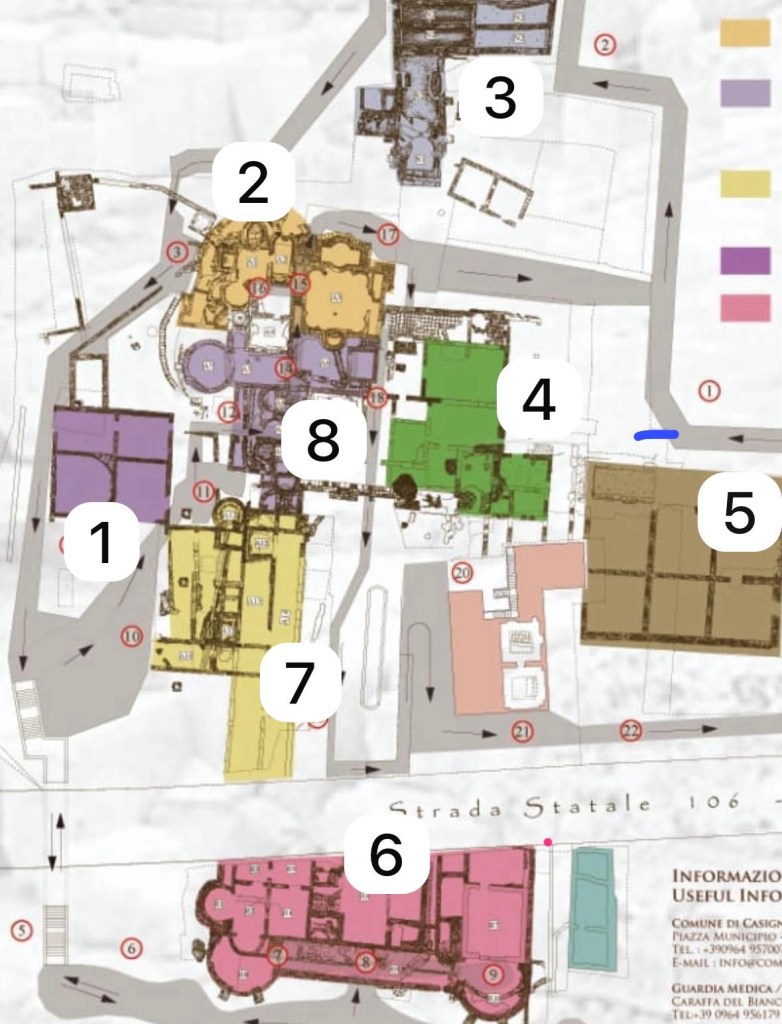
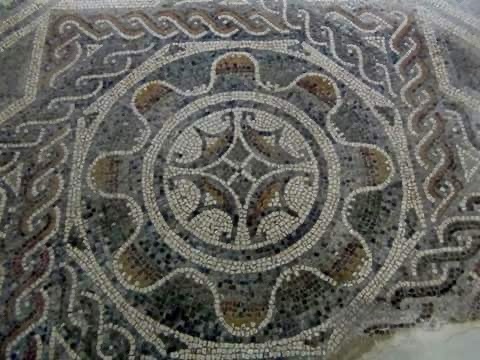
The mosaics stand out for their variety, quantity and elegant workmanship. Black and white floors, polychrome, geometric and figurative mosaics, and even “opus sectile” floors, where an intricate interplay of marble cutouts creates fascinating geometric patterns.
THE BATHS – The thermal bath complex has two distinct sections: the Western Baths and the Eastern Baths, which feature the usual sequence of rooms in Roman termae, the frigidarium, the tepidarium and the calidarium, complete with pools for hot and cold baths.
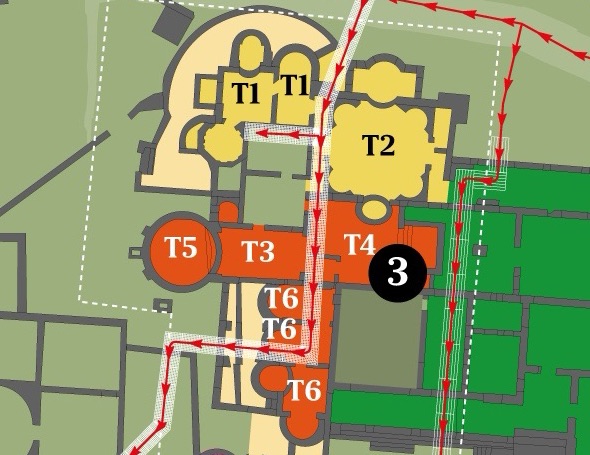
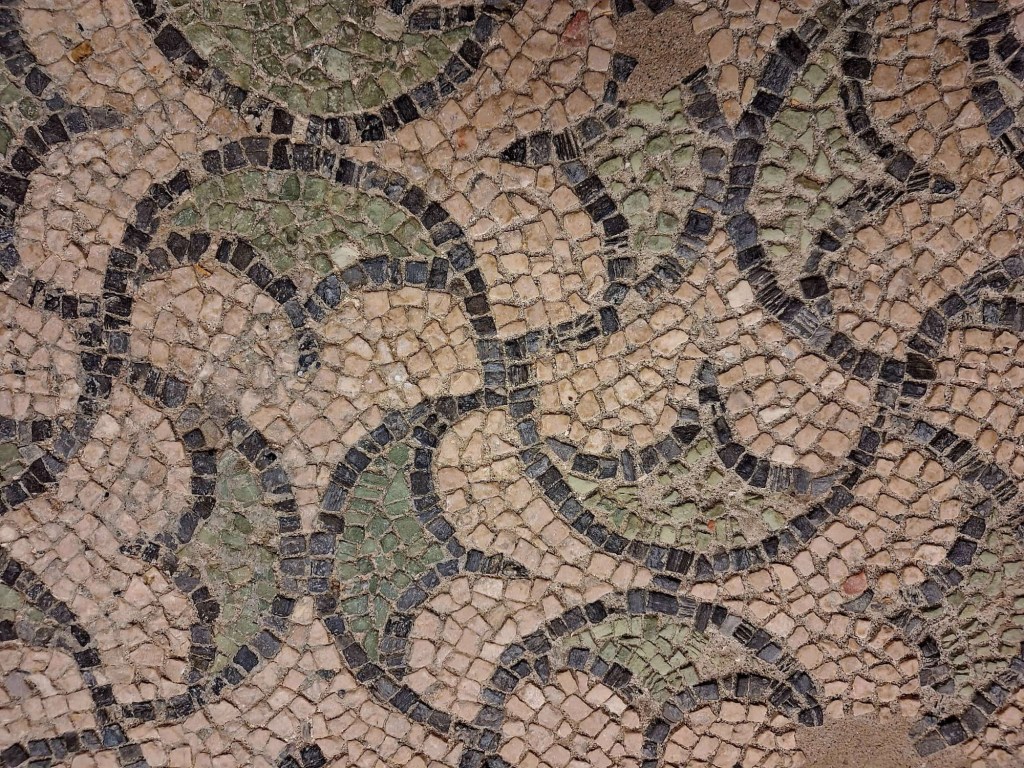
The frigidarium in the Eastern Baths (“Hall of the Nereids“), dating back to the 3rd century, has one of the most beautiful mosaics, depicting a marine landscape in large white and green tesserae.
It is a wonderful marine thiasos (an ancient Greek group dedicated to the worship of a specific deity, most commonly Dionysus) that still seems to be moving, made with large white and green tiles.
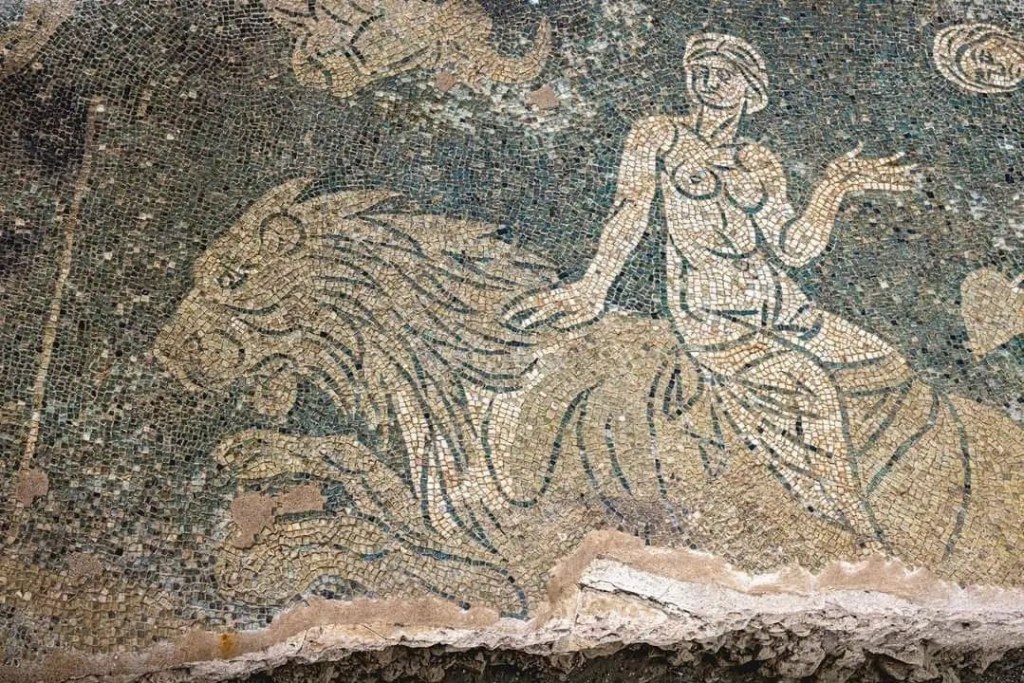
Four nymphs, the Nereids, are riding a lion, a bull, a horse, and a tiger—all land animals with aquatic transformations, that is, with fins and fish tails.
The room has an octagonal plan with four apsidal sides and two cold-water pools.
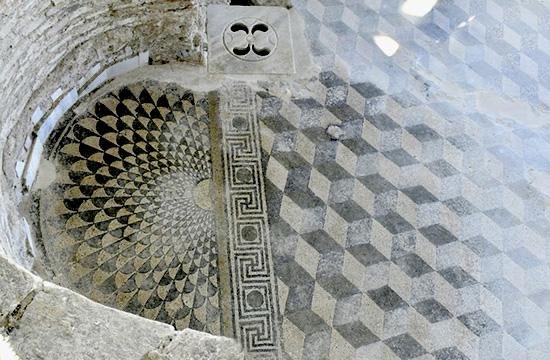
The calidarium, with hypocaust heating and clay pipes on the walls, also has an octagonal plan and a mosaic floor of small tesserae and must have been covered by a vault. The doors had oblique stipules to reduce heat dispersion.
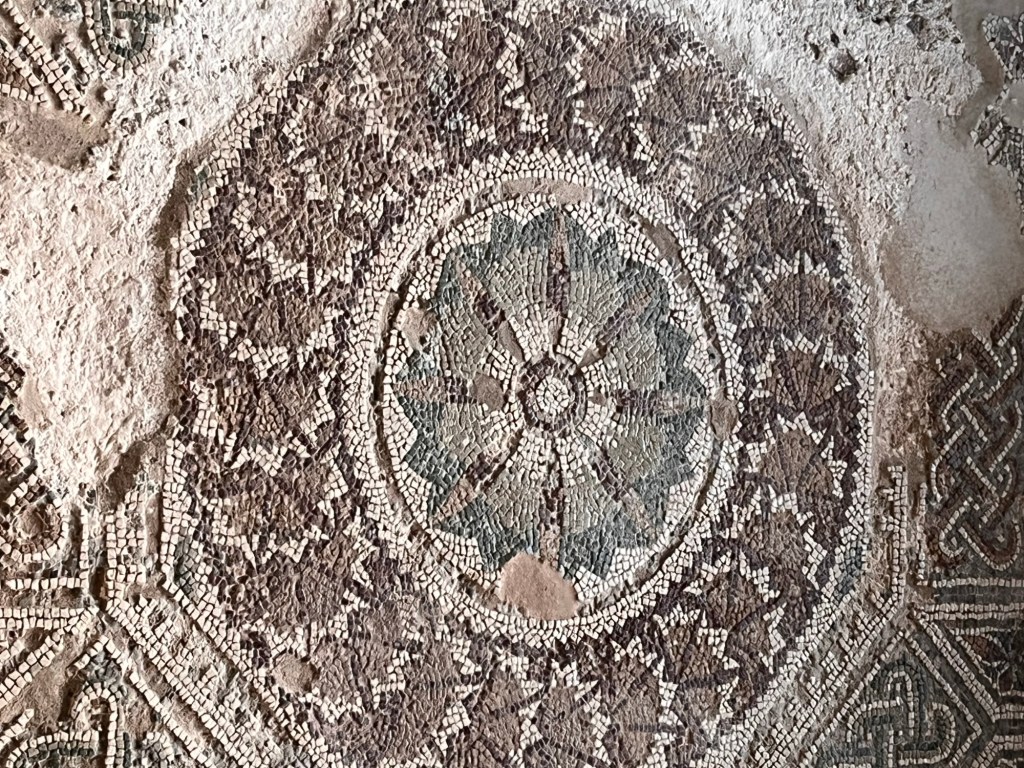
The tepidarium is a rectangular room paved with colored marble slabs (opus sectile).
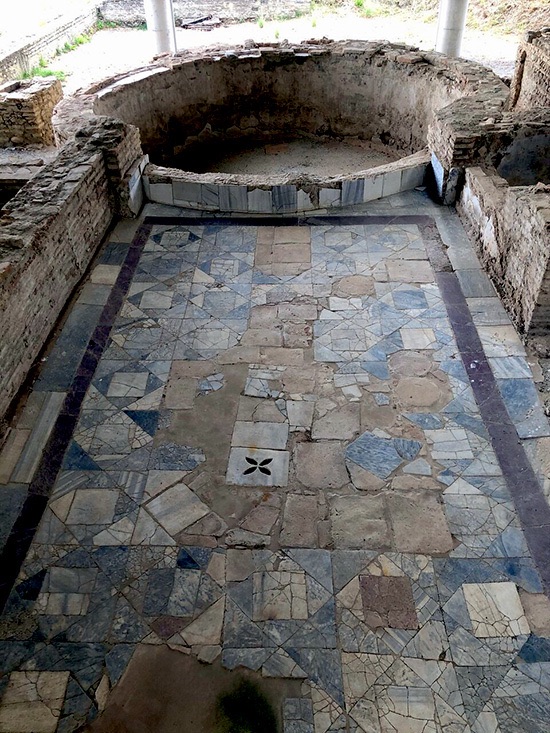
Testifying to the ingenuity of the era are also traces of the heating system, located at the edge of the two thermal baths—the so-called praefurnia, or oven vents located beneath the floors that circulated hot air.
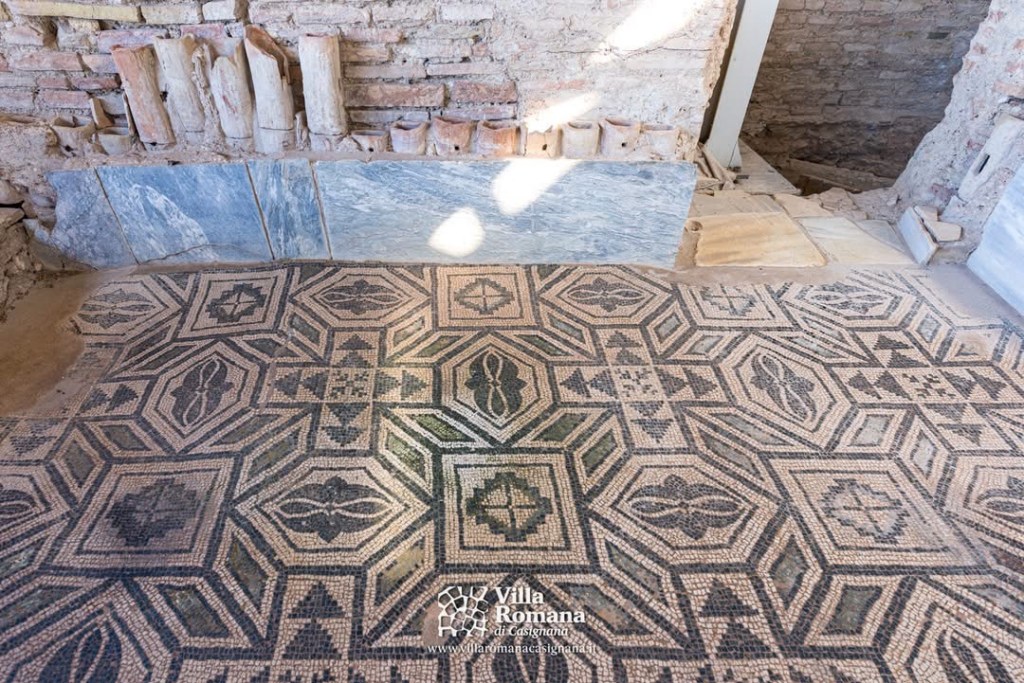
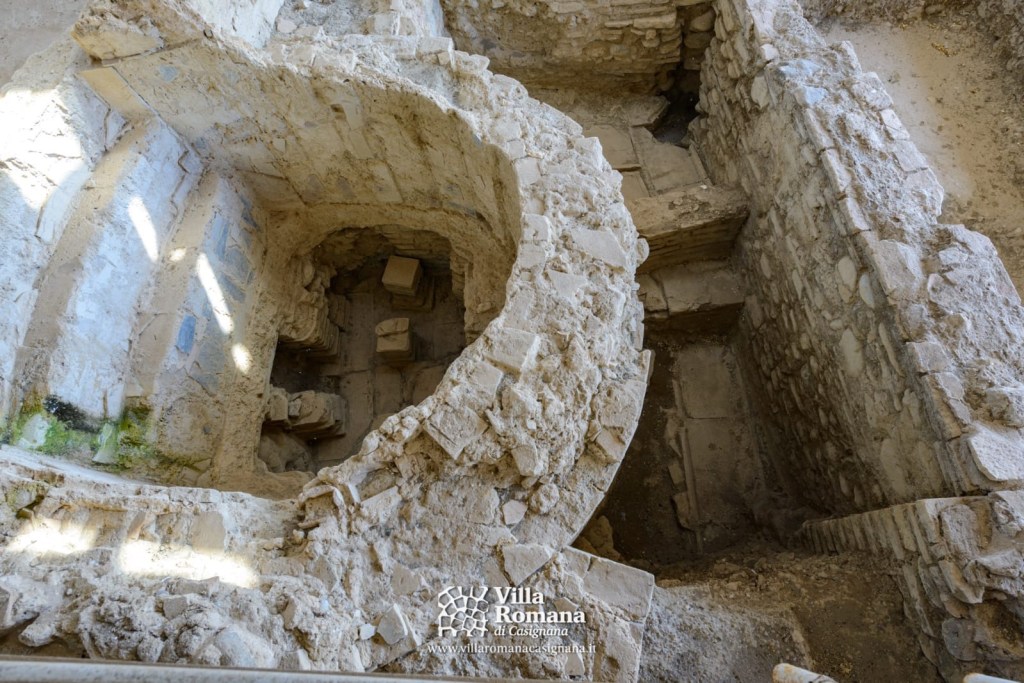
All the rooms are decorated with mosaics: the older ones use white and green tiles, while the more recent ones are polychrome with smaller tiles. The villa’s opulence is further enhanced by its rectangular layout and the use of marble inlays. The walls were also covered with marble from distant regions of the Roman Empire: Asia and Africa.
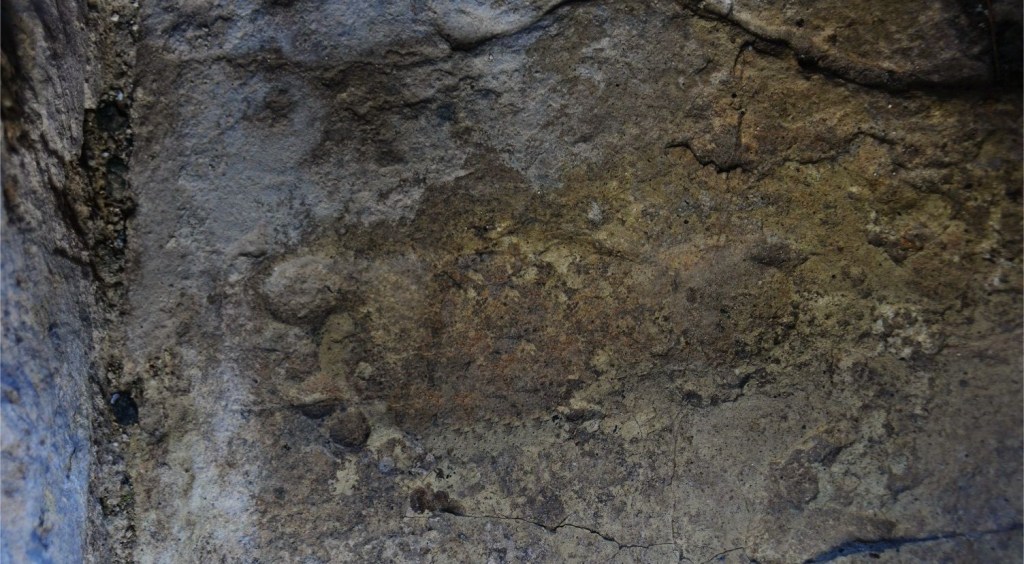
Next to the Eastern Baths a large quadrangular hall with representative functions overlooks a porticoed courtyard which is accessed by a brick staircase. It has a beautiful polychrome mosaic with three pairs of eight-pointed stars.
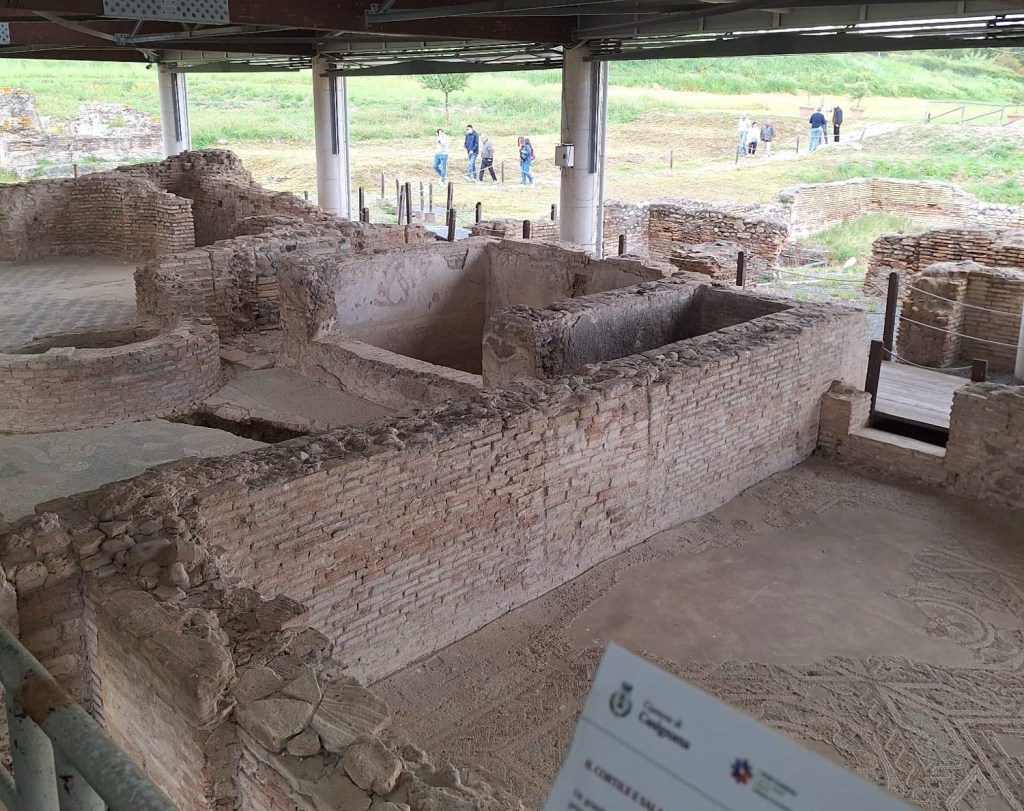
THE NYMPHAEUM – Upstream from the Western Baths there is a monumental nymphaeum, a rectangular apsidal tank with four pillars at the corners.
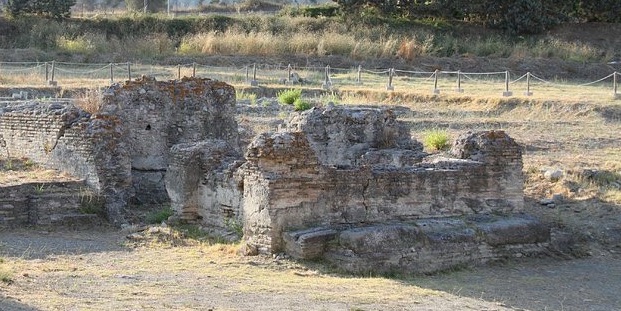
The interconnected tanks behind the fount could contain up to 200 cubic meters of water (200,000 litres) coming from the springs upstream of the villa.
SOUTHERN WING – In the area that connects the baths area with the residential area is a 30-meter-long and 2.80 meters wide porticoed space. On the walls are visibile the traces of the brick ashlars of the colonnade.
In one of the panels of the floor is enclosed a magnificent mosaic: the Indian triumph of Dionisus.. The tondo with the scene measures 2.13 meters and is enclosed in a square, outlined by a thin serrated band. At the corners are four kantharoi (typical greek cup for drinking) from which vegetal swirls emerge.
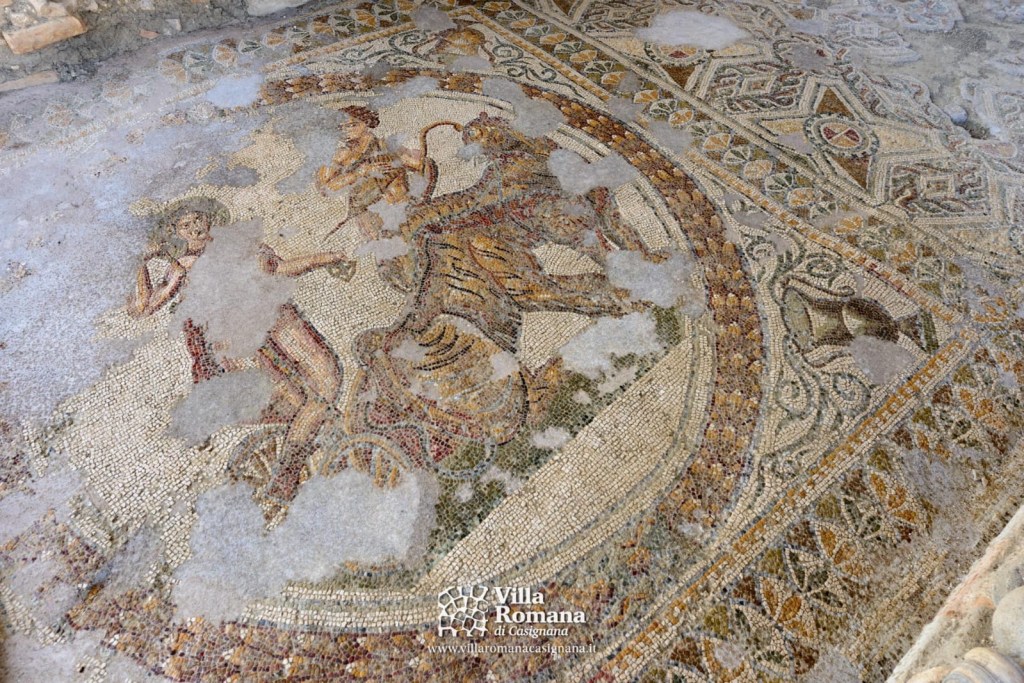
This is a rare representation outside North Africa: the animal generally associated with Dionisus/Bacchus is the leopard, not the tiger. The tondo is currently the only known example from Southern Italy. The scene is stripped to the bare essentials: the god is alone on the chariot, indicated only by the wheels. He is not holding the reins and is leaning on the thyrsus (a staff topped with a pine cone and wrapped in ivy or vine leaves carried by the god and his followers during Bacchic rites as a symbol of fertility, pleasure, and hedonism). There is only one figure in the procession; the tigers are not advancing but are in a “resting” pose.
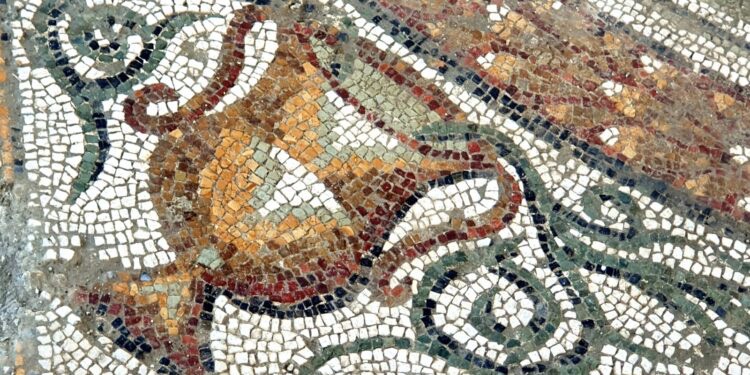
The colors used, variously combined, reveal a meticulous attention to chromaticism: white, green, orange, red, ochre and black, created with marbles of various origins, local stones, and terracotta. There are also some blue glass paste tesserae on the head and body of Bacchus and on the tigers. This mosaic also indicates the opulence and magnificence of the Villa.
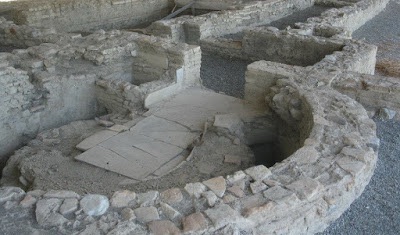
In this area there are also service rooms with latrines. Note the one with a circular plan embellished with marble which preserves the wooden supports of the bench hanging in the drainage pipe.
In the middle of the courtyard is a large rectangular basin.
RESIDENTIAL AREA – The eastern section of the Villa, on the other side of the Ionian State road, is the residential complex, characterized by a long porticoed corridor with two large apses at either end.
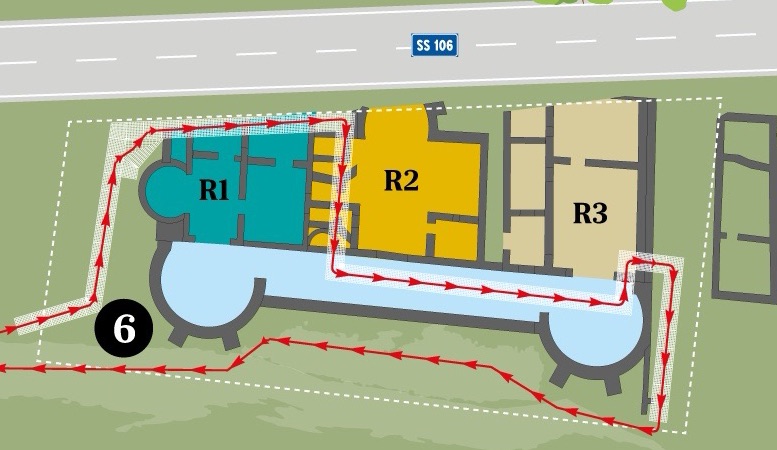
This section is the result of subsequent expansions that added a central body with the Apsidal Hall, a large cruciform room, to an original core of five rooms, and a northern core comprising three small rooms and two halls.
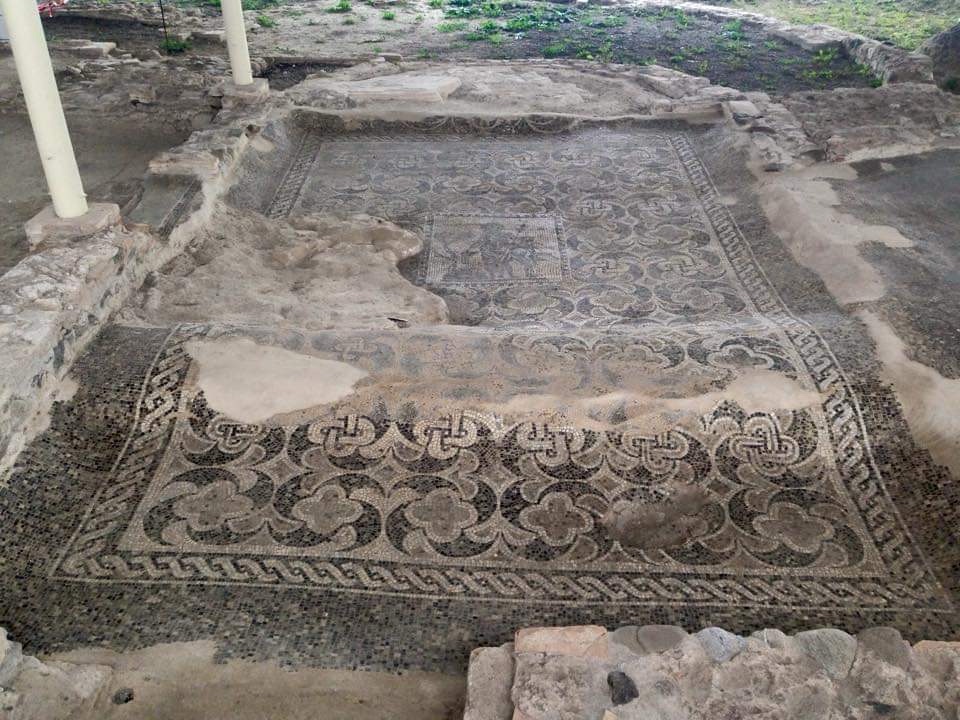
The Apsidal Hall, in the middle of the residential area, is the largest room discovered so far: a cross shaped room (12m x 13 m) with an apse in the western side and two little square rooms in the opposte side. The room is paved with a rich decorated mosaic.
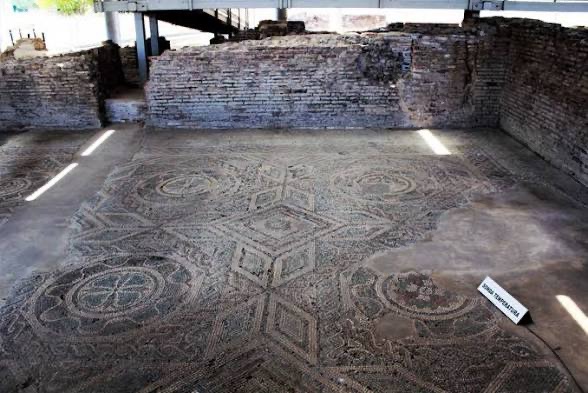
Apsidal rooms in Roman villas were reception rooms, often surmounted by a semidome (apse basin). Used for audiences, banquets, or as a triclinium (dining room), they symbolized power and prestige.
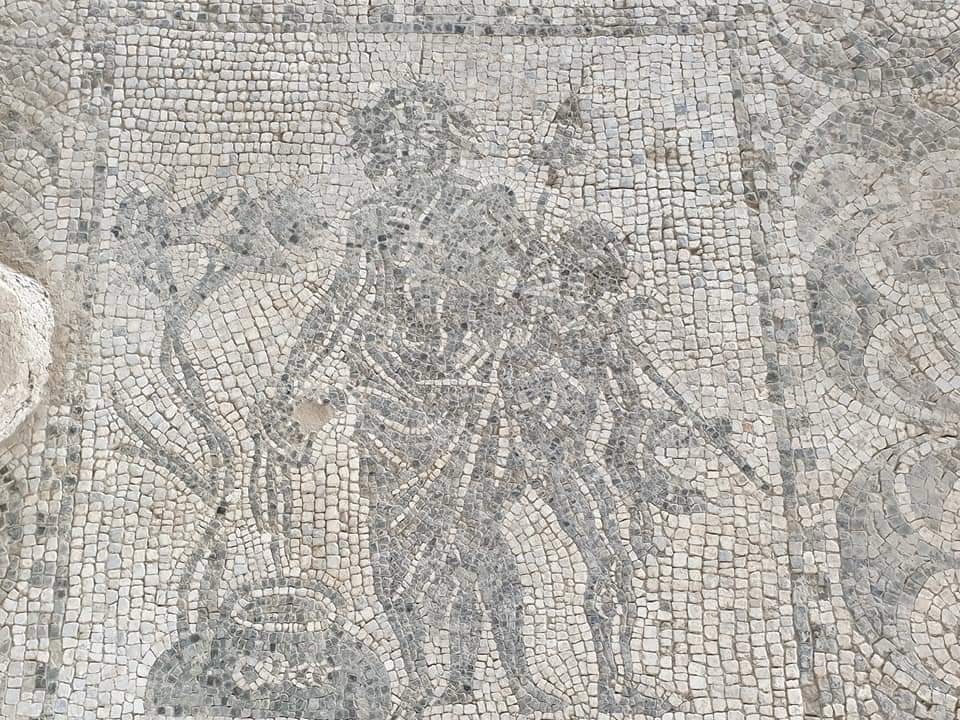
In the northern core the first nucleus is the Hall of Drunken Bacchus, where the god of wine is supported by a satyr while he pours wine into a large amphora. Bacchus is the Roman god of wine and his debauched behaviour was frequently the subject of ridicule.
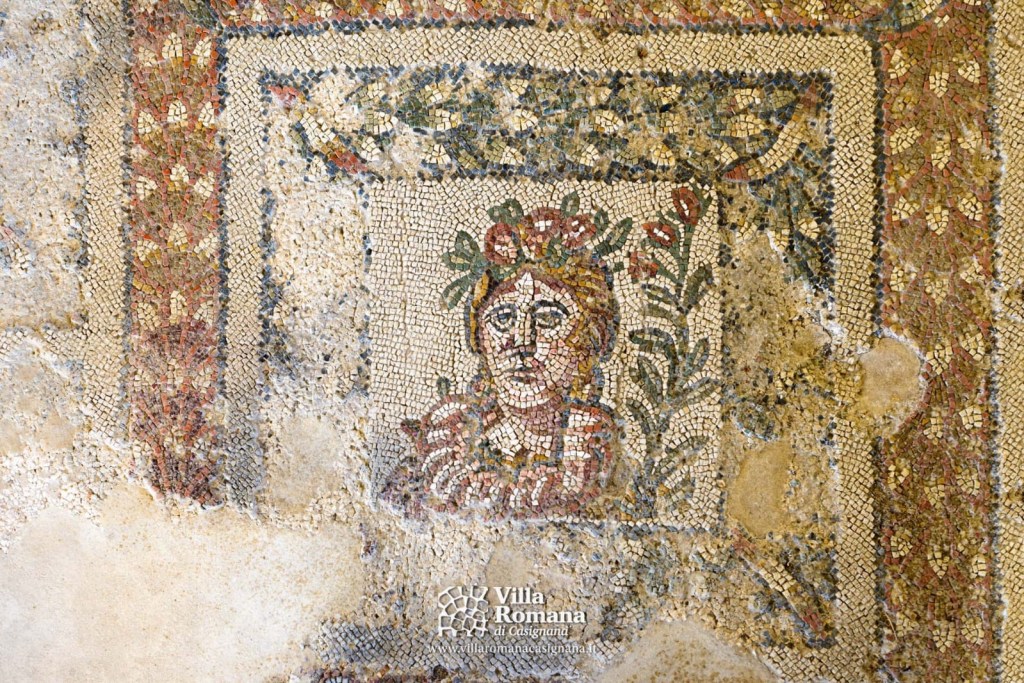
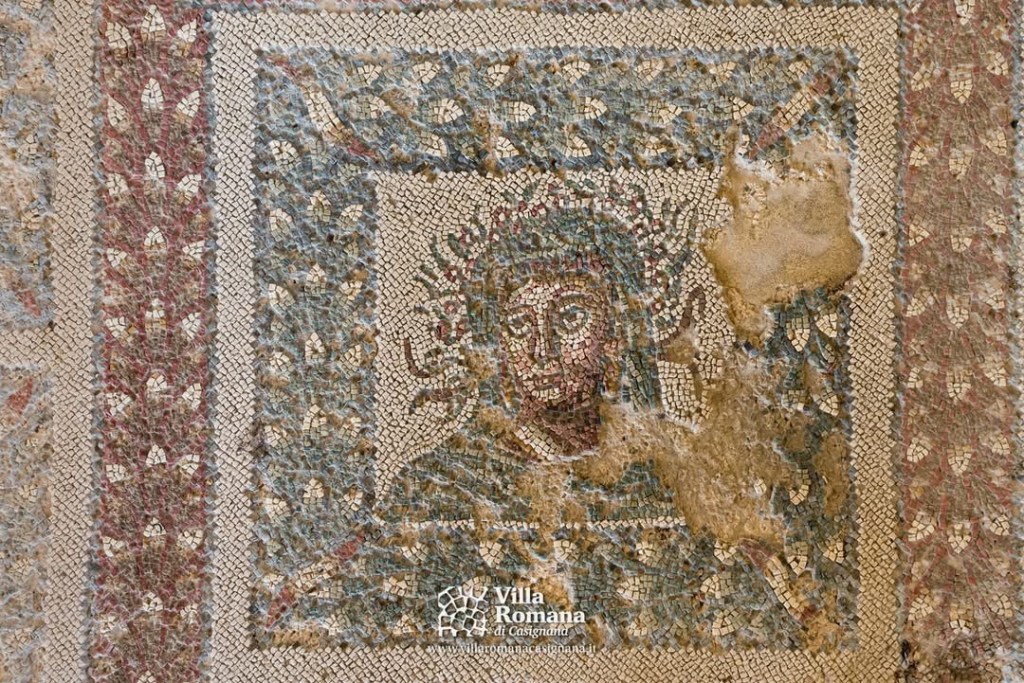
The other is the Hall of the Four Seasons that was probably a banquet hall (triclinium). The iconography of the seasons has often been given an anthropomorphic aspect, Spring, summer, and autumn are generally depicted as female figures. Spring is associated with buds and flowers. Winter is associated with the cardinal point of the North.
The various rooms of the residential wing overlook a single large space, once a garden, embellished with a portico that opens onto the main entrance, protecting it from thieves and prying eyes.
A visit to the Roman Villa is a journey into a bygone era where art and architecture blend in a symphony of beauty and magnificence.
Useful Informations
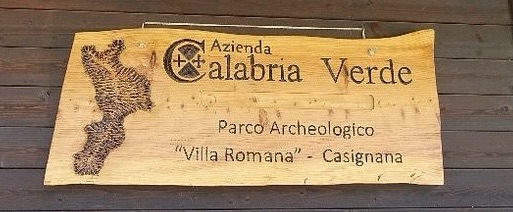
The Archaeological area of Villa di Casignana FROM OCTOBER TO MAY is open from Monday to Friday (9 am-1 pm), Monday and Wednesday also 2,30-4,30 pm. On Saturdays and Sundays only by reservation.
From JUNE to SEPTEMBER it is open without reservation: on weekdays from 9 am to 1pm and from 5 pm to 7 pm. On Saturday and Sunday only from 5 pm to 7 pm.
Ticket: 5€ – Reduced (min. of 14 years old): 3€
Contrada Palazzi, 89030 Casignana (Reggio Calabria)
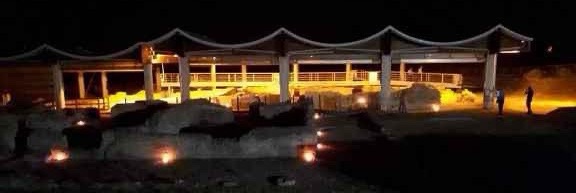
It is advisable to call the Comune of Casignana (+390964957007) or Giuseppe Romeo (+393476719975) to check the opening times in advance.
Our Tabernae – Where to Eat
Via Annunziata, 1/3 – Siderno
Typical Calabrian cuisine in this restaurant in Siderno Superiore, the medieval village that dominates a plain overlooking the Ionian Sea at 192 metres above sea level.
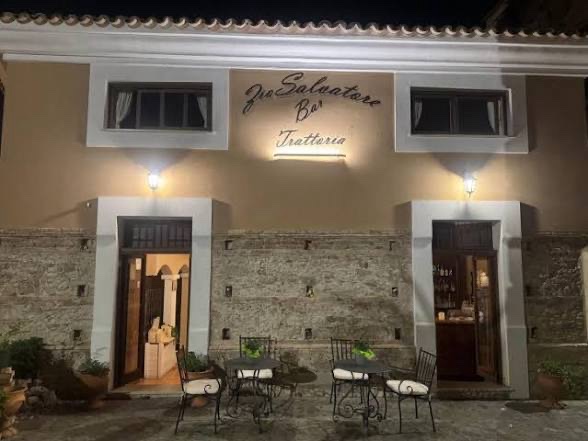
Viale Matteotti, 198 – Locri
A small restaurant where Emilian cuisine and the Calabrian sea meet. Quality and tradition for a genuine cuisine.
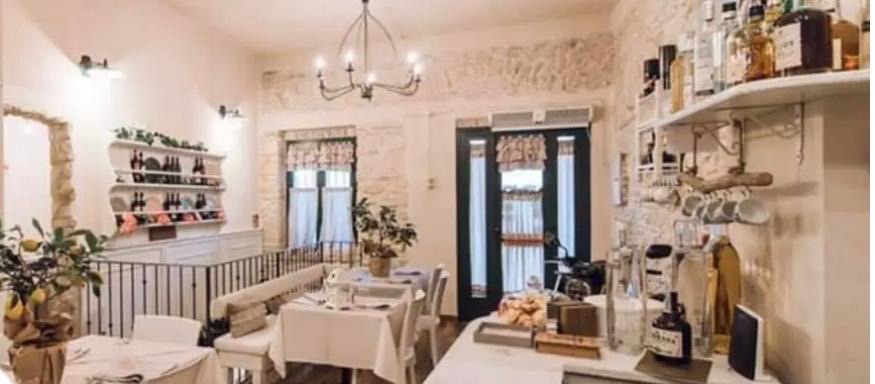
Via San Nicodemo, 3 Mammola
Here you must taste the stockfish Mammolese-style: tender, flavorful, and rich with Mediterranean aromas. Its secret seems to be local water. The excellent selection of local wines enhances each dish.
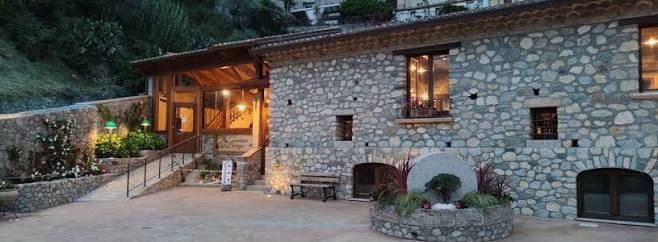
Cibus Loci
Spaghetti alla Corte d’Assise – They were created in 1958 for a judge and the name refers to a court because their spiciness leaves no one spared from punishment. They are made with tomato, hot pepper, parsley and basil.
Sweet wine Mantonico Igt Passito – Mantonico della Locride is the oldest native grape variety in Calabria, imported in the early 7th century BC by Greek colonists who landed in Calabria, in the lower Locride region. In Ancient Rome, emperors and patricians served it only to their most distinguished guests and it was known for its therapeutic qualities.
Its name derives from the Greek word ‘mantonikos‘, from the noun ‘mantiseos’ meaning soothsayer, prophet, because it was primarily drunk by the priests of ancient Locri Epizephiri and by soothsayers.
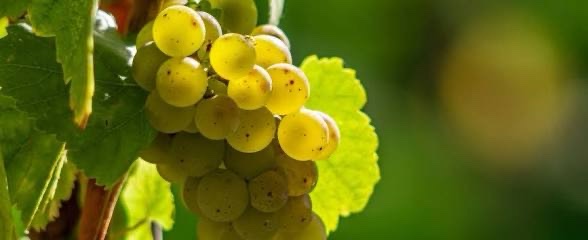
This white wine, vinified entirely from Mantonico grapes, has a hint of acacia that harmonizes wonderfully with aromas of orange blossom and exotic fruits.. Its full-bodied character, rich in spice and freshness, pairs well with small pastries and blue cheeses, even with ice cream such as Tartufo di Pizzo.
Granita con panna (coffee granita with whipped cream). Try it at bar Riviera in Locri (Corso Vittorio Emanuele 24/26)
Bergamot – The ‘Reggio Calabria bergamot’ is a unique citrus fruit, grown almost exclusively along the Ionian coast of the province of Reggio Calabria, known as Costa dei gelsomini (Jasmine Coast).
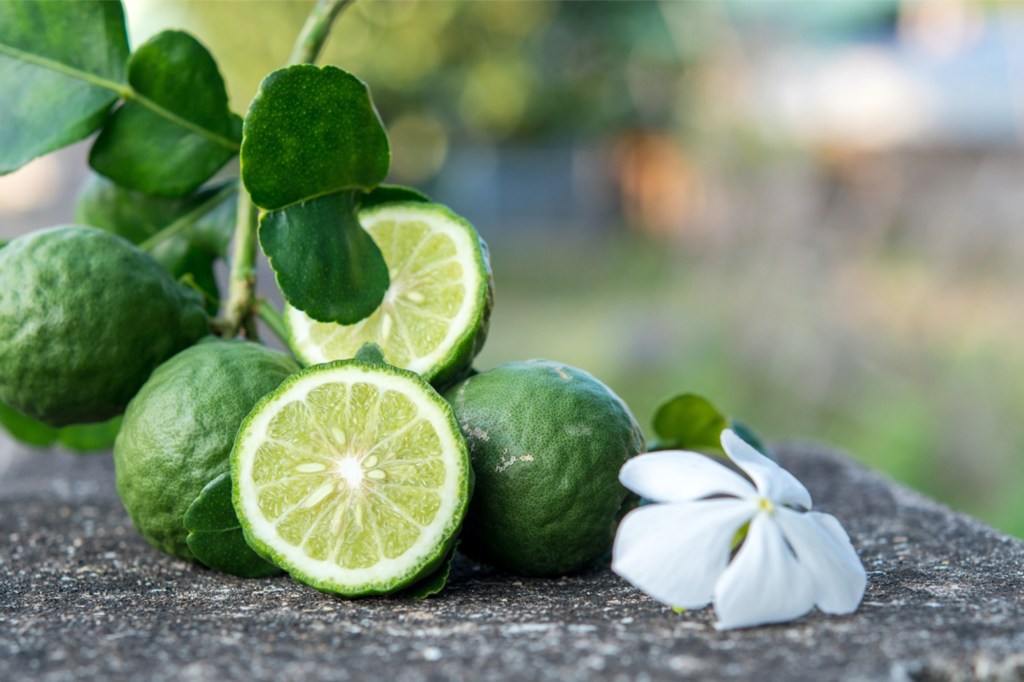
This area accounts for 90% of global production, making it a true “green gold” of Calabrian excellence.
It is used in traditional medicine for digestive issues, and in cooking, particularly for its bitter rind, on risotto and marinated fish and in biscuits and liquers.
Its aromatic oil is used in perfumes and cosmetics, as the flavoring in Earl Grey tea, and in aromatherapy to reduce stress and improve mood.


Leave a comment