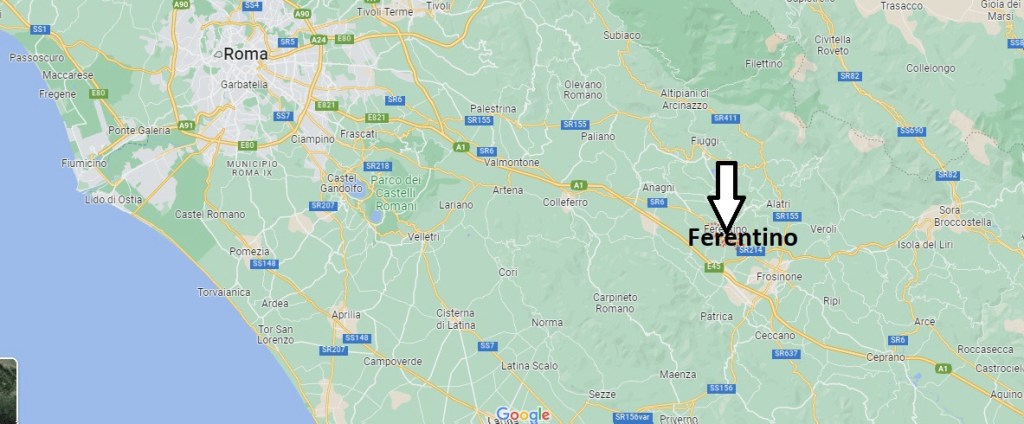
A Roman Theatre restored to its ancient splendor, an acropolis with walls from the Sullan era, the testament of a Roman magistrate from the 1st century AD carved in limestone: these are some of the treasures of Ferentino, a town of 20,000 inhabitants near Frosinone, south of Rome.
THE HISTORY – “If you like a quiet life and sleep all day, if you mind dust and the clatter of wheels and taverns annoy you, I would advise you to go to Ferentino: in fact, not only the rich are allowed to enjoy the sun” (Si te grata quies et primam somnus in horam / delectct, si te pulvis strepitusque rotarum, / si laedit caupona, Ferentinum ire iubebo: / nam neque divitibus contingunt gaudia solis … –Horace, Epist. I, 17, vv. 6-9).
With these words the Roman poet Horace, close to Maecenas and emperor Augustus, addressed his friend Sceva, inviting him to choose Ferentino to restore his tired limbs, fatigued by the stress of city life.
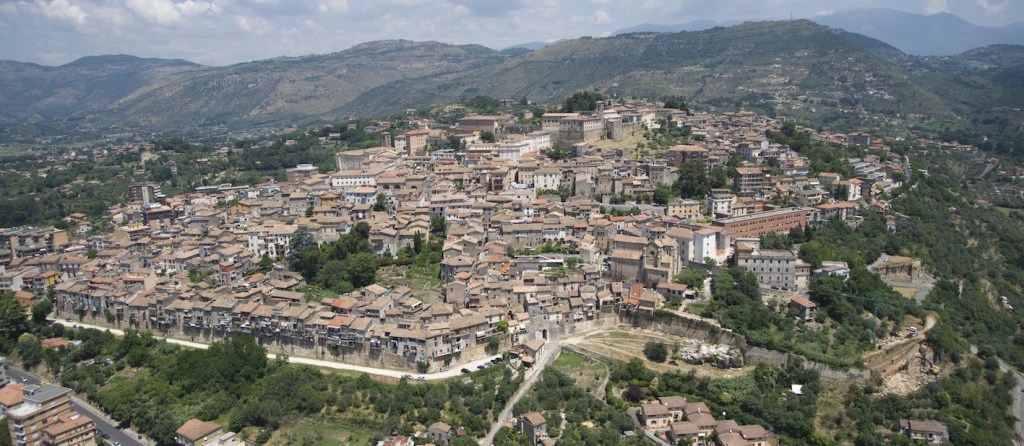
Even today Ferentino, in the province of Frosinone, presents itself to the visitor gently nestled on a pleasant hill in the fertile valley of the Sacco river, at about 395 m above sea level.
The geographical position of the city guarantees a healthy climate, which enhances the fertility of the soil of its volcanic territory.
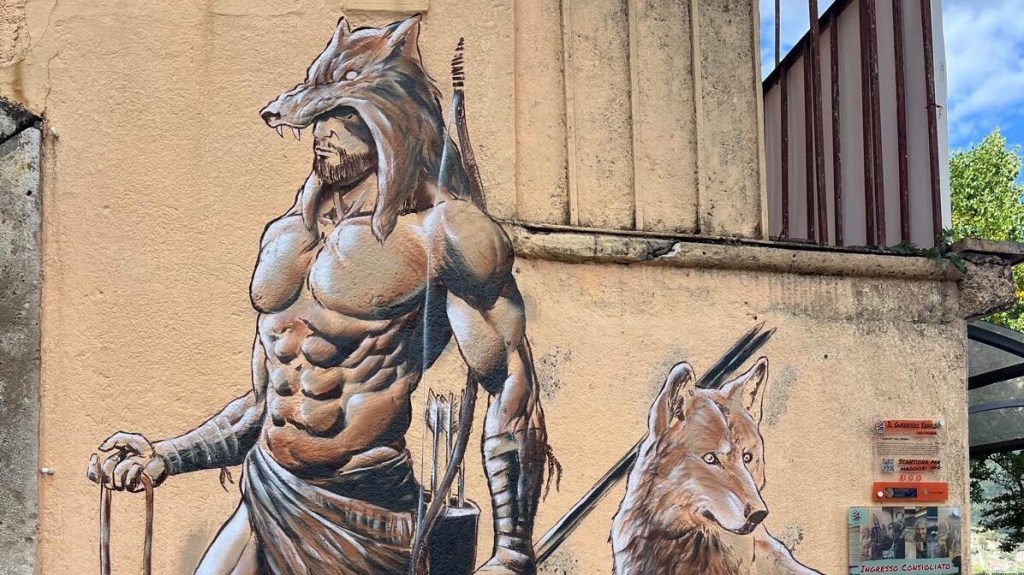
Founded by the Hernici, ancient Italic people who lived in southern Latium between the Fucino Lake and the Sacco river, Ferentino is remembered in literary sources as early as the 6th century BC as an ally of the cities of Alatri, Veroli and Anagni in the Hernica League, which, with its capital in Anagni, defended the territories of the federation from the neighboring peoples: the Volsci to the south-east, the Latins, the Equi and the Marsi to the north.
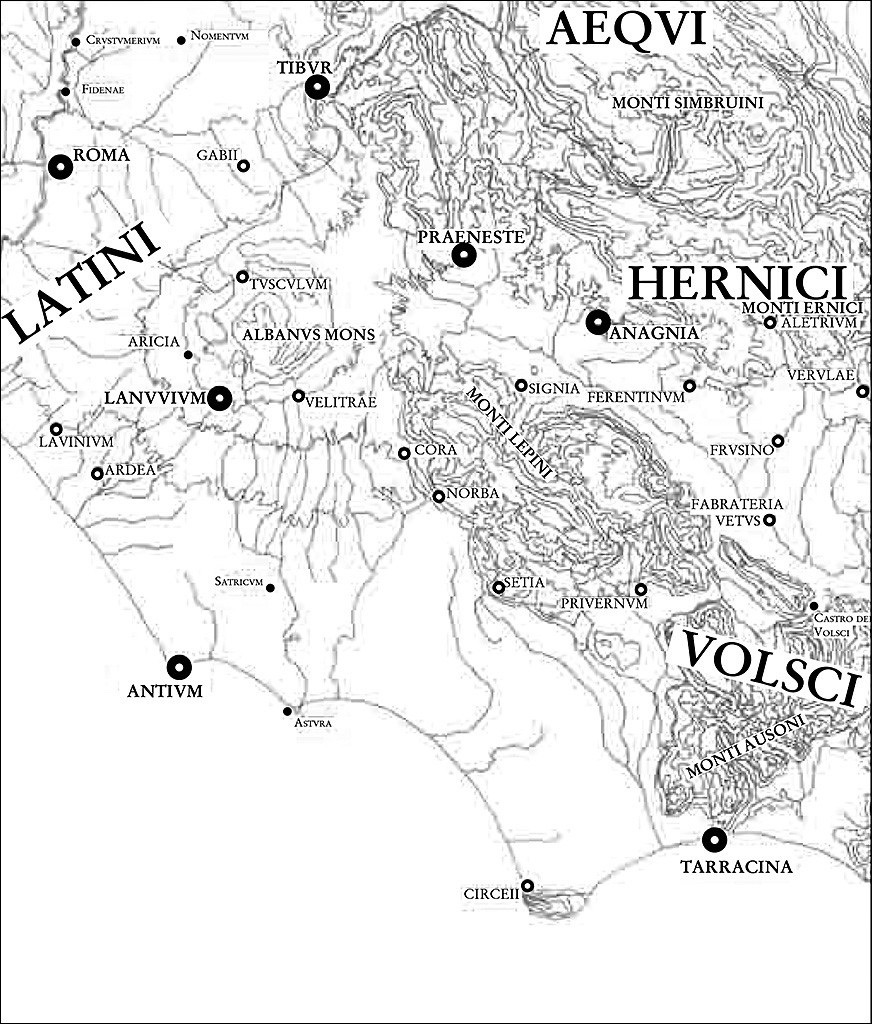
When the Hernici became allies of the Romans against the expansionist ambitions of the Volsci, Ferentino was also the scene of war clashes. In 413 BC the consul L. Furio Medullino conquered the city occupied by the Volsci and returned it to the Hernic people.
In 361 BC Rome sent the consul C. Licinius Calvus who occupied Ferentino, a strategic stronghold in the territory bordering the Volscian cities, weakening the Hernica league.

Ferentino became a faithful ally of Rome to whose glory it donated great men like Aulo Irzio, lieutenant of Julius Caesar (at least his family came from Ferentinum), and Flavia Domitilla Major, wife of Vespasian and mother of Titus and Domitian, who died before her husband became Emperor.
A the end of the Republican age and under the Empire, Ferentino became a favourite destination for the Roman nobles attracted by the climate, the beautiful villas, the water sources and the theatre 54 metres in diameter which could seat up to 3,000 people.
THE VISIT – Ferentino is still a well preserved Roman city that continues to fascinate scholars and travelers, a little jewel with the over 2500 meters of external walls, the Acropolis with the powerful bastion of the foremast, the 12 entrance doors, including the famous Porta Sanguinaria, Porta Casamari and Porta Pentagonale, the underground path of Grotta Para, completely walled with large cyclopean stones, the Covered Market, the Roman Theatre and much more.
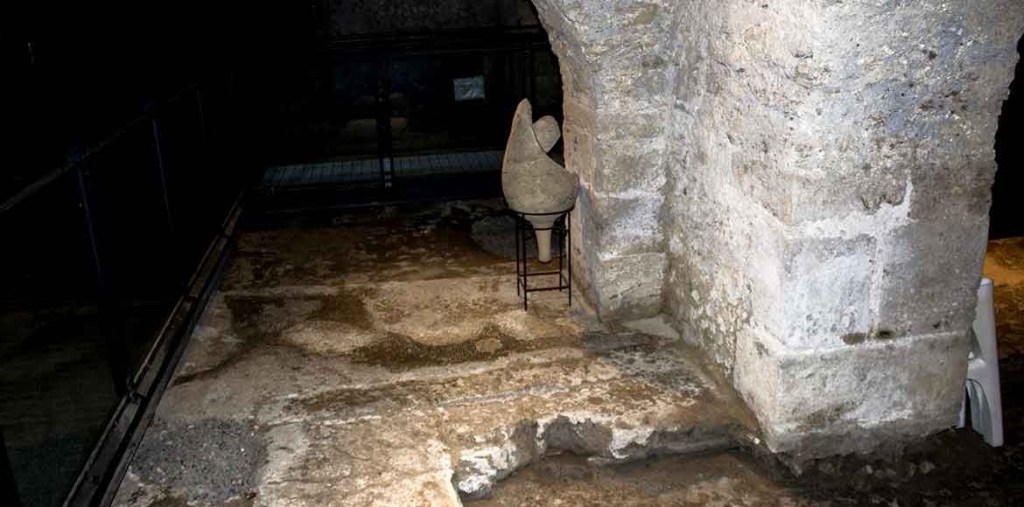
In Piazza Giuseppe Mazzini the Associazione Pro Loco is a Tourist Office that provides maps and informations. Inside you can admire the remains of a Roman domus form the 2nd century AD. Excavations have uncovered rich black and white mosaic floors, remains of dividing walls between domestic spaces, the impluvium of an atrium, and fragments of frescoed plaster.

THE WALLS – Built with whitish stone called limestone of the Apennines, known to the ancients as silex, the walls of Ferentinum can be distinguished for their various techniques.
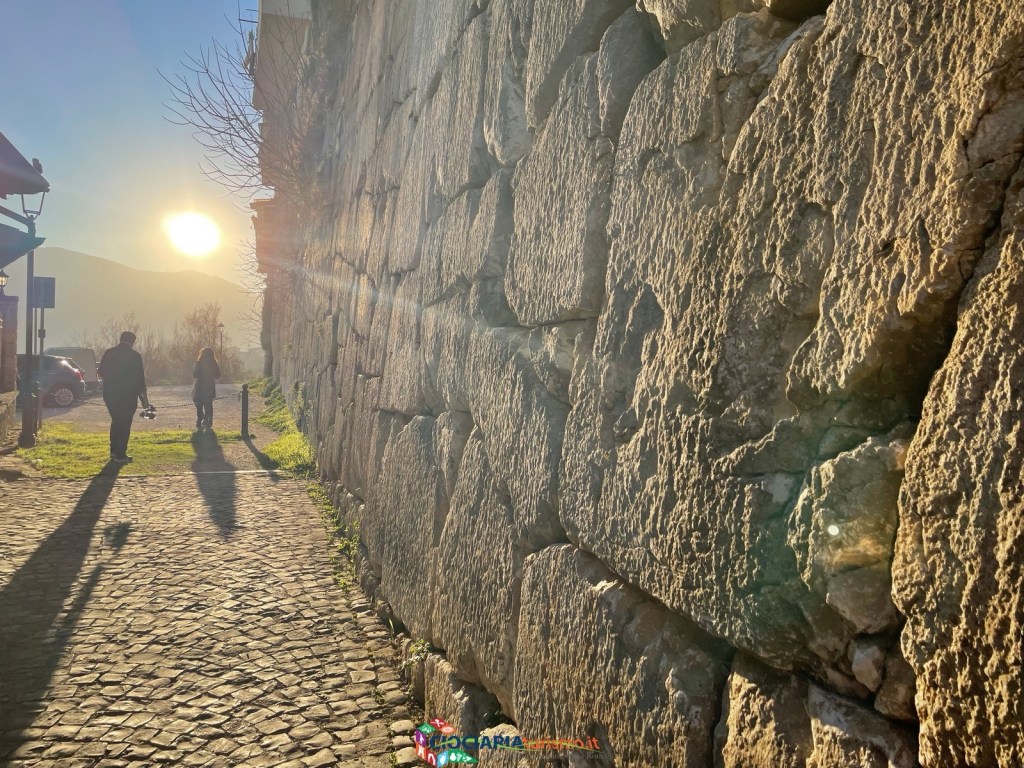
In the lower part, the boulders are interlocked without mortar (4th century BC); in the middle band the boulders are more regular (square work of the 2nd century BC); the third band, on the other hand, dates from the medieval age.
PORTA CASAMARI – Built at the time of Sulla (II-I centuries BC), when other works were made on the defense of the Acropolis and embellishment of the city, it derives its name from the Abbey of Casamari because from here departed the road to the house of Cistercians monks.
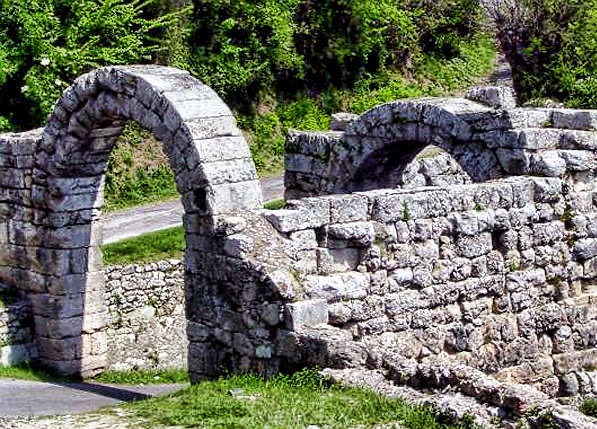
The door is built in square work with two round arches that are inserted perpendicular to the wall of perimeter. The second door provided an additional possibility of defense in case of breach of the external door.
PORTA SANGUINARIA – A little further on is the ‘Bloody door’, so called because capital executions were carried out at that point outside the walls. It opens a crack in the walls to show a splendid panorama, the communication routes, the Sacco river.

It appears to be made in the lower part from megalithic blocks, while in the upper part you can see the various interventions made in the following centuries.
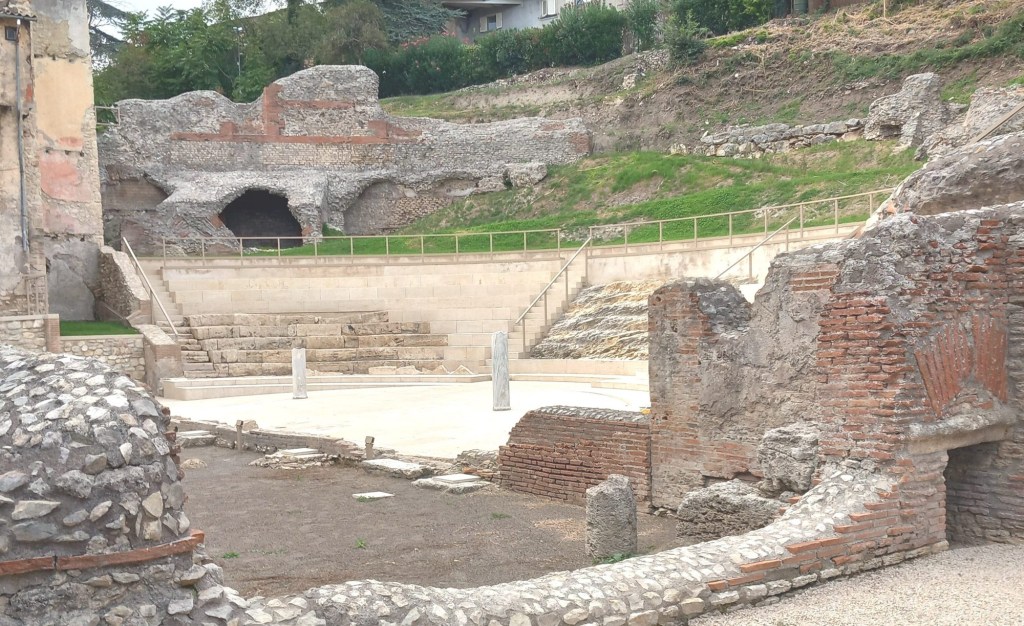
THE ROMAN THEATRE – The Roman theatre, completely restored in 2025, dates back to the 2nd century AD, under Trajan of Hadrian. It follows the natural slope of the hill, reaching a height of 12 meters and it could accomodate up to 3,000 spectators. The structures are partly open-air and partly incorporated into the private homes that occupy the steps. The cavea, the steps reserved for the audience, and part of the stage are still visible.
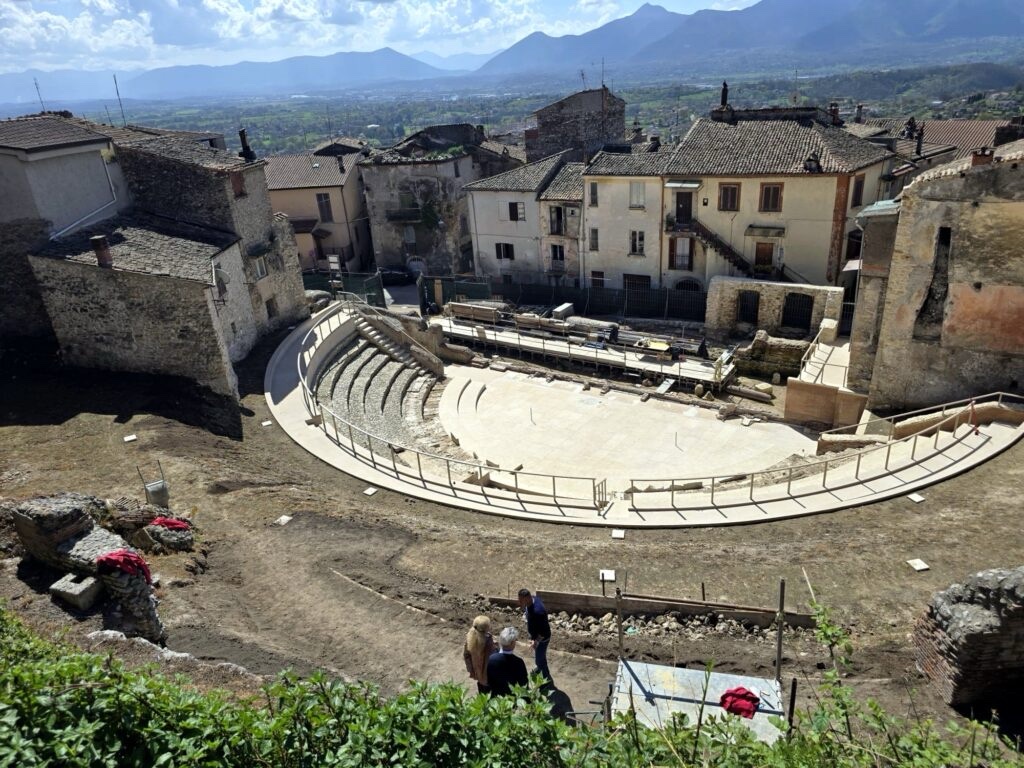
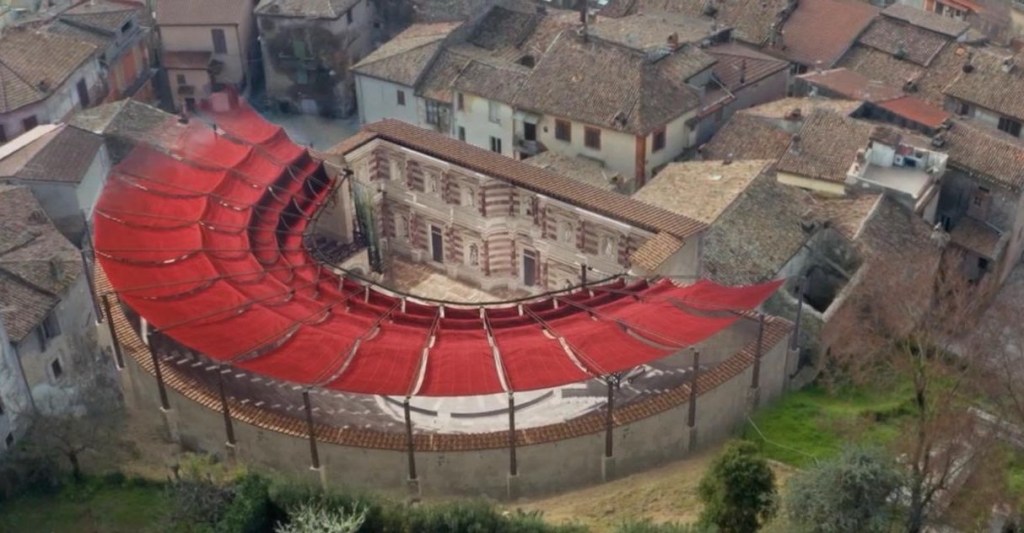
Three types of construction have been used: the first is brick, large square bricks bonded with a thin but tough layer of mortar and pozzolana; the second is stone-built—bonded with the same type of mortar; and the third is mixed construction—with alternating layers of stone and brick.
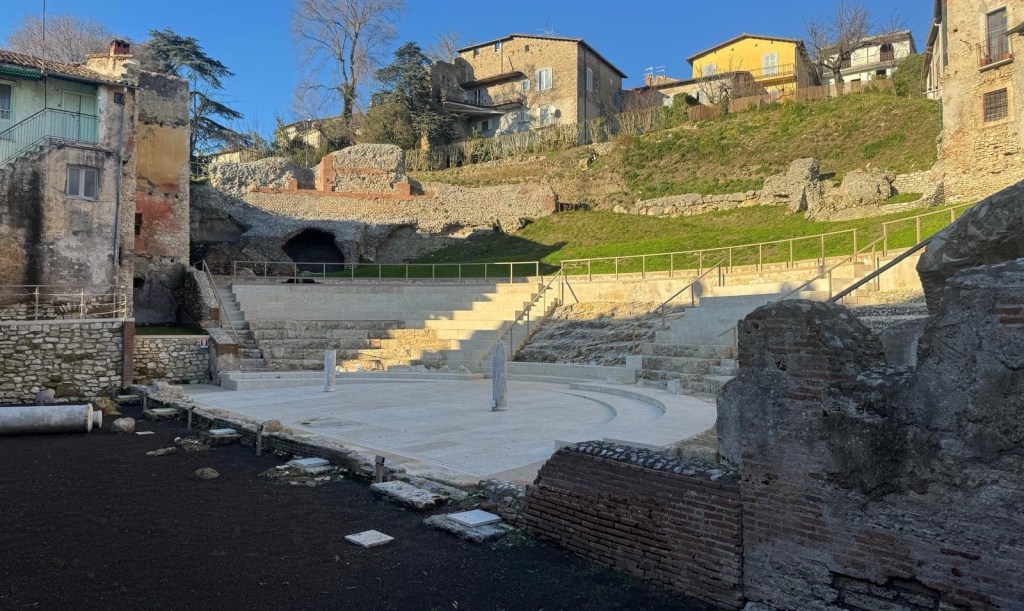
The structure and the materials are typical of the Trajan-Hadrian era, with the exception of the tuff, which was replaced by limestone, a material readily available in the area.
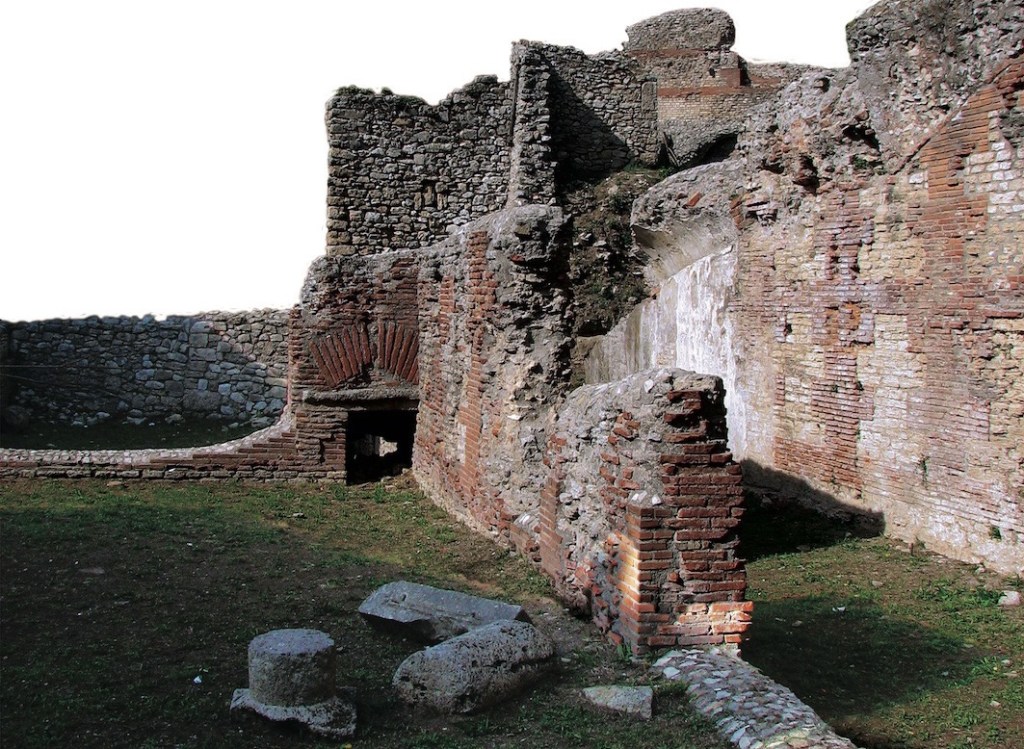
The monument has an exceptional value both as the only theatre in the Ernici area and as an evidence of the culture of the Ferentino people, who loved theatrical performances.
CHURCH OF SANTA LUCIA – Next to the theatre you can find the Church of Santa Lucia, dedicated to the Syracusan martyr.
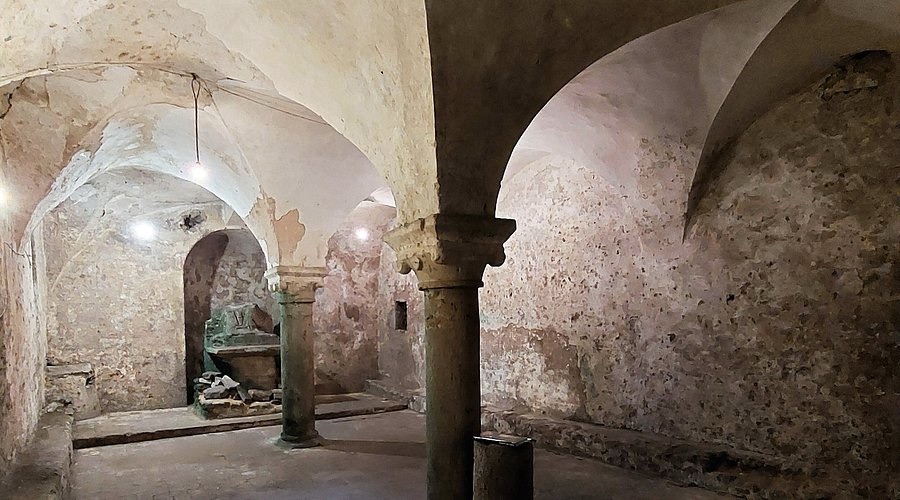
It was built around the 7th century on the thermal complex of Flavia Domitilla, wife of the Emperor Vespasian; its crypt – from the 4th century AD – dedicated to the Armenian bishop and martyr Saint Blaise, is an ancient mithraeum with the base of a mysterious statue, maybe the godess Fortuna.
THE ACROPOLIS – The city is crowned by the Acropolis, a masterpiece of civil engineering. The grandiose terrace on which it stands dates back to the 2nd century BC.

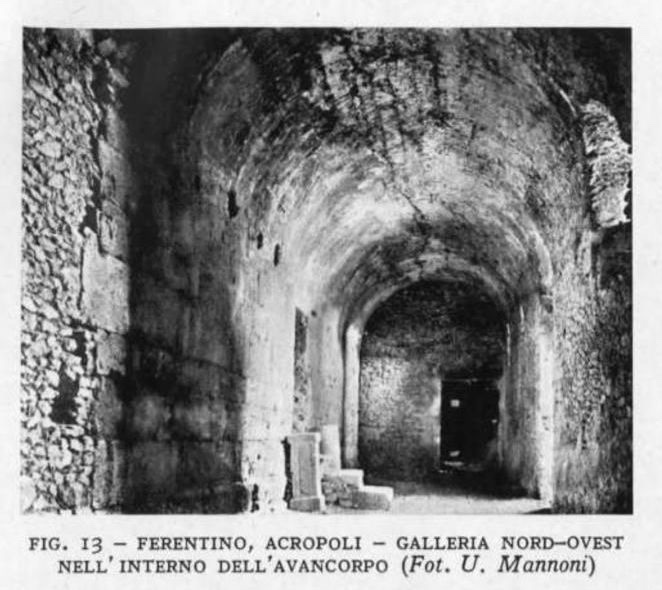
The southern forepart is made up of an imposing wall band and the structure, with a quadrangular plan, has three rectangular rooms inside, surrounded by four corridors, covered by barrel vaults.
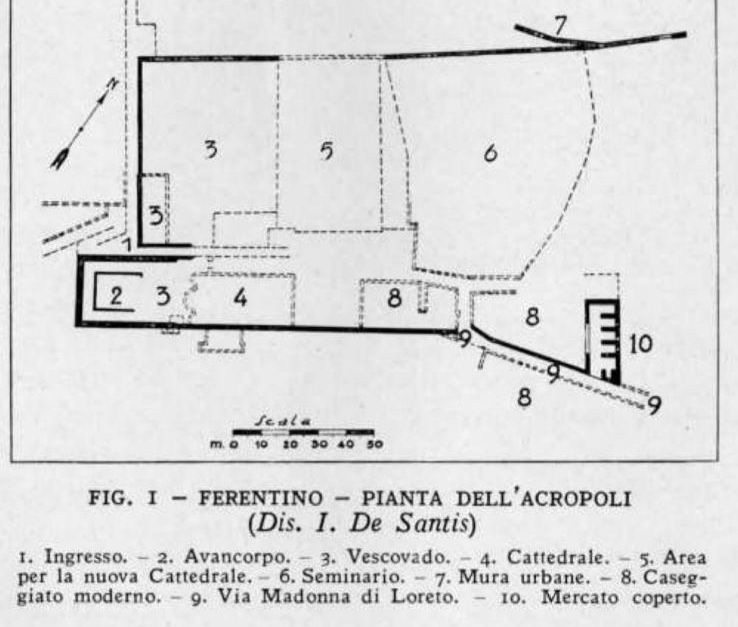
The Acropolis is accessed through the door popularly known as the “del Fattore” (Factor’s Gate). It was built on the rocky outcrop that emerged from the Ferentino hill, creating a terrace approximately 170 x 80 metres long, contained by walls in polygonal masonry: hence the name Avantcorpo.
who is the patron of Ferentino. By order of Diocletian, Ambrose arrived with his army at Ferentino. The governor, Publius Dacianus, began a persecution of Christians but discovered that Ambrose was also a Christian and he reluctantly ordered his execution on August 16, 304 AD.
The work is part of a larger project carried out by the Romans during the time of Sulla, between 100 and 80 BC approximately, which also included the construction of the Roman Market.
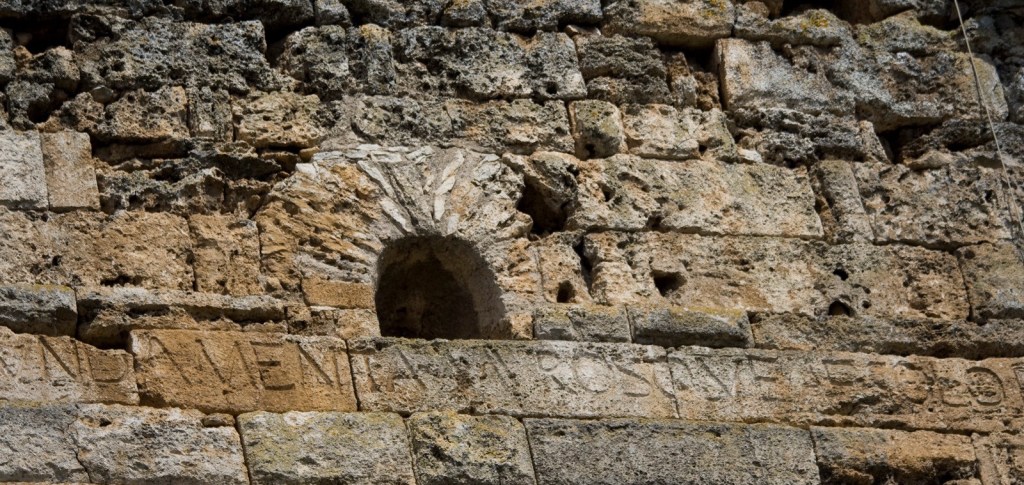
From the inscriptions engraved on the southwest façade, repeated on the southeast façade and on the architrave of the two access doors, we know that the censors Aulus Hirtius and Marcus Lollius had the work built and tested, and that it started from a depth of 33 feet (9.75 metres).
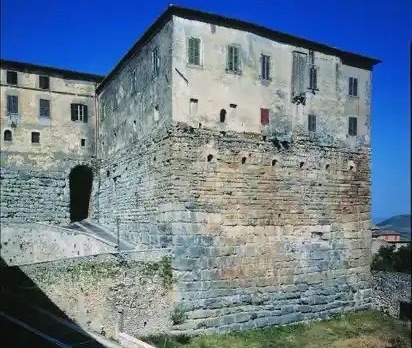
The structure of the base is in polygonal masonry of the 4th century BC with discontinuous horizontal planes and large squared blocks.
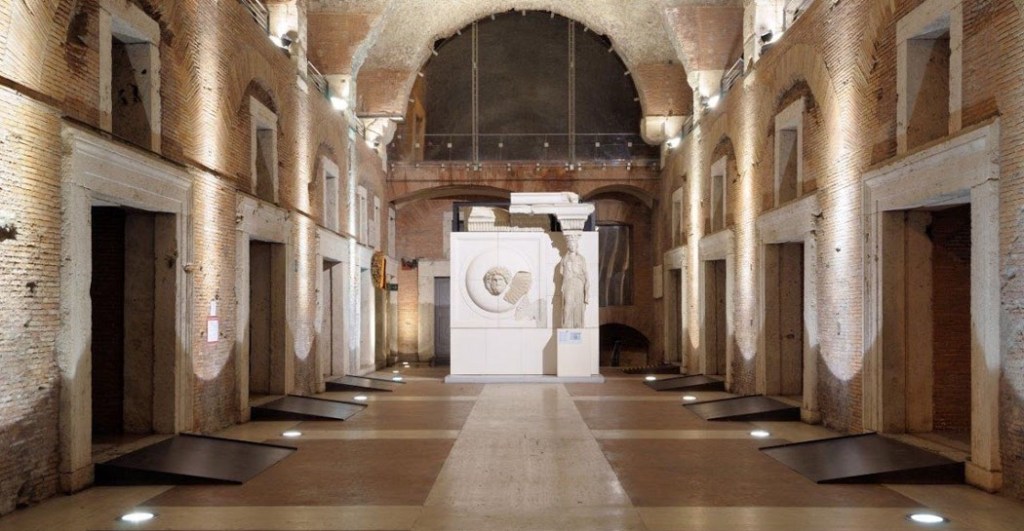
THE MARKET – On the opposite side of the forepart, 11 meters below the top of the Acropolis, is the so-called Market, a sort of covered street dating back to the end of the 2nd century BC. The commercial purpose of the building is suggested by its proximity to the external wall circuit and in particular to the Porta Montana, near which there was the “pecuarium” Forum, where livestock was traded.

The Market consists of a large space, approximately 24 metres long, covered by a barrel vault and flanked by five rectangular rooms or shops, opened on the north-eastern side by means of large round arches.
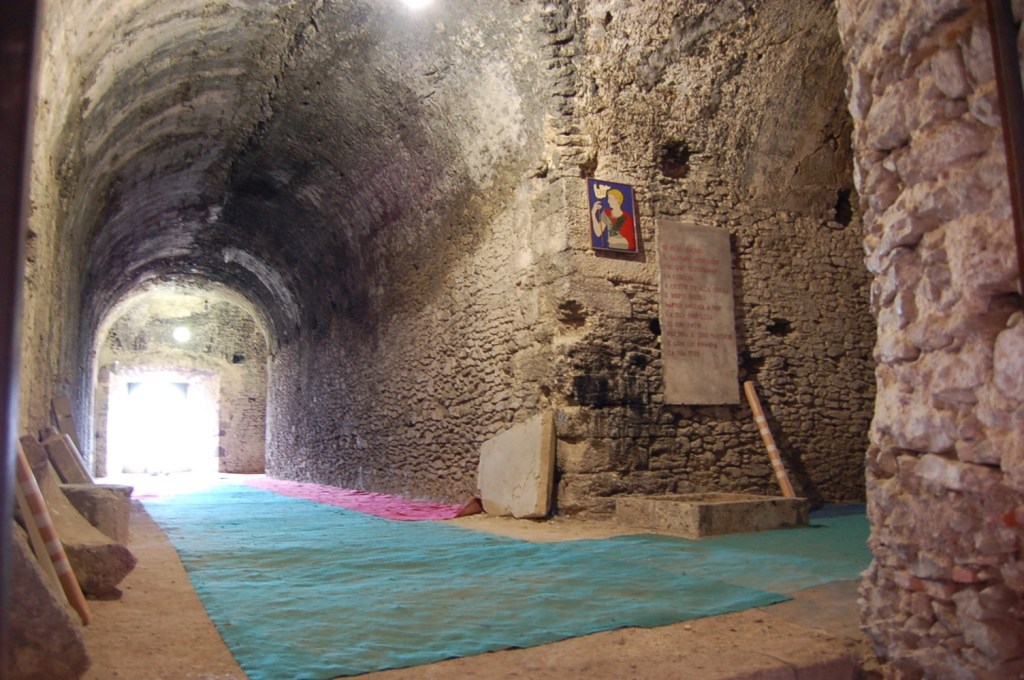
The 5 shops jut out onto the corridor with a round arch, and become smaller as as you proceed towards the end of the corridor. It is likely that they sold statuettes of the deity for the tempie on the Acropolis or objects to be given as gifts to the deity, such as bracelets, stones, rings. The floor slopes outwards, with a few steps, and opens onto the road with an arch of about seven meters in height with a strange inclination.
The splay of this arch, facing east, allowed the market to have maximum exposure to daylight. The only other opening to the outside is a small door located high on the back wall that allowed access to the terrace above via a wooden staircase. This market is considered by archaeologists to be the prototype of Trajan’s Markets.
THE TESTAMENT OF AULUS QUINTILIUS – The testament of Aulus Quintilius is an incredible gem left by Romans located outside the walls, in Via Casamari, not far from Porta Casamari.
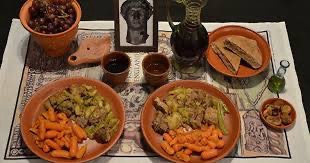
The will is carved in the rock, overlooking an ancient major road: the deceased declares to have redeemed four lands, to have returned them to the municipium, and to have arranged for the income from these lands to be used to donate money and buy Mulsum (wine mixed with honey), sweet flat bread (Crustulae) and nuts for the population, every 5 years, on the day of the donor’s birthday, in the 9th of May.
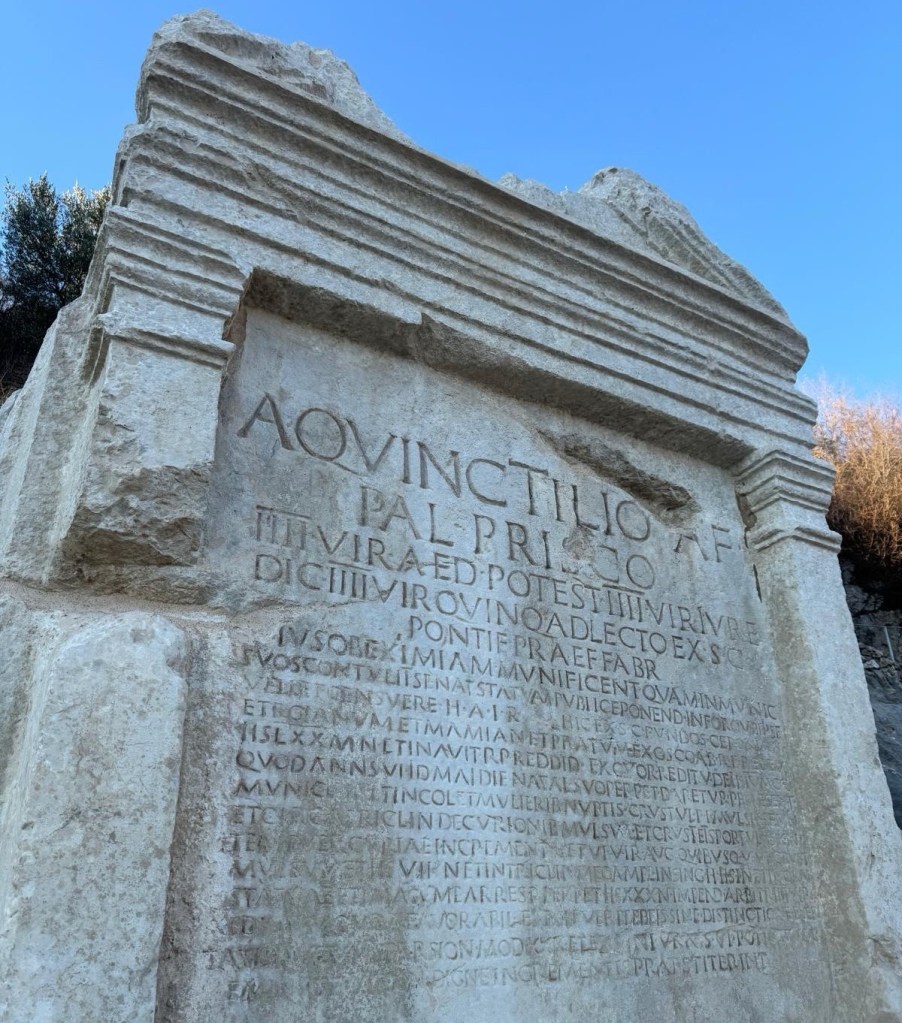
The free distribution of food regarded the citizens of Ferentinum, rich and poor and even slaves. Also 30 sesterces had to be spent for what we would call the maintenance of the statue and its portraits.
The quadrumvir Aulus Quintilius Priscus is a character of the imperial age, originally from Rome but a citizen of Ferentino, where he settled and held important public offices. The position of this epigraphic cippus makes it a rare monument since it is outside the city and is clearly visible from the Via Latina, or from the current Casilina. It is located in the place where the forum once stood, outside the city, on Via Casamari. It is in the area of the Forum, where monuments to the Emperors and to the Patrons of the Municipality were erected.
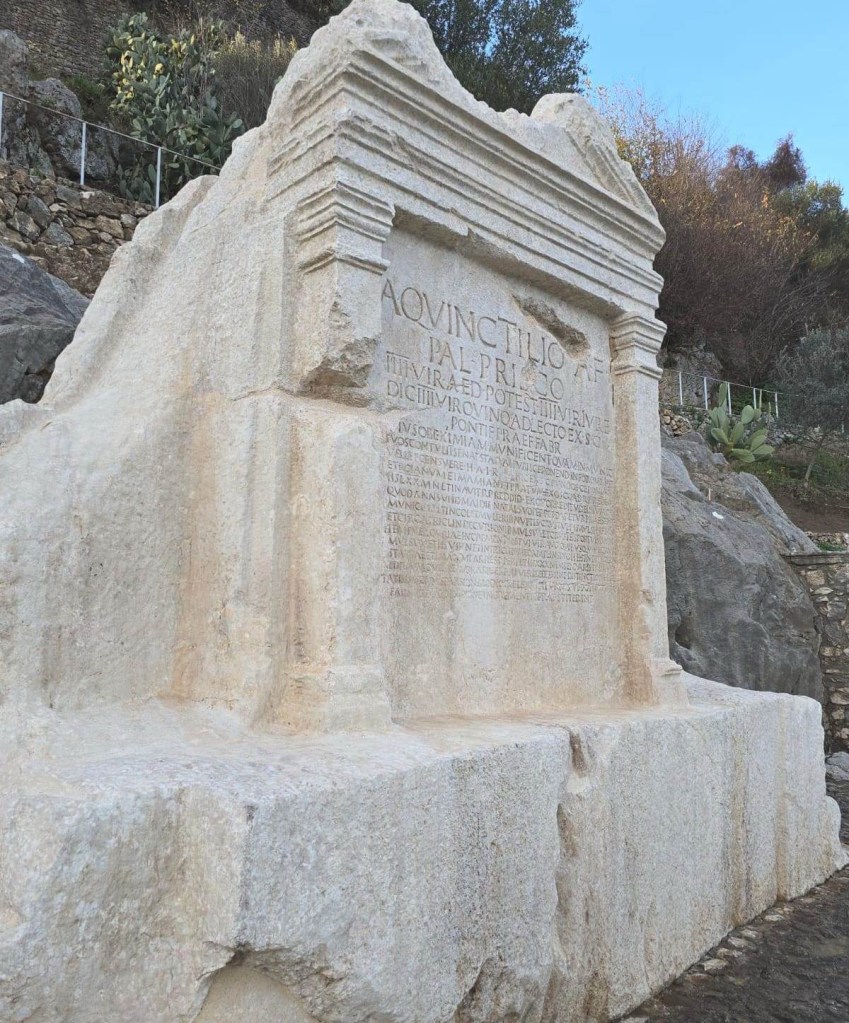
The central panel contains the last will of the quadrumvir Aulus Quintilius Priscus, beloved by the people for his generosity. The text is written on 19 lines and is enclosed by a sturdy frame.
The epigraph was excavated in the 1st or early 2nd century AD, on a boulder of limestone. The base of the aedicule is 6.80 m long and 1.20 m high.
OUR TABERNAE – Where to Eat
TRATTORIA CONSOLARE – Traditional local cuisine in the historic center of Ferentino.
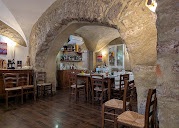
Via Palazzo Consolare, 1 – +390775961062
DON’T MISS….
ALATRI – At 12 km from Ferentino, Alatri (Aletrium) is known as the “City of the Cyclops”for the exceptional state of preservation of one of the greatest examples of ancient architecture in Italy, the Acropolis of its Civita.
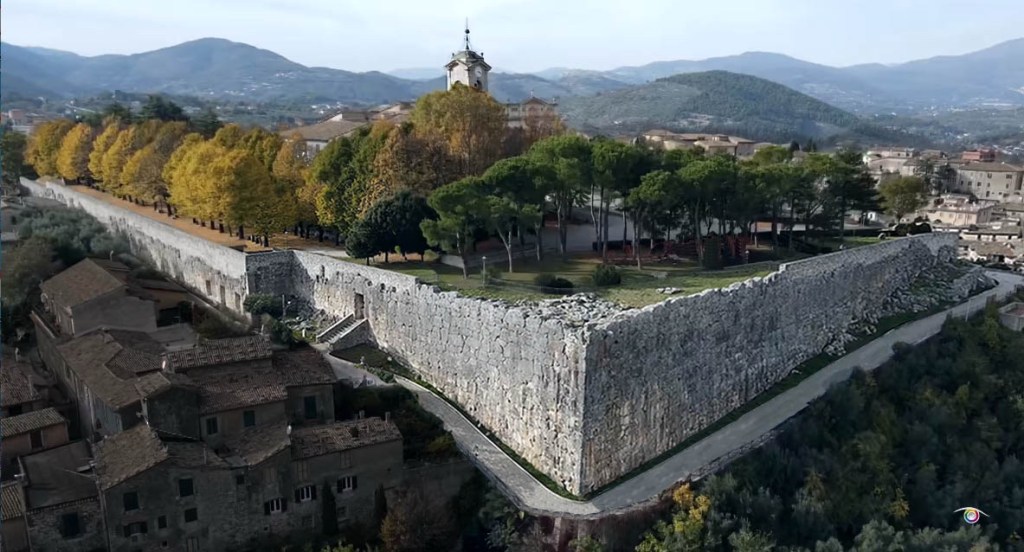
According to tradition, it was the Pelasgian people, direct descendants of the god Saturn, who laid the foundation stone of the town.
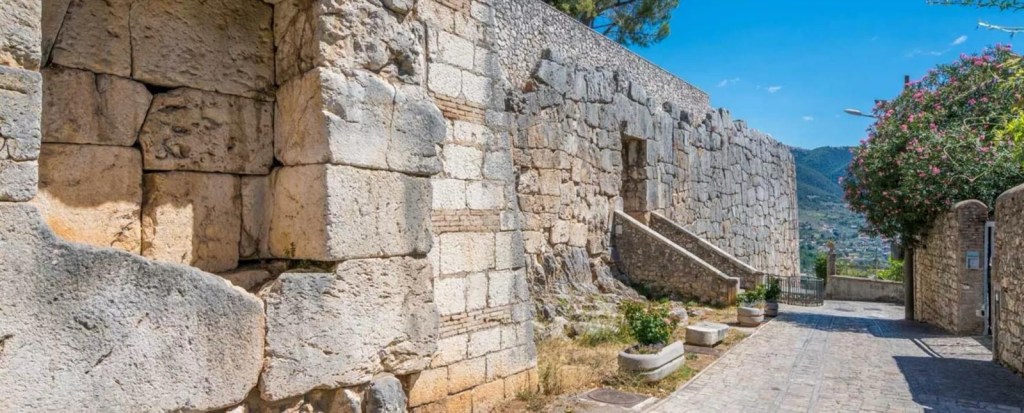
The colossal stone blocks that make up the Acropolis walls leave you amazed. The huge stone walls, which extend for a perimeter of two kilometres, are still well preserved.

The city of Alatri, with its massive Acropolis and its famous Domus, was in Roman times an important residential center.
The Civic Archaeological Museum houses several Roman epigraphs, including one commissioned in Alatri by the magistrate Lucius Botilienus Varus, a censor during the Republican period.

Among the finds are a small bronze statue from the acropolis and paintings from the 2nd-1st century BC, from a domus in Piazza Santa Maria Maggiore, the site of the Forum.
VEROLI – At 16 kn from Ferentino, Veroli has a rich Roman Heritage.
The Archaeological Museum “I Luoghi del Tempo” houses artifacts, mosaic floor, clay hydraulic and above all the precious Roman calendar called the Fasti Verulani.
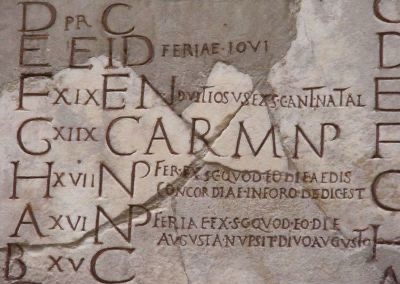
The slab of marble was displayed in the city forum, in full view of all, and it is engraved wit the first three months of the year (Ianuarius, Februarius and Martius. of the Roman calendar. For each month there are three fixed dates: Kalends, Nones, and Ides. The calendar also indicates the various date for fairs and markets and working days (marked with a P) and holidays (NP) such as Agonalia, Carmentalia, Lupercalia, Quirinalia, and Liberalia.

Underground Structures: Inside the museum, you can see the substructures of the forum and a cryptoporticus.
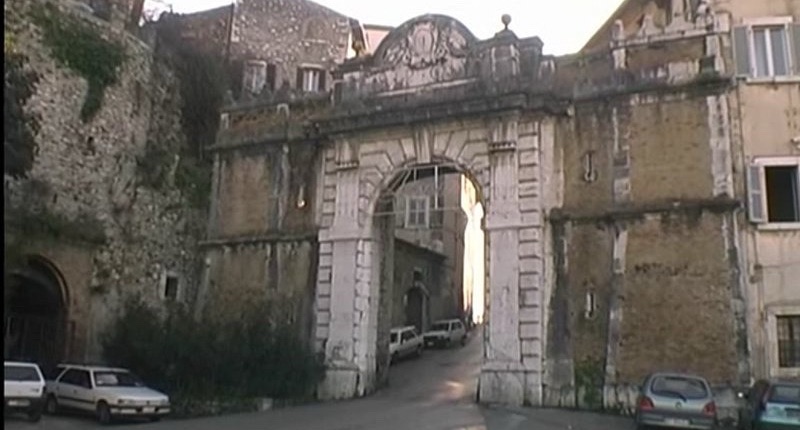
Porta Romana: An imposing 18th-century entrance bearing the letters S.P.Q.V. (Senatus Populus Que Verolanus) to celebrate the city’s status as a Roman municipality.
Polygonal Walls: The ancient defensive walls, a pre-Roman vestige, were integrated and strengthened by the Romans.
AQUINUM – About 50 km south of Ferentino, in Castrocielo, you may fine one of the most beautiful archaeological areas in the entire Ciociaria, the region of Frosinone: Aquinum.
In the center of the Liri Valley, at the foot of the mountain range dominated by Monte Cairo, stands the ancient city of Aquinum, a Roman colony at the time of Octavian, Mark Antony and Lepidus. Juvenal, the famous Roman satirist, was born in Aquinum around 55 BC.
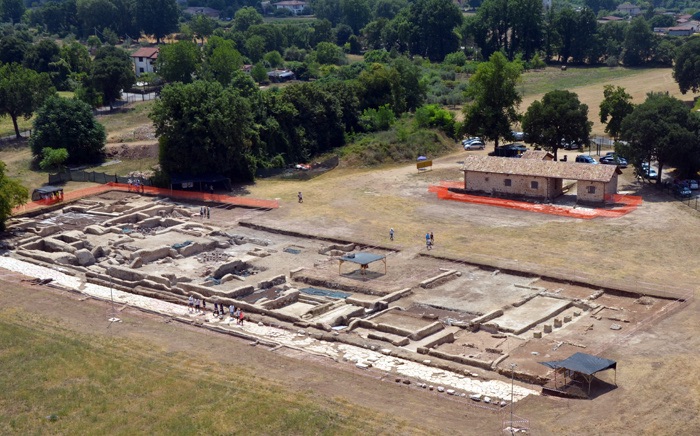
The excavation area is located on a flat surface of almost 8 hectares. The peculiarity of Aquinum lies in its complex defensive system, made up of combined natural and artificial defenses that have determined the particular shape of the city and the urban traffic system.

The area is composed of: the Roman gate, in the western area of which only the lower rows and some blocks at the base remain, while conspicuous collapsed remains lie around the ruin; the Square Tower located in the extreme western sector of the urban area a few meters from the Via Latina and the Roman Gate, dating back to between the end of the 4th and the 3rd century BC, built for defensive purposes; the Tempio Maggiore or Capitolium, probably the most important building in the city; the apsidal building or the Temple of Diana located in the center of the city; the theatre, of which many parts are missing, and the amphitheater seriously damaged by the construction of the A1; Porta Capuana, one of the best preserved monuments in the area; the arch of Marcantonio and the central baths.

The largest site in the ancient city is its bath complex. The remnants of a Hadrianic portico is still visible, along with two separate bathing facilities used for men and women. These facilities feature mosaics with exotic subjects, such as a rhinoceros and the Egyptian god Anubis, highlighting the cosmopolitan character of the Roman Empire.
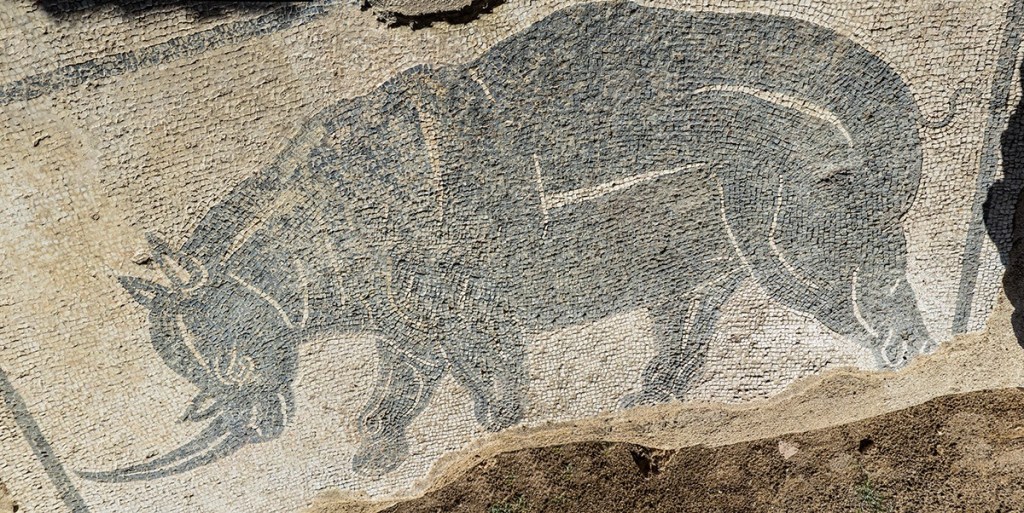
Three heads from the Roman era have recently been discovered in the area: the first of Heracles, another of a woman and a third, more refined one, it seems to be of Julius Ceasar.
 Italy as the Romans did
Leave a comment