
- The ‘Pompeii of Apulia’
- History and Roman Legacy
- Ancient Rome Itinerary
- Useful Informations for Ordona
- Our ‘Tabernae’, where to Eat
The ‘Pompeii of Apulia’
It has been called the ‘Pompeii of Apulia’, it is the Roman city that lived twice: Herdonia (today Ordona, near Foggia, in South-Eastern Italy) was burned and destroyed by Hannibal in 210 BC because it sided with the Romans in the battles against the Carthaginians fought in the area during the Second Punic War. Its inhabitants were deported to Metaponto and Thurii.
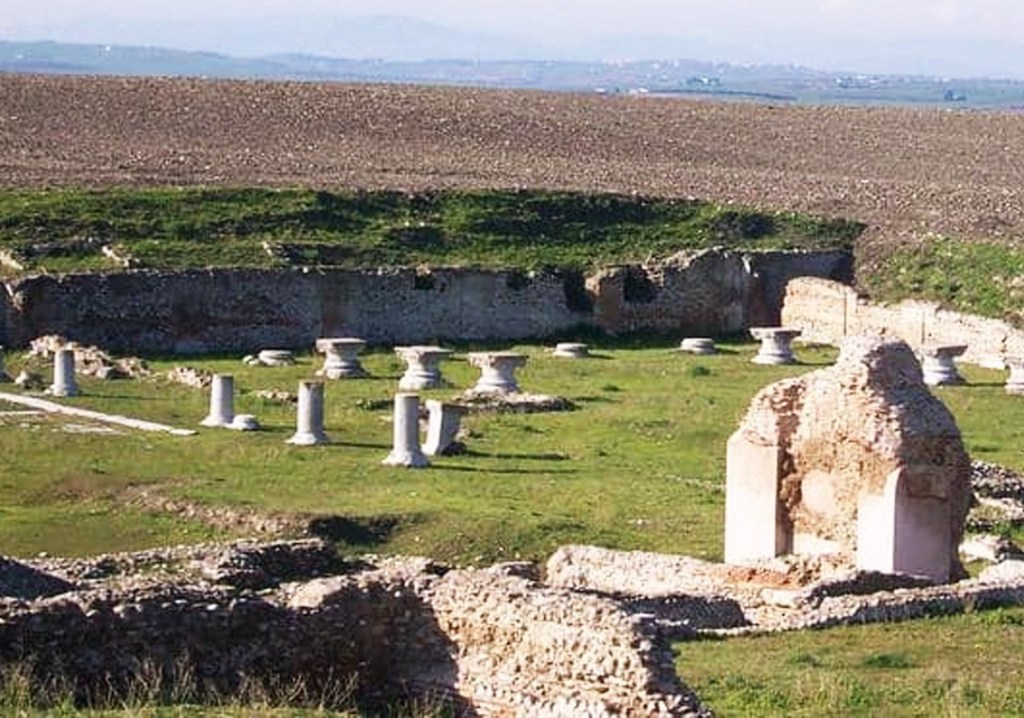
Rebuilt in 89 BC, Herdonia became a municipium and it later gained great importance for the Romans because it was at a crossroads between Via Traiana, one of the key trade routes between Rome and southern Italy built in 109 AD, and the Eclanense and Venosa roads.
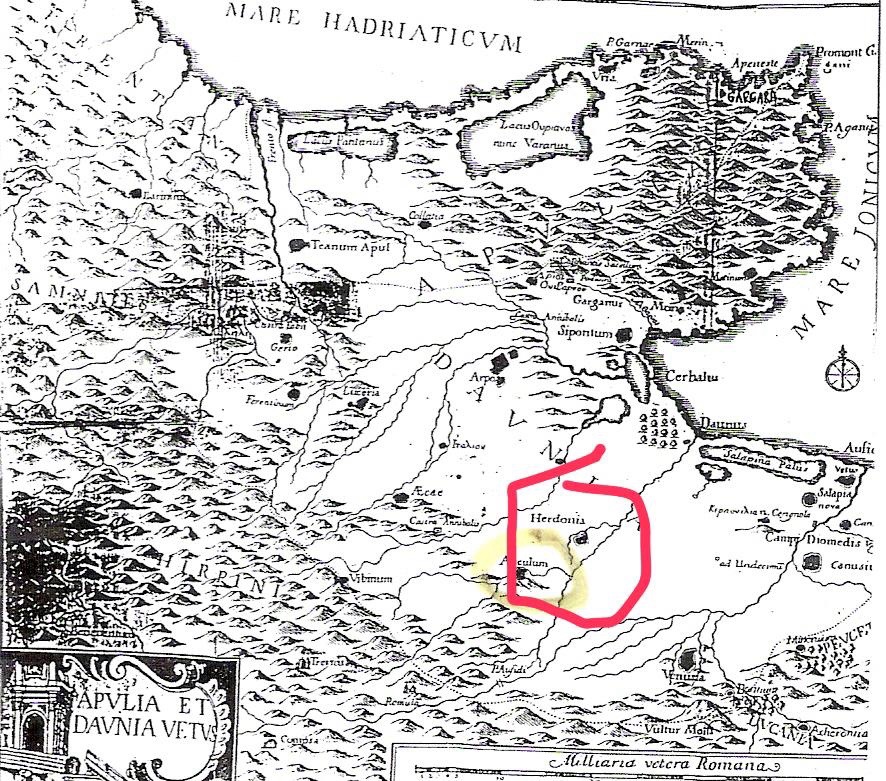
It was inhabited by a lively and flourishing community of 7,000-10,000 people who also took advantage of its position on the edge of the fertile Tavoliere plain. Among the most powerful families were the Publilii Patruini from which came Publilius Celsus who was consul twice before being executed under Emperor Hadrian in 118 AD because he was accused to be part of a conspiracy.
The area within the walls encompasses three hills, the highest one is 134 meters above the sea level.
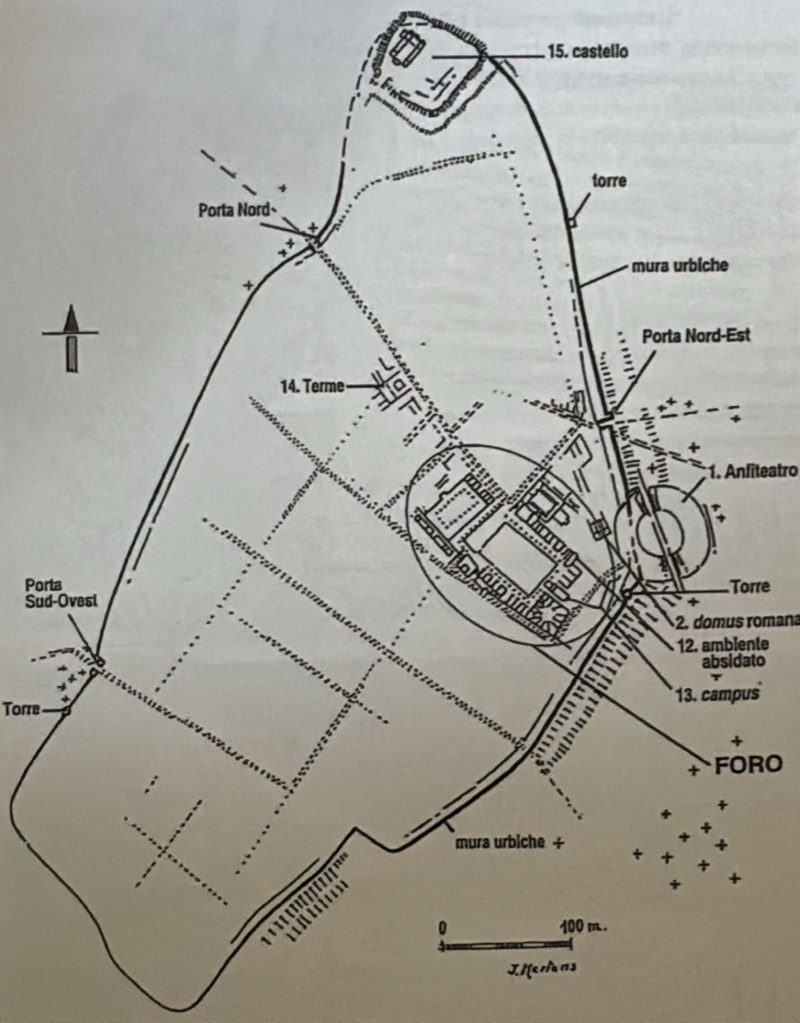
Its remains from the Daunian, Roman, and medieval periods were uncovered following extensive excavation campaigns conducted by a Belgian group of archaeologists from 1962 to 2000. It was belgian archaeologist Joseph Mertens who in 1962 discovered the site and donated it its third life: excavations have revealed remnants of the city walls, two temples, a basilica, the forum, a basilica.
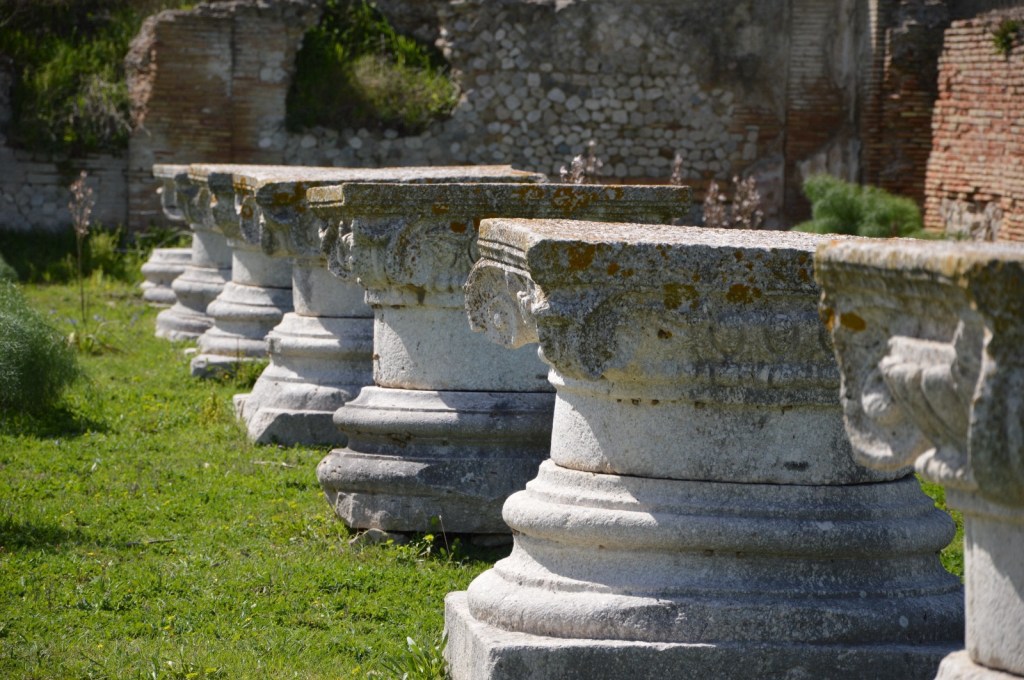
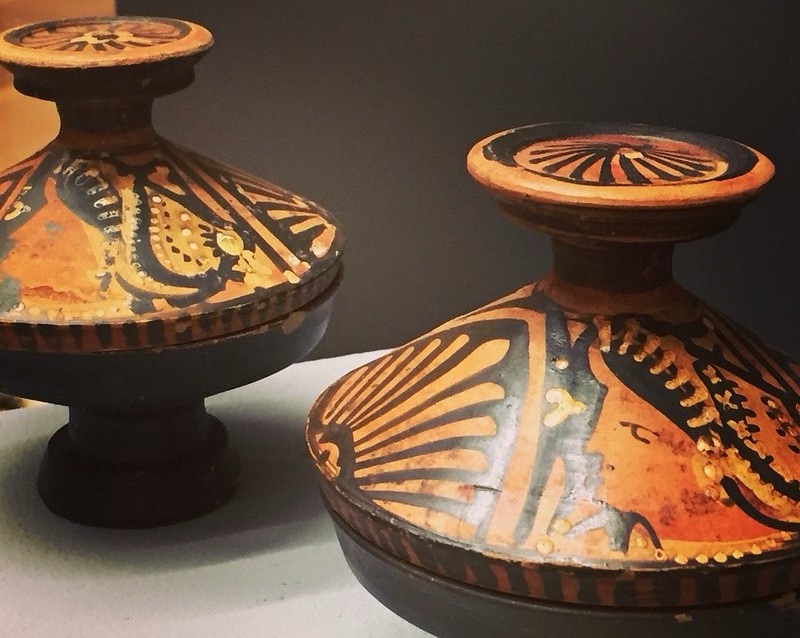
The area also features a necropolis with various artifacts, some of which are displayed in the Herdonia Archaeological Museum in Ordona.
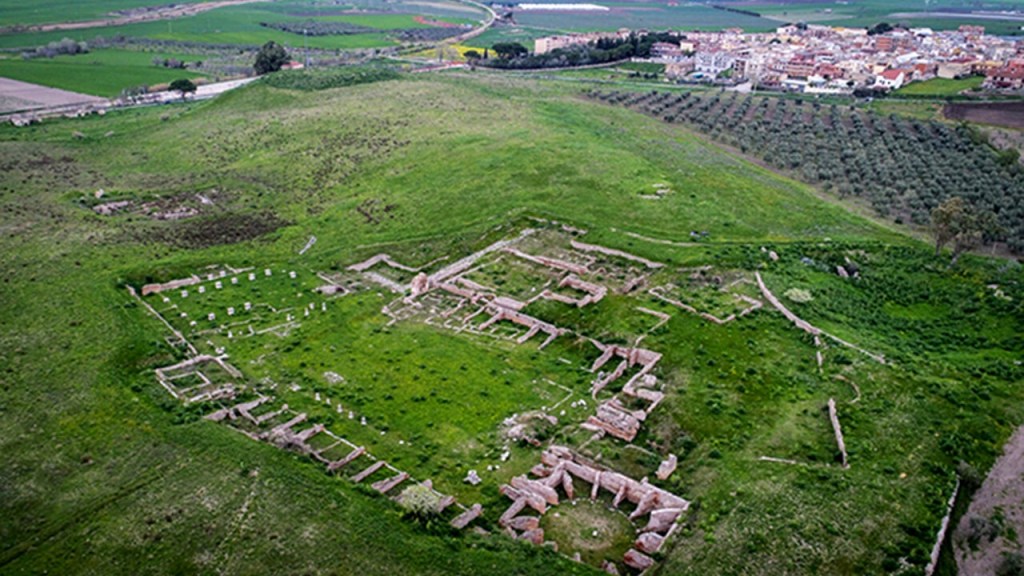
Herdonia is one of the few large Roman sites in Italy devoid of any modern urban overlay: there are no buildings or infrastructure to impede excavation. This is a rare condition shared with only a few other sites in the Mediterranean and for this reason the international scientific community has been studying it.
ARCHAEOLOGICAL MUSEUM – The Ordona Archaeological Museum, in Via Pascullo Soldato, is dedicated to the archaeological site of Herdonia.
The reception takes place in the introductory section, including landscape images and aerial views of the Herdonia site. A video summarizes the history of the city and the area from the Daunian age to the present and introduces to how this history was reconstructed.
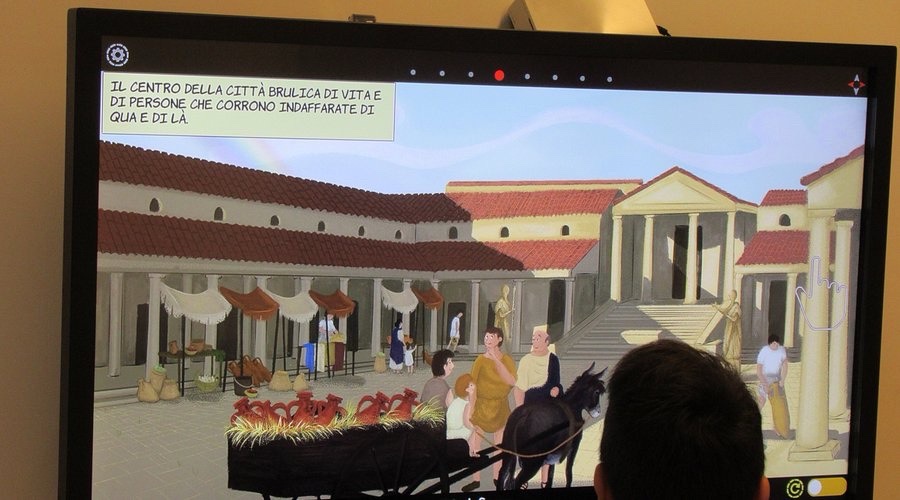
The itinerary runs clockwise, starting from the reception.
The museum is divided in 3 sections: Novecento; The territory; The city.
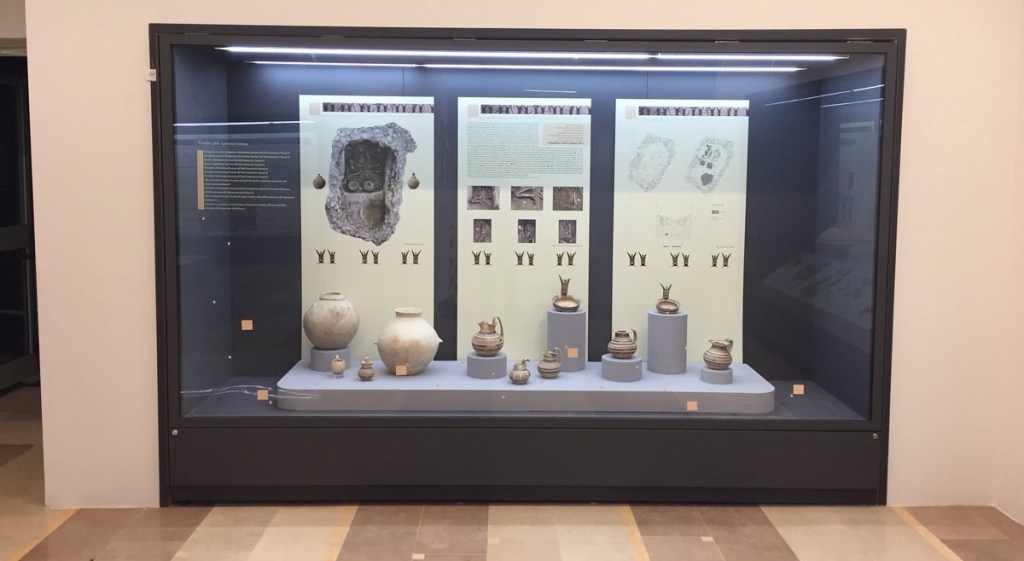
Each section offers drawings and images, large panels with photographic reproductions, plans and sections from the archives of the University of Foggia, explanatory panels with short texts and in large and clearly legible characters, showcases with objects and multimedia products.
THE ARCHAEOLOGICAL AREA – The remains in the archaeological area correspond to those of the city in the 2nd century AD, during its period of greatest wealth. Only one fifth of Herdonia has been excavated.
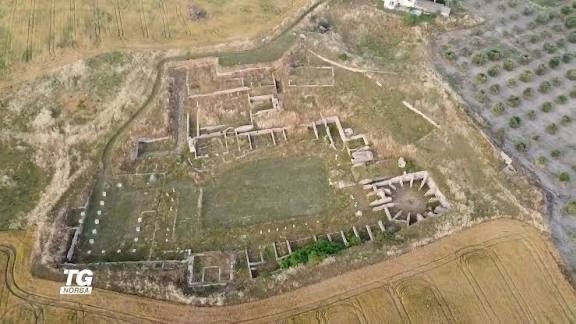
The ancient city has the shape of an elongated rectangle that ends in a point towards the north and is delimited by a wall 2 km long, partially still visible, which enclosed an area of almost 20 hectares of land. This rectangle, approximately 730 meters long and 300 meters wide, encloses a group of three hills very flat at the summit.
THE AMPHITHEATRE – The first building on the left is the amphitheatre. It was the venue for gladiatorial shows and public games, with an estimated capacity of up to 8,000 spectators. Built in the 1st century AD, in the Augustan era, it was restored, enlarged, and embellished in the 2nd century AD.
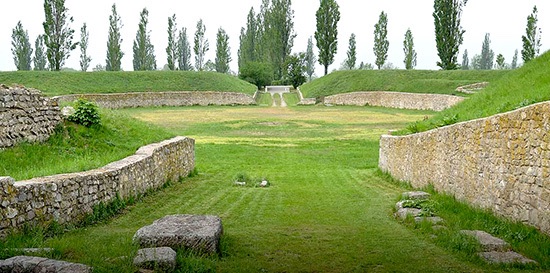
It is currently visible only by the depression in the ground corresponding to the elliptical cavea and the wall fragments still emerging from the ground; the rest lies beneath the earth poured to cover and protect it.
The amphitheatre was built using the moat outside the city walls. It measures 74 x 59 meters and it is surrounded by a 215-meter-long external wall of opus reticulatum, part of which is still visible. It was built in the 1st century AD,. The building had two entrances on the main axis, which provided access to the steps, of which no traces remain. They were probably in wood.
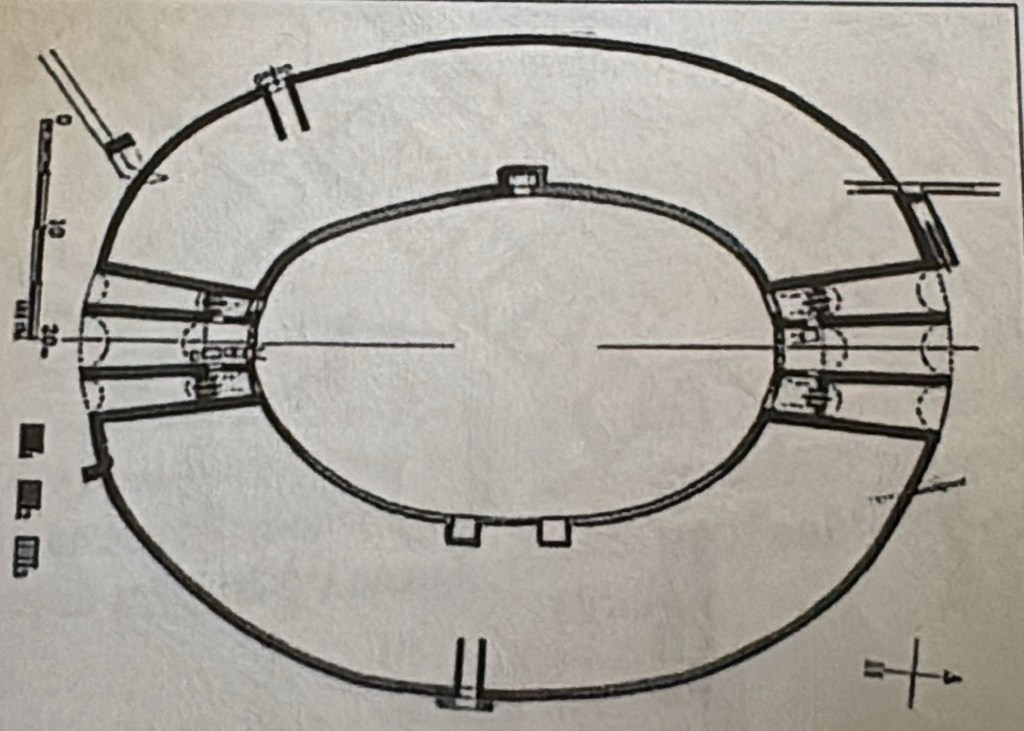
Spectators attended the events (gladiatorial games, animal fights, etc.) not only from the city but also from the surrounding countryside. The amphitheatre was dismantled in Late Antiquity (4th-6th centuries AD), when Christianity banned most spectacles, so the entrances were converted into residential spaces.
VIA TRAIANA – Alongside the Forum is still visible a paved road, the Via Traiana. It was built during the reign of Trajan in the 2nd century AD and it is a branch of the more important Appian Way. It was the catalyst for Herdonia’s economic and political development, as it inserted the city into the circuit of the main Roman roads and connected it to Benevento and the port of Brindisi.
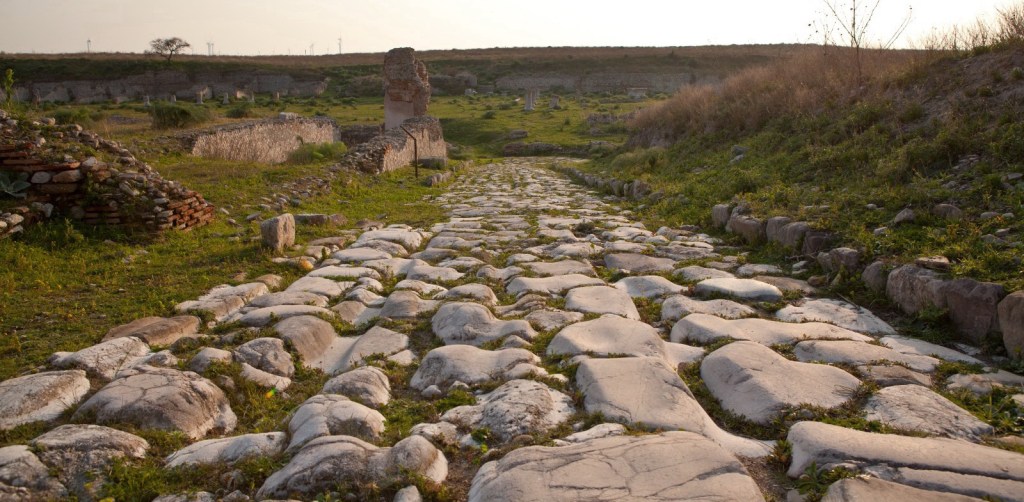
The urban stretch of Via Traiana is 350 m. long. It is approximately 3.50 meters wide and entirely paved: the signs of intense cart traffic are very evident, which have caused real ruts. The road is lined with bollards and walks. The first building on the left features a rectangular porticoed courtyard that was part of a gymnasium.
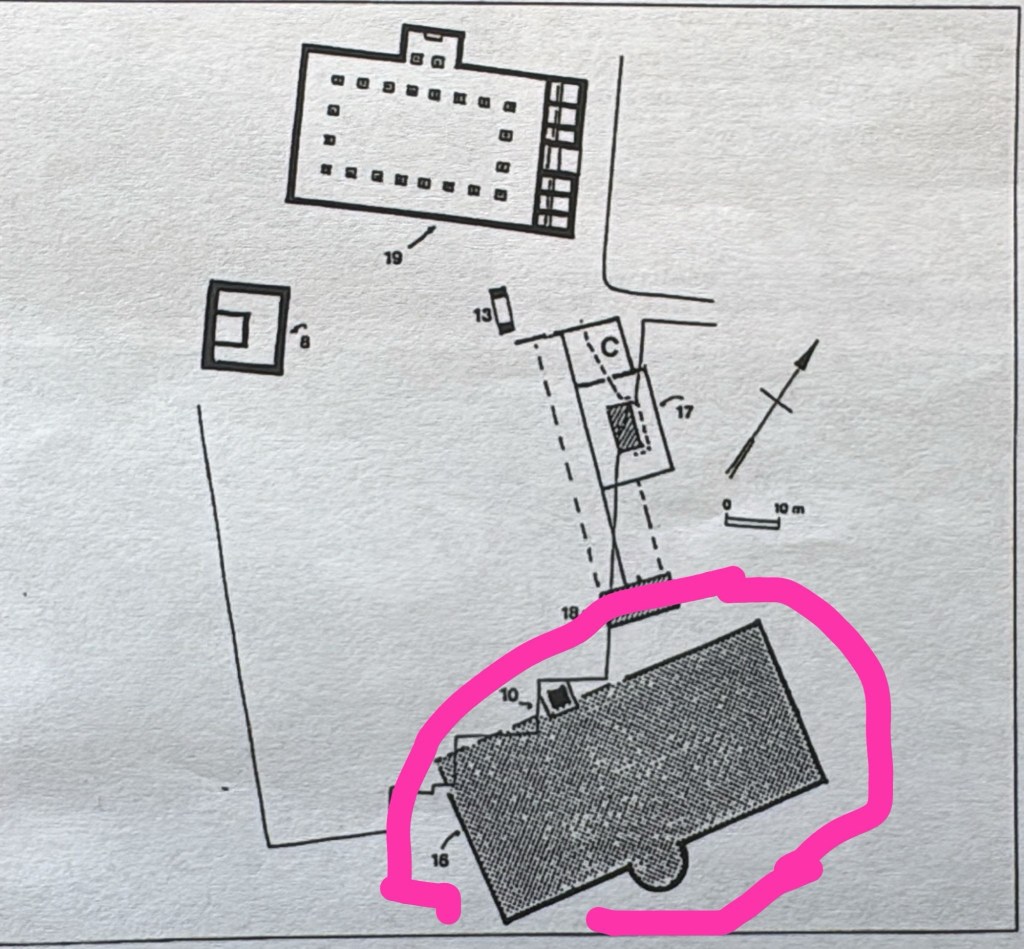
It was built in the 1st century BC: on the long eastern side is a schola with a semicircular exedra. In this large enclosed area, all types of ludus gymnicus could be held, that is, gymnastic events, games, and competitions for the youth (iuventus).
A city with three lives, Salapia: the ancient, the Roman (who later called it Salpia and then Salpi) and the medieval. In a highly evocative landscape. A privileged observatory among the flamingos in the salt pans area, once the “universe of birds” beloved by the naturalist Emperor Frederick II and still today a humid area of international importance.
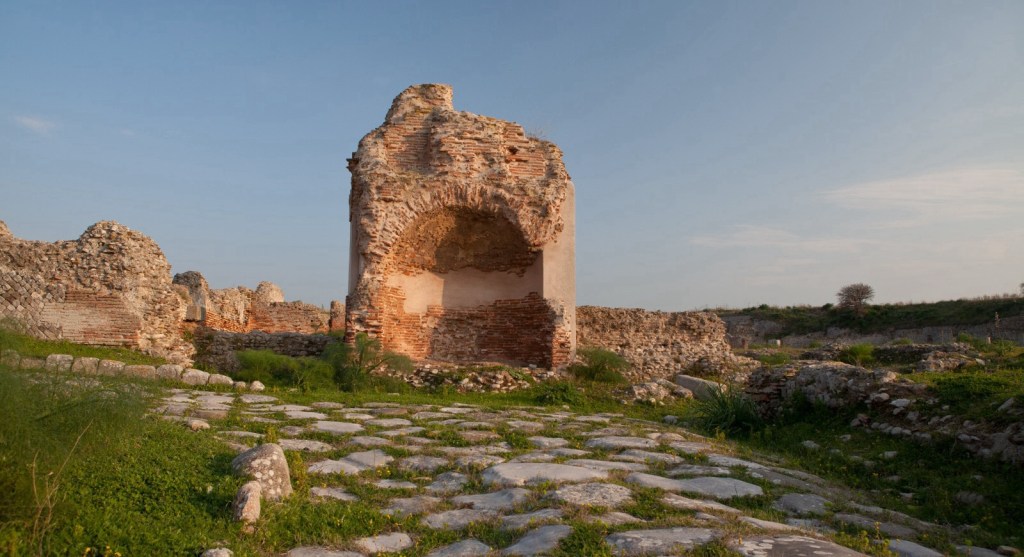
Continuing along the road, we come to a very well-preserved structure with a large elliptical niche: it is a nymphaeum, a monumental fountain built in the 2nd century AD that probably served as a refreshment for travelers entering the city. The large niche is covered by a semi-dome lined on the inside with plaster and marble slabs. The back was delimited by a low wall that formed a basin that was probably used as a watering hole for people and animals.
THE FORUM – The Forum was the heart of the Roman city, surrounded by public buildings such as the basilica, the curia, and temples. The square was surrounded on three sides by shops (Tabernae)while on the southern side was a covered market.
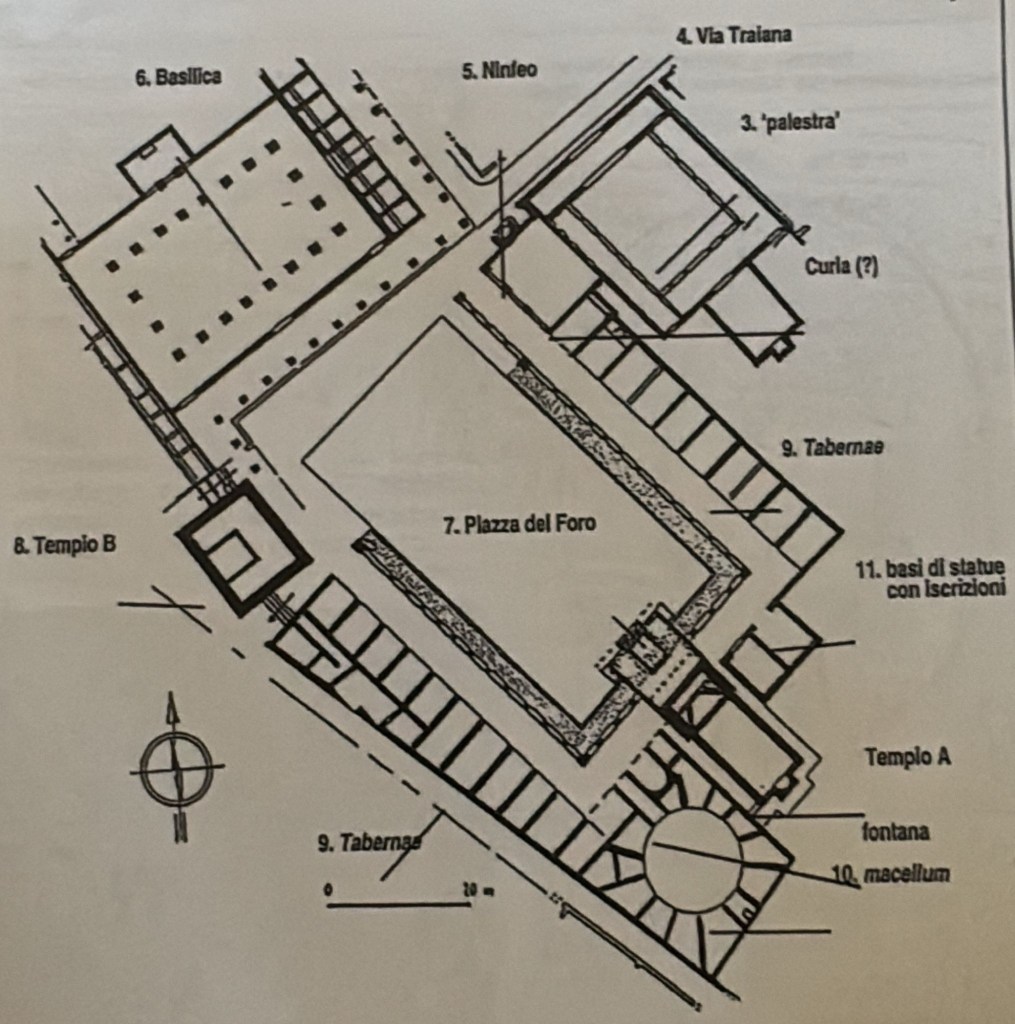
The shops sold various types of food and goods they were surrounded by the square on three sides. The most common type of shop had a rectangular plan, about 4.5 meters wide and 8 meters deep, and had easily washable cocciopesto floors (a durable, waterproof pavement made by mixing lime mortar with crushed terracotta fragments).

Umane dell’Università di Foggia)
The monumental arrangement of the Forum took a long time; the beginning of the work can be dated to the age of the emperors Trajan and Hadrian (98-117, 117-138 AD), following the construction of the Via Traiana, with further interventions throughout the 2nd and 3rd centuries.
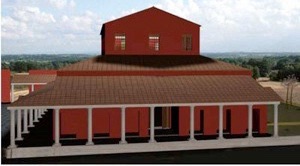
THE BASILICA – The Basilica of Herdonia develops on the north-west side of the forum, occupying one entire short side. It was built at the end of the 1st century BC and it was used as a courtroom, but also as a place for gatherings and debates. Of the large rectangular hall (30×15.5 m.) and its 20 Ionic columns, only bases and capitals remain.
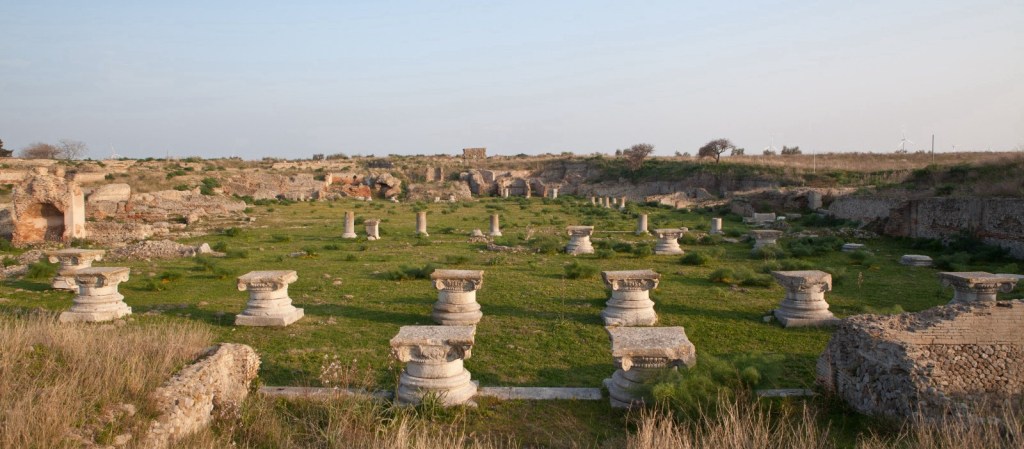
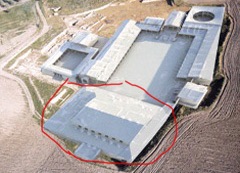
There were three buildings facing the Forum that must have had administrative functions; it is likely that colleges of priests or artisans, or even the Senate itself, met there.
Umane dell’Università di Foggia)
The first, larger than the others, has access to the Forum divided by two columns; the second and third respectively feature a cistern and a base for a statue as well as traces of the marble cladding of the walls.
Along the southeastern front of the basilica is a colonnaded portico that connects the basilica to the forum square. Here is one of the many statue bases with epigraphs dedicated to emperors or members of the eminent families of Herdonia who had distinguished themselves for particular merits towards the city.
Umane dell’Università di Foggia)
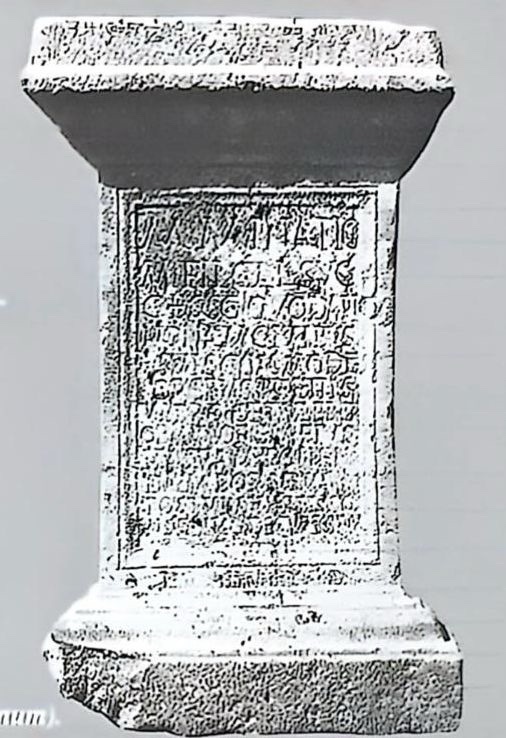
A statue base (the fixing pins are still clearly visible on the upper part) has been placed in front of the basilica. It bears a dedication to a generous figure: Minatius from the Galeria tribe (different from that of the majority of the Ordonesi, the Papiria).
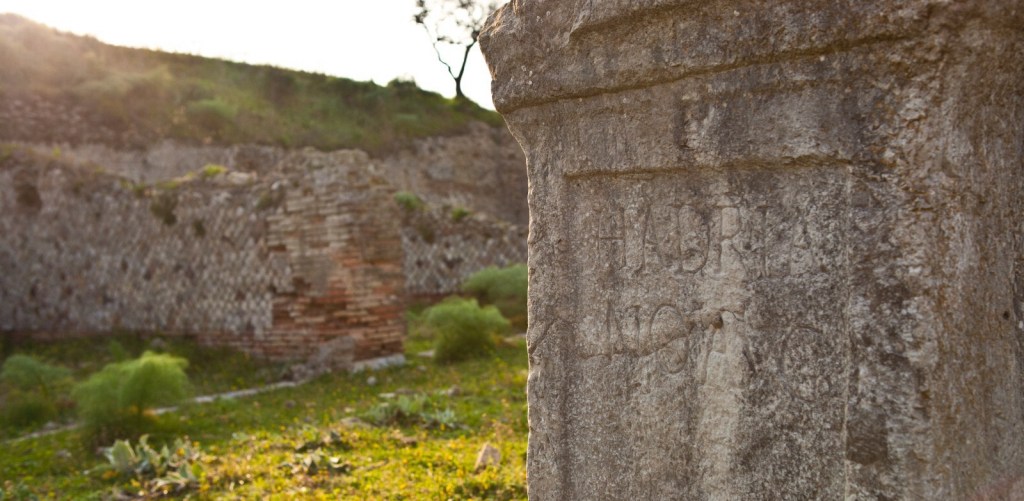
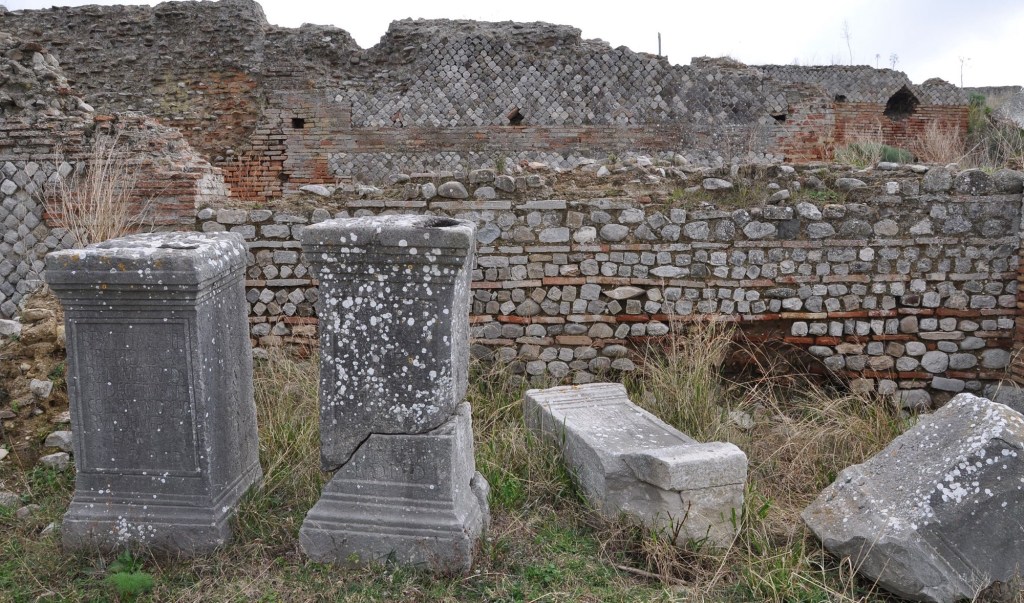
The inscription, dating between the end of the 2nd and the first half of the 3rd century, mentions an intervention in favor of the inhabitants of Herdonia, perhaps during a famine or supply shortage.
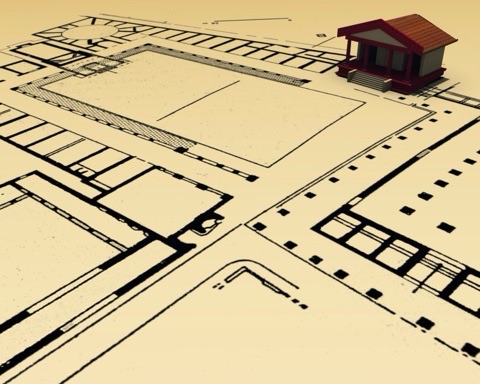
THE TEMPLES – There were two temples in the Forum area: the remains of the first one, an Italic temple known as Temple B, belong to the oldest place of worship in Roman Herdonia, built in the 2nd century BC when its inhabitants came back from the exile ordered by Hannibal.
Umane dell’Università di Foggia)
The temple B was probably dedicated to the goddess Diana, equated with the greek Artemis, patroness of the countryside, hunters and the Moon and therefore very close to pastoralism and transhumant farming that developed in Herdonia between 2nd and 1st century BC.
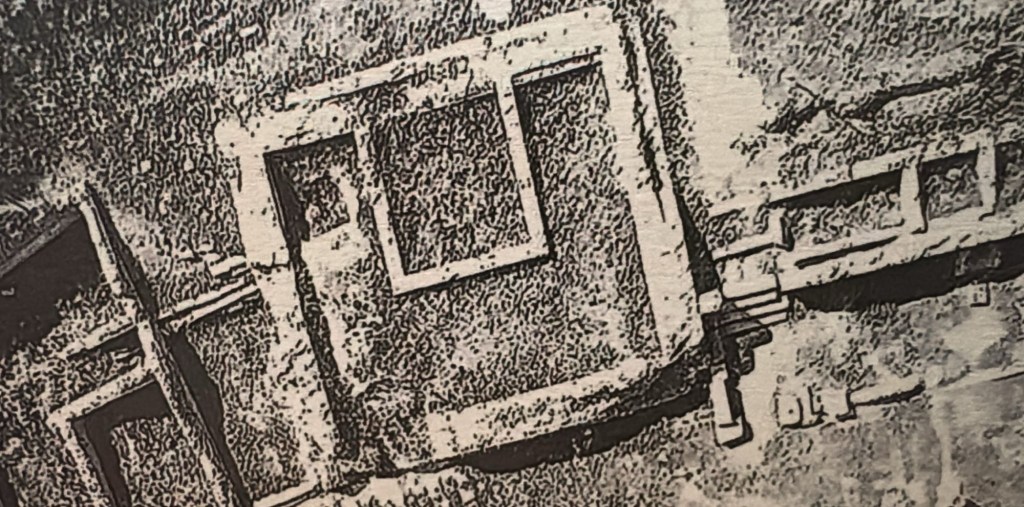
Today only the high podium remains; originally on the eastern side, towards the forum, there was an access stairway, which was eliminated following the transformations of the forum itself.
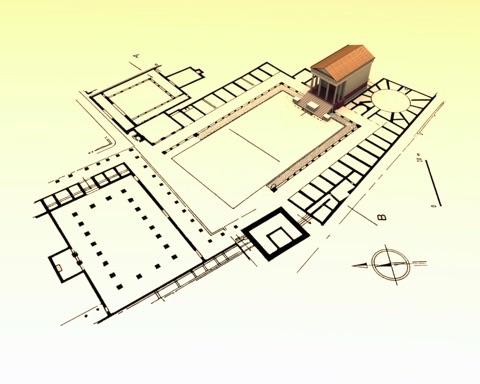
Temple A, facing the Basilica, was the main place of worship in Herdonia in the Imperial age. It was a monumental single-nave building, of which only the podium remains, preceded by a staircase.
Umane dell’Università di Foggia)
Its imposing façade dominated the southern side of the porticoed square. The building underwent significant modifications in Late Antiquity and maybe it was turned into a Christian church.
MACELLUM – Located in the southern corner of the forum is the macellum, the city market for the daily sale of fish, meat, fruit, and other foods, built in the 1st century AD and perhaps the best-preserved monument of the city.
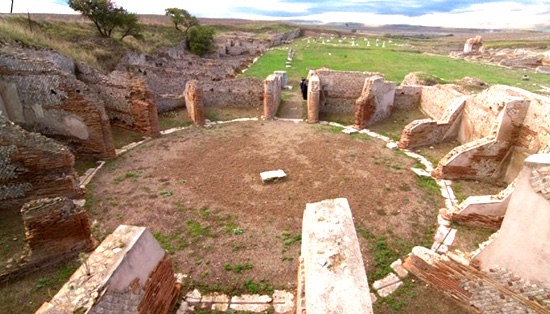
Commercial activities took place throughout the square, surrounded by numerous shops but this covered market was probably reserved for the sale of products like fish and meat which also posed problems of pollution and waste disposal.
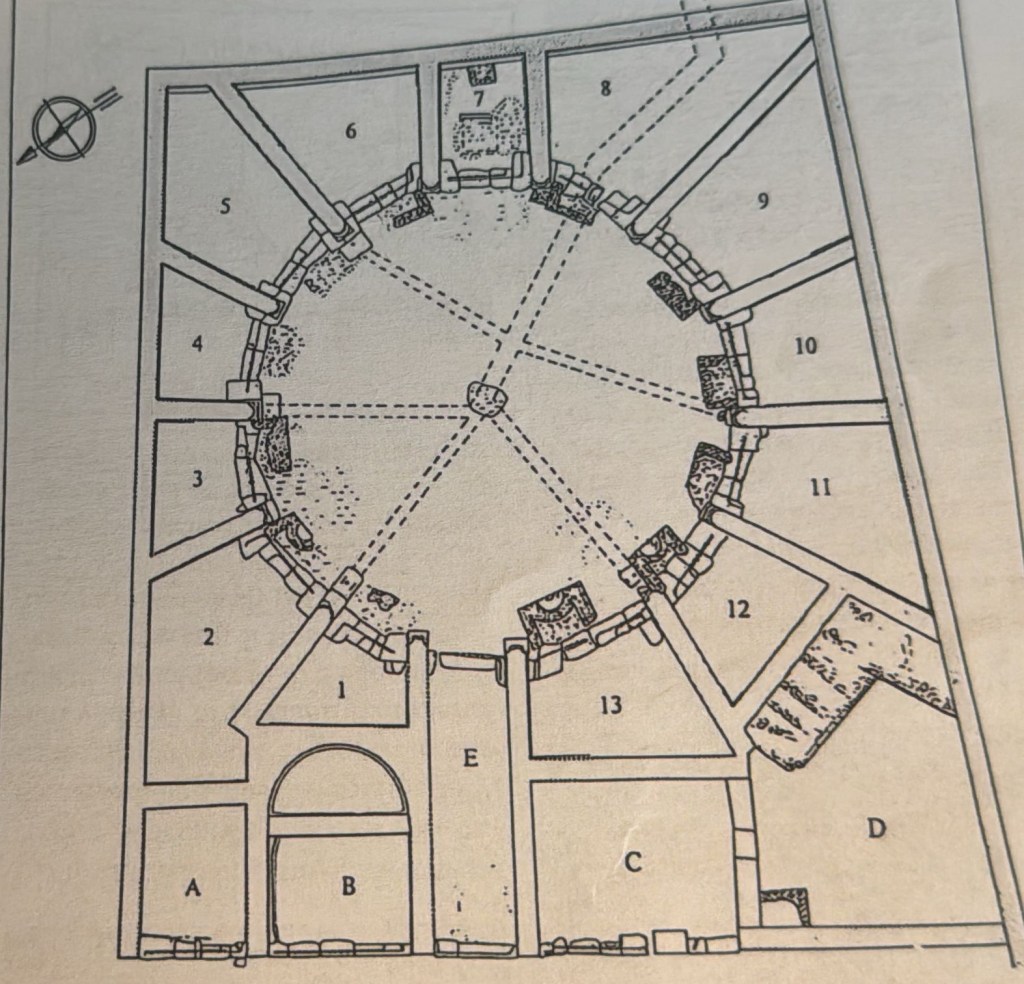
The central courtyard is circular (usually they were squared). There were 12 shops (tabernae) of different shapes and sizes, over which a gallery was placed on the first floor. The small room in front of the entrance served as a shrine (sacellum) in which a statue of Poseidon-Neptune was probably placed (it was venerated by the fishmongers).
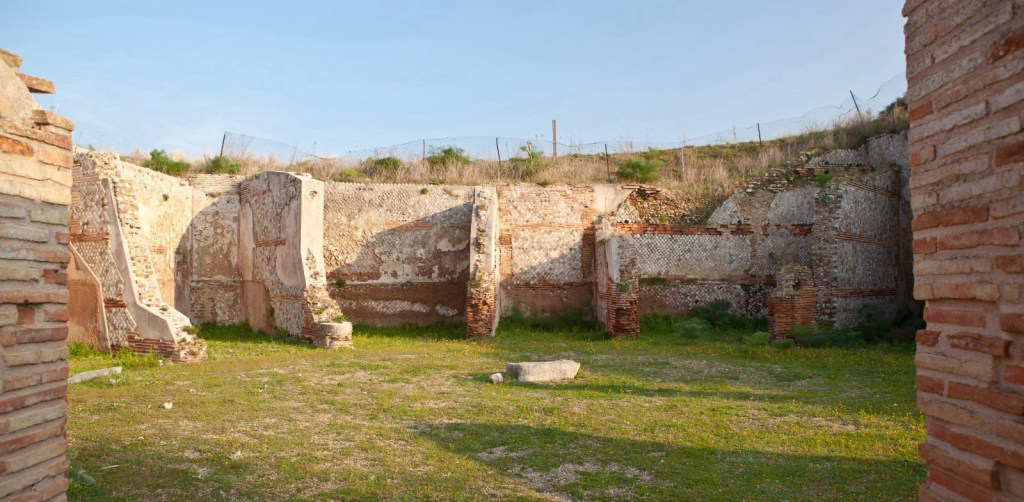
Under the floor there was a complex sewer system which guaranteed, in counter-slope, the flow of water (and of smelly waste) beyond the urban walls.
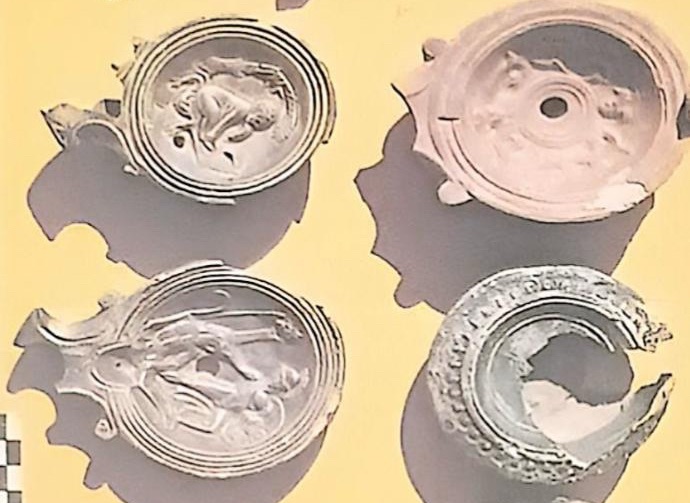
Behind the macellum, close to the city walls, was an artisans’ quarter, where ceramics for domestic use, tiles, and other building materials, as well as glass and metals, were produced.
THE BATHS – The baths are located west of the Via Traiana and are divided into frigidarium (cold room), tepidarium (warm room), calidarium (hot room) with distinct bathing areas.
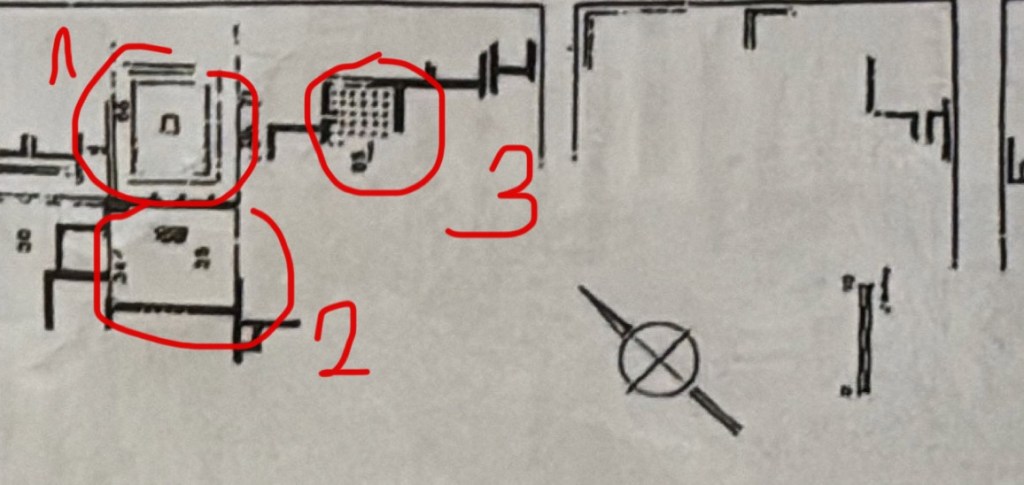
Three rectangular rooms of varying sizes stand out, one of which has an apse on the back wall, characterized by the presence of typical small square, quadrangular, or circular pillars (suspensurae), which supported a raised floor allowing the circulation of warm and hot air (hypocaust).
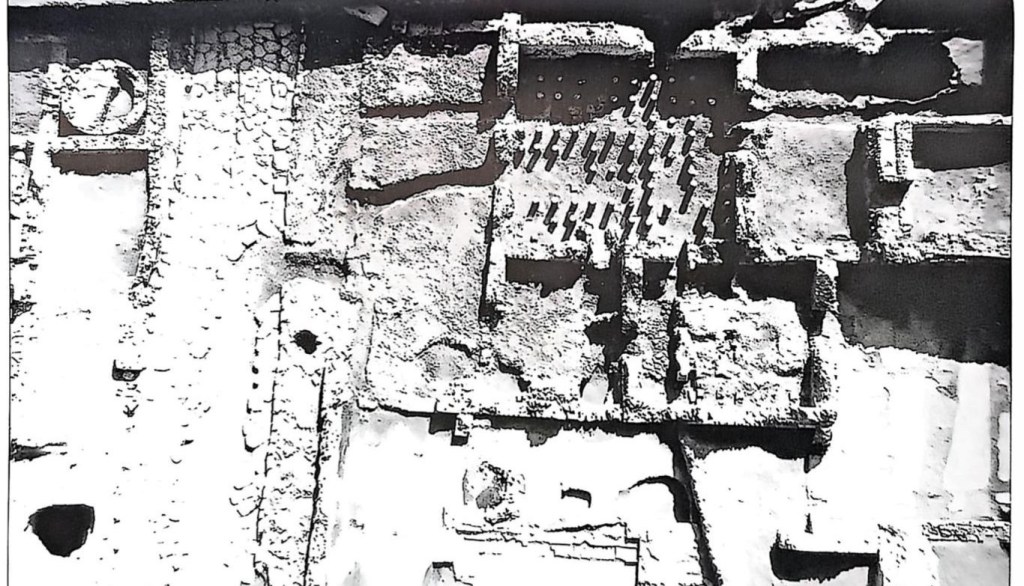
Along the walls are visibile some terracotta pipes (tubuli) for the passage of hot air to the tepidarium and the caldarium. The production of hot air was possible thanks to several ovens (praefurnia), fueled by wood and tended by the workers. Also partially visible are a porticoed corridor with a geometric mosaic (which perhaps extended around the gymnasium for gymnastic exercises) and a large room, perhaps the frigidarium with a valuable black-and-white mosaic depicting various types of fish. The baths must therefore have been characterized by a certain luxury.
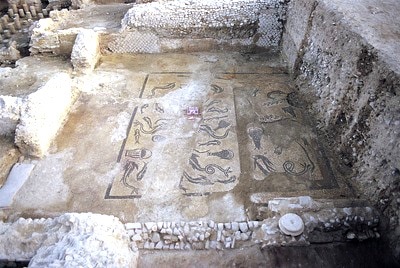
They were built as a bathing establishment (1st century BC) and underwent renovations with new splendid mosaics in the 4th century AD, after an earthquake. The white tessellated floors, with marble frames, are famous.
THE TWO DOMUS – Two private residences (domus) located near the amphitheatre and other public buildings, not far from the main city road which in the Imperial era would form the urban layout of the Via Traiana.
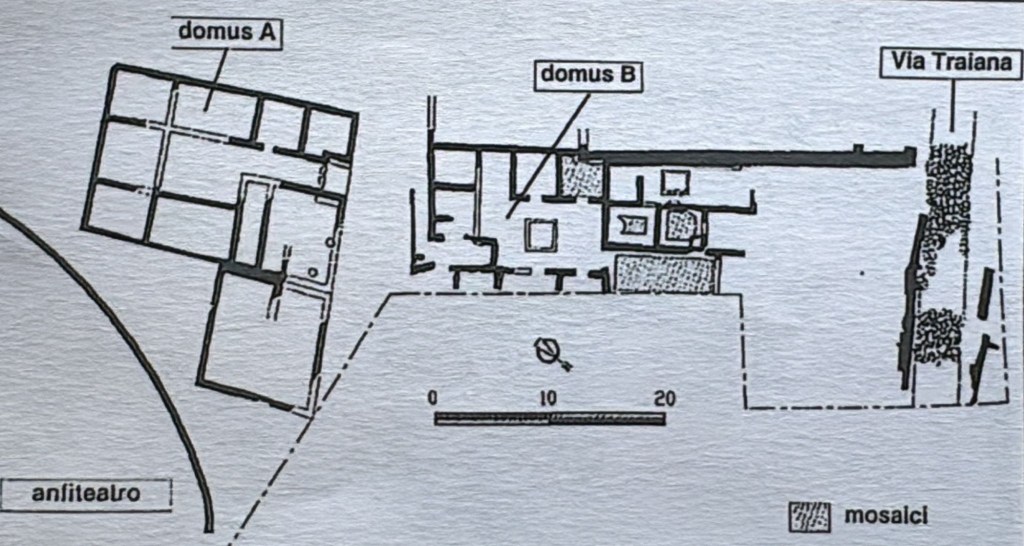
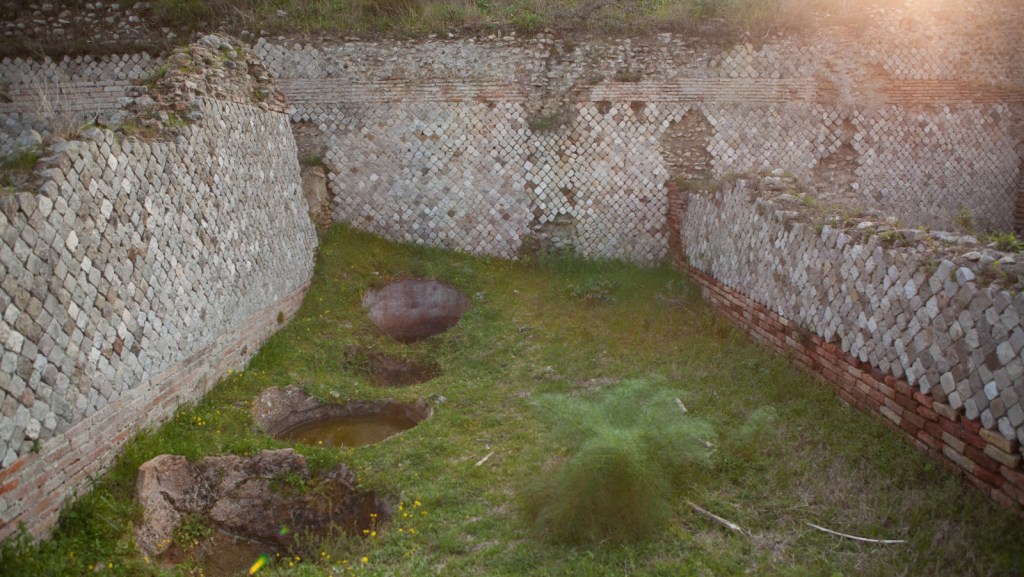
One (domus A), the only one fully exposed, features a series of rooms arranged around a central space, an atrium, beneath which is a large water cistern. It is accessed via a narrow corridor, flanked by two rooms, through an entrance that opens onto a cobbled street. The floors are made of simple white mosaics, and the walls are faced with opus reticulatum with brick corners and bands. In the Imperial era, this house would form the urban layout of the Via Traiana.
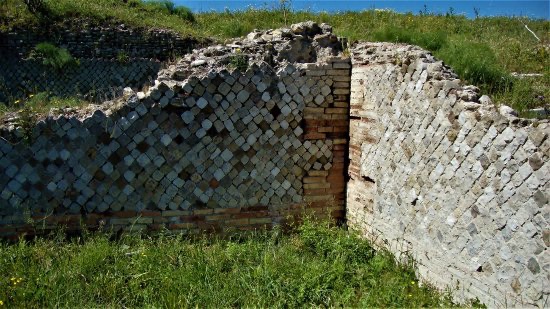
In the elongated room to the left of the entrance is a latrine with a deep cesspool, the filling of which yielded numerous materials. The construction dates to the 2nd-3rd century AD.
To the north of this domus, a large dwelling (Domus B) has been partially excavated adjacent to the so-called palestra and overlooking the Via Traiana. The domus was very long: built in the 1st century BC, it was used until at least the 4th or 5th century.
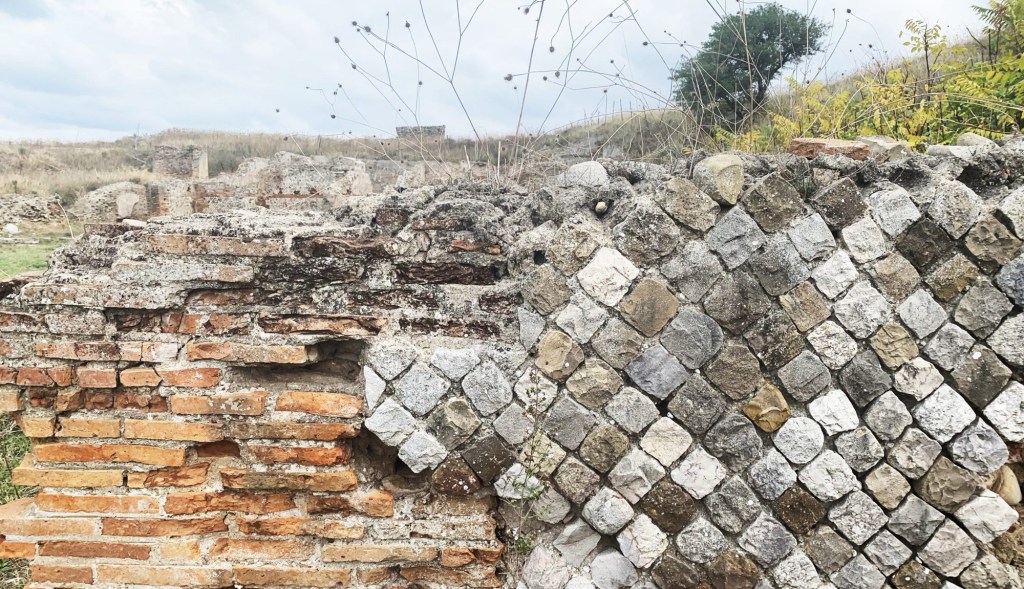
Various rooms are arranged around an atrium at the center of which is the impluvium. When the adjacent “gymnasium” was built, the house must have undergone modifications along its western side, now bordered by the perimeter wall of the new building. Some rooms of the house have simple red cocciopesto floors with hexagonal and rosette decorations (opus signinum), others have black and white mosaics with floral motifs and geometric decorations.
History and Roman Legacy
Herdonia arose on the foothills of the southern Sub-Apennines, bordering the Tavoliere plateau to the south. The Carapelle and Cervaro rivers flow through the plateau, already known in ancient times for its fertile plains, where wheat fields alternated with verdant pastures.
Inhabited from the Neolithic period, Herdonia became an important Daunian center from the 6th century BC. The Daunians were a Iapygian civilization that inhabited northern Apulia (modern Foggia province and the Gargano promontory) from the 7th to 4th centuries BC.
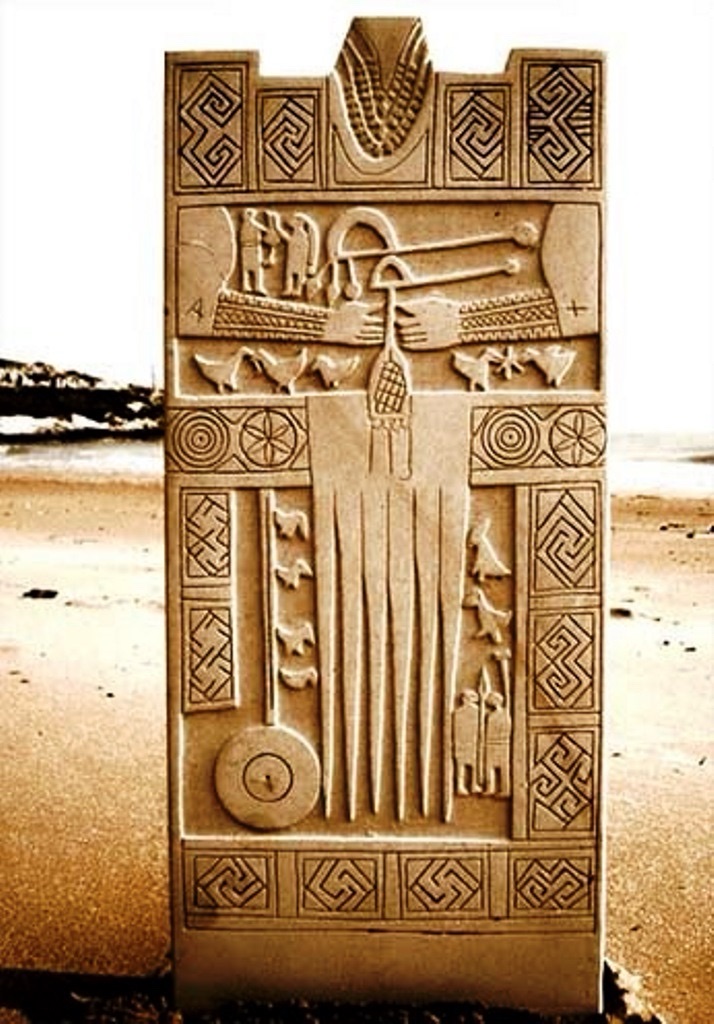
Known for their unique, highly decorated limestone funeral stelae and pottery, they were skilled farmers and maritime traders and they resisted early Greek cultural assimilation.
The Tavoliere plateau was the granary of Italy and Herdonia provided fodder for the flocks that descended each year from the mountains of Abruzzo and Molise, prompting a widespread transhumance along the sheep tracks (calles publici) that crisscrossed Daunia.
In 215, returning from Capua, Hannibal wintered in Arpi, and in 214, after reconquering Accua, Aecae and Herdonia, he set up his headquarters in nearby Salapia (see the next section). By 213, though, Arpi had fallen into Roman hands, thanks to agreements reached between Fabius Maximus and local magistrate Dasius Altinius.
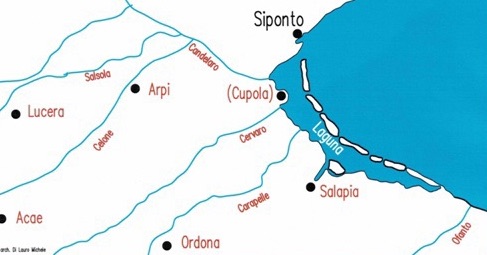
In 212, two Roman legions were massacred in Herdonia, and proconsul Fulvius Centumalus fell in battle near this city in 210. Salapia, though, was recaptured in 210, with the cooperation of its inhabitants and the consent of two principes, Blattius and Dasius, representatives of the two factions in command of the city, one pro-Carthaginian, the other pro-Roman. The Carthaginian regime meted out harsh punishments to the city of Herdonia.
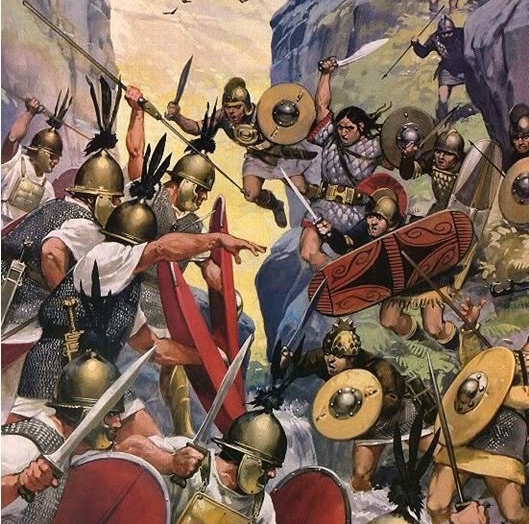
(© Angus McBride)
“Obscura” (obscure) is the term used by Silius Italicus, a Latin author of the 1st century AD, to define Herdonia. And yet in the the 2nd century AD the city reached its peak as a commercial, administrative, and monumental center.
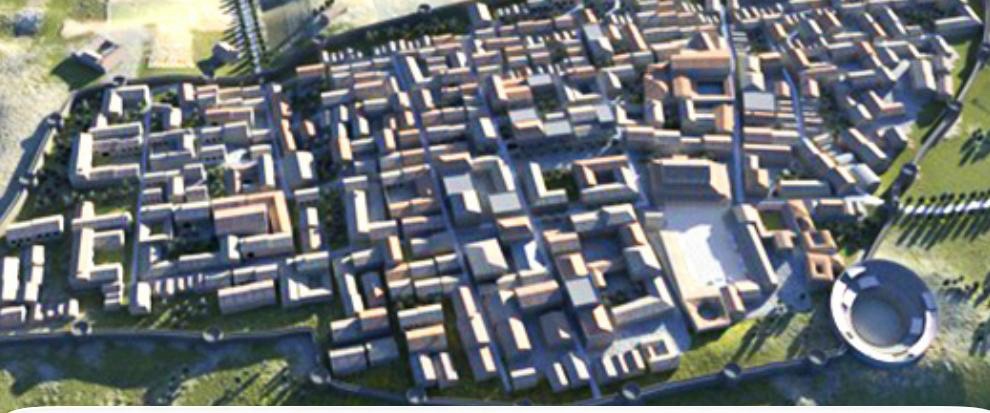
(www.archeologiadigitale.it)
In 37 AD the Roman poet Horace probably made a stop in Herdonia during a trip from Rome to Brindisi (he said he ate there “the best bread in the world”).
This centrality was maintained even during the crisis of the Roman Empire (3rd and 4th centuries AD). At the beginning of the 4th century it hosted the governor of the new province of Apulia et Calabria. In the 5th century AD, its commercial role was joined by the title of Episcopal see.
Herdonia was devastated by several earthquakes, the most destructive of which was the one that hit the area in 346 AD.
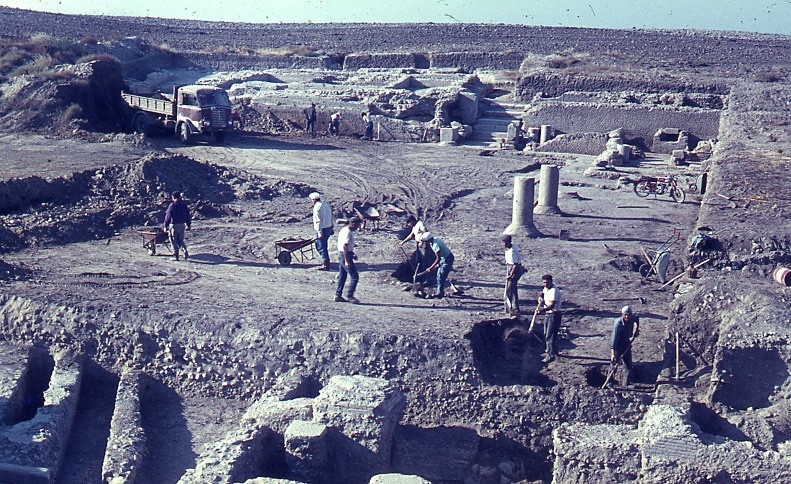
In 1962 a team from the Institut Historique Belge de Rome, led by archaeologist Joseph Mertens of the University of Louvain, discovered the site of the Roman city and brought it back to life.They arrived in November and began excavating an area that few had truly explored using scientific methods.
The first campaign lasted 30 uninterrupted years. During that time, Herdonia became an international archaeological attraction: hundreds of students from Belgium, Italy, and other countries came here for their first field excavation experiences. In 1993, the Belgian team was joined by an Italian team, led by Professor Giuliano Volpe of the Universities of Bari and Foggia. The results are documented in 13 volumes of the scientific series “Ordona” (1965–2021), known throughout the academic world, but this site is mostly ignored by tourists.
Ancient Rome Itinerary
SALAPIA – At less than 50 km from Ordona, in Contrada San Vito at Trinitapoli, near Cerignola, the Archaeological area of Roman Salapia is of great interest. At the request of its citizens, Salapia was refounded in the Roman era (late 1st century BC) by M. Hostilius in a healthier location, on the northwestern shore of the Margherita di Savoia salt pans, the largest in Europe.
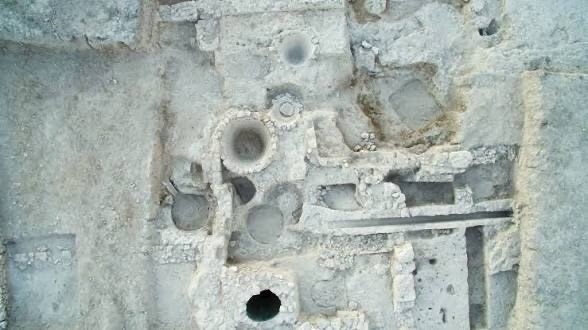
It is a fortified Roman city in the Capitanata area, covering approximately 18 hectares and therefore slightly smaller than Herculaneum. Excavations have brought to light an entire “district” likely dedicated to the tanning of hides and the washing of wool and fabrics.
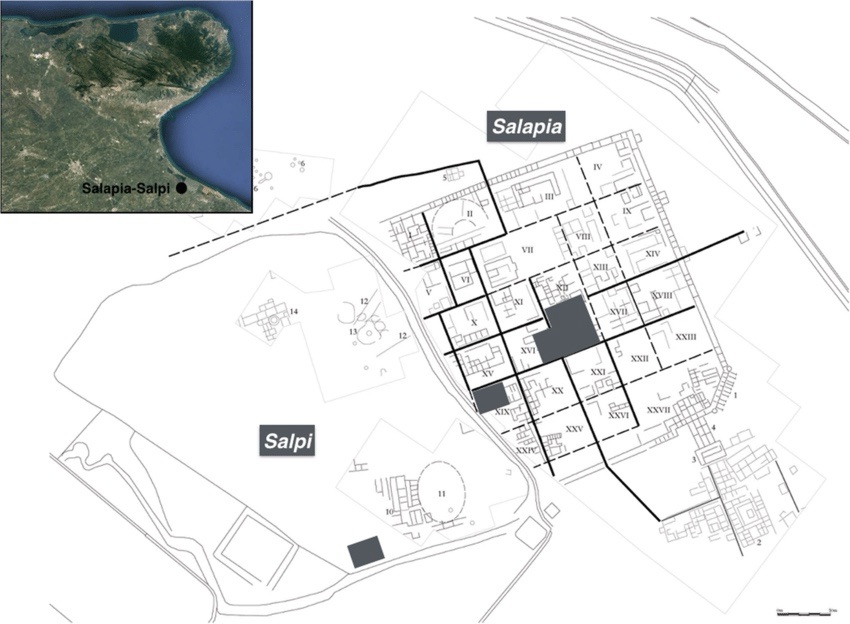
It is one of the few, if not the only, purpose-built Roman “industrial zones” known today in southern Italy, and similar examples still exist today in Morocco.
For the visita you may contact +390805275451 https://www.facebook.com/progettosalapia/
Useful Informations for Ordona
It us possibile to visit the Archaeological Museum (in Via Soldato Felice Pasculli 3, Ordona) only with a reservation:
Mobile: +393738384202 museo.herdonia@comune.ordona.fg
The Archaeological Area is in Contrada Cavallerizza. The entrance is free.
+390885796221
https://www.facebook.com/p/Parco-Archeologico-Herdonia-100057339886298/
Our ‘Tabernae’, where to Eat
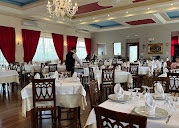
SAPORI DI SICILIA – This restaurant serves Mediterranean cuisine, seafood and pizza near the Herdonia Archaeological Museum. Viale Pietro Mennea – Ordona +390885796415
 Italy as the Romans did
Leave a comment