- The ‘Must see’ – The battlefield
- History and Roman Legacy
- Ancient Rome itinerary
- The ‘Fun Fact’ – Busa, the pitiful widow
- Useful Informations
- Our ‘Tabernae’, where to eat
The ‘Must see’ – The battlefield
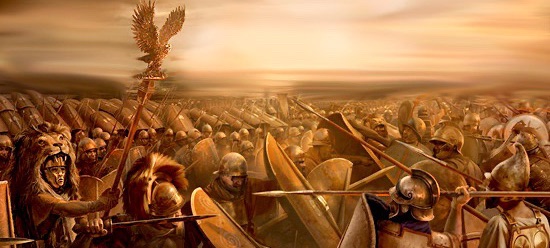
It is one of the most famous battles in Ancient history and it is still described in military textbooks: on the 2nd of August of 216 BC, on the plains near the Adriatic coast of Apulia, in southern Italy, Carthaginian commander Hannibal Barca’s outnumbered forces crushed a massive Roman army, delivering one of the worst defeats Rome ever suffered.

The Battle of Cannae lasted one day and it is remembered for the famous double envelopment tactic used by Hannibal. It was the final in a series of crushing defeats suffered by the Romans in the Second Punic War.
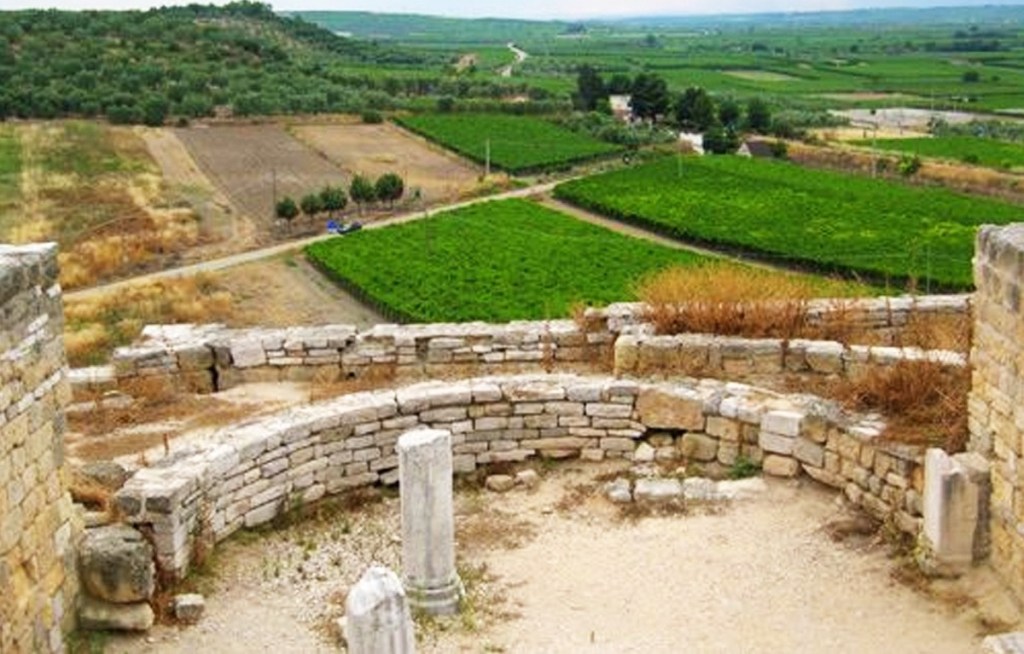
The town of Canne della Battaglia stands on a hill along the Lower Ofanto Valley, not far from the modern city of Barletta on the Adriatic coast. Canosa di Puglia and Andria are the other nearest towns.

The battlefield is in the middle of an archaeological park excavating the ancient hilltop town of Cannae itself.
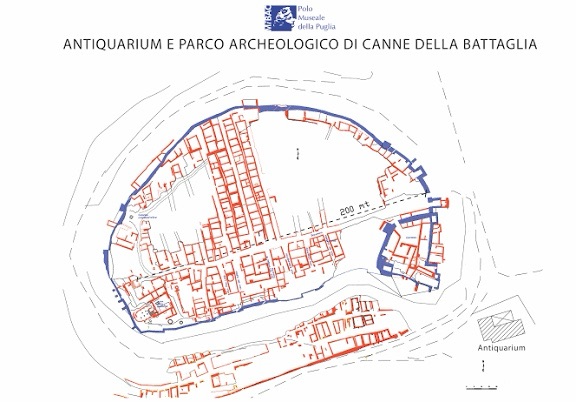

THE MUSEUM – The Antiquarium, located at the foot of the fortified citadel, houses the museum exhibition.
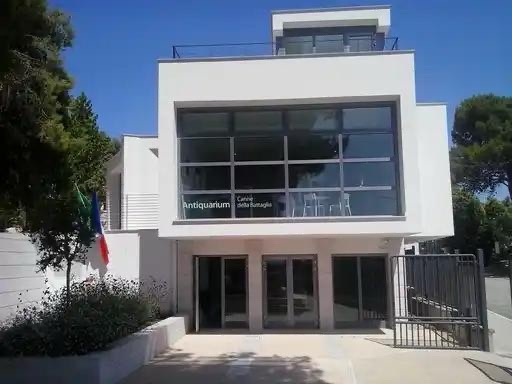
The large windows enhance the connection with the archaeological remains and the pristine natural setting.
The epic battle is narrated through the screening of the 15 minutes video “Apud Cannas,” presented in an engaging and captivating 3D version.
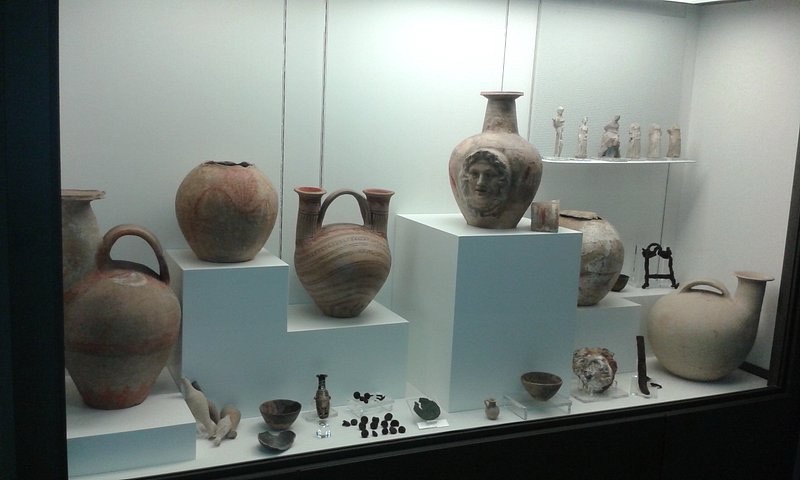
The current exhibition itinerary, inaugurated in 2017, covers the Neolithic civilization, the development of social groups of the Daunian culture, the transformations linked to the presence of Rome in northern Puglia, the medieval civitas until the abandonment of Cannae. The itinerary, chronological and thematic, projects visitors from the spaces of the museum area to the grand scenario of the battle between the Romans and the Carthaginians.
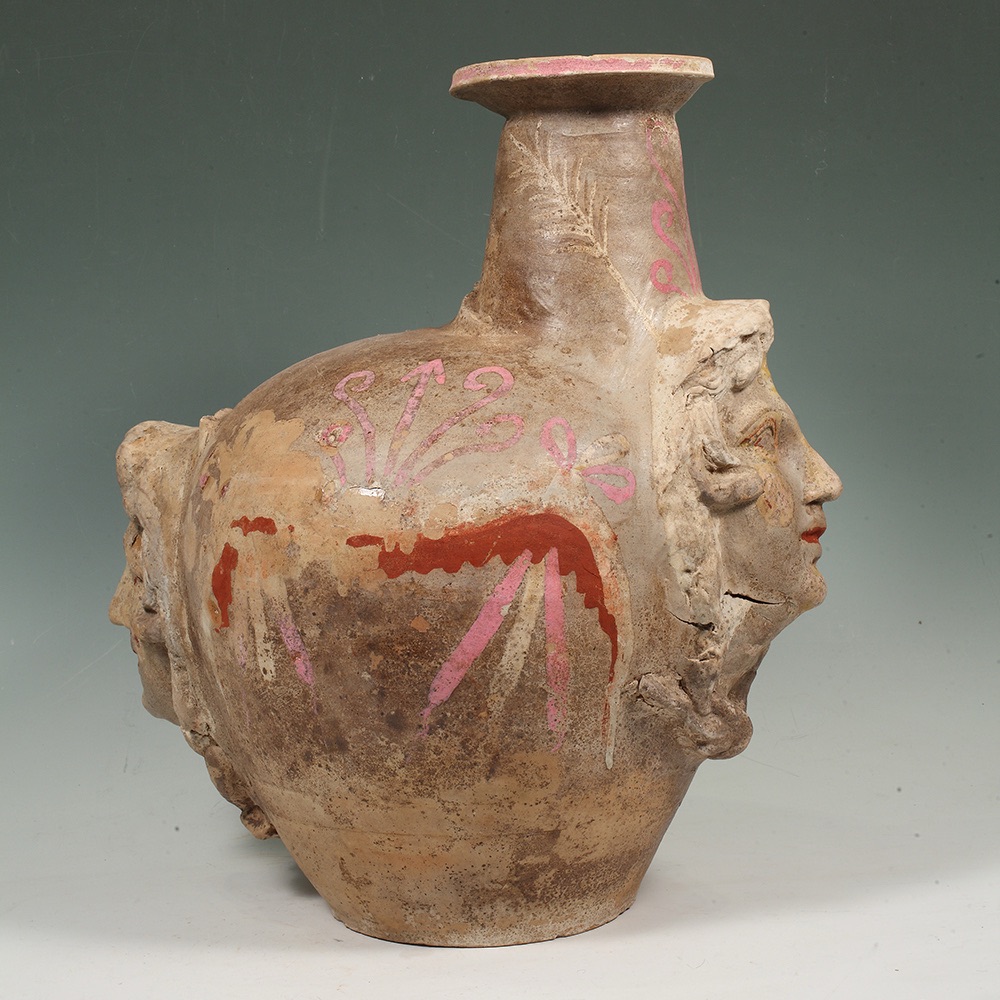
The museum’s five chronological sections are complemented by a sixth dedicated to Hannibal’s presence in Italy during the Second Punic War.
Among the Roman jewels of the Antiquarium is a 3rd-2nd century BC Askos, an ancient pottery vessel (the name comes from the Greek word for tube) used for pouring liquids like oil or wine.
Roman epigraphs are a precious legacy offering direct windows into Roman lives, beliefs and social structures. In the Antiquarium there are several found in nearby Canosa. One is a boundary marker from the 1st century AD, under Emperor Vespasianus, another one celebrates the construction of walls.

(Imperator Caesar Vespasianus Augustus co(n)s(ul) VII fines agror(urum) public (orurum) m(unicipii) C(anusini) ex formis publicis restituit. The emperor Caesar Vespasianus Augustus, restored the boundaries of the public lands of the municipality of Canosa.

In front of the Antiquarium lies a vast space from where a panoramic avenue leads up to the area of the Apulian village and burial ground. The village is estimated to have reached its peak between the 6th and 3rd centuries BC.
THE CITADEL – You can admire the sections of Roman walls made of large limestone and climb up the hill to walk among the remains of the Roman and medieval era.
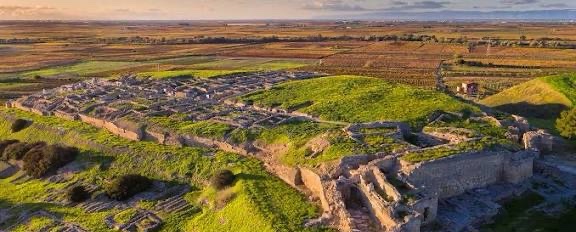
From the hill you dominate the ‘Plain of Blood’ of the famous battle and looking towards the Adriatic Sea you can imagine the two armies facing each other, with the Ofanto river on your left.
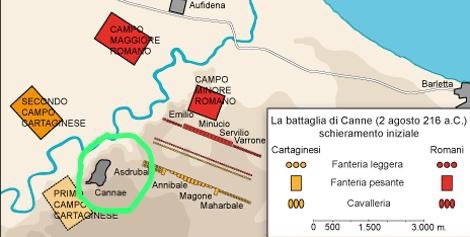
The 80-90,000 men on the Roman side would be in front of you and on the left the 50,000 at the orders of Hannibal would give their backs at Cannae. The hill overlooks the entire horizon as far as the promontory of Gargano, the ‘spur’ of the Italian boot.

A residential nucleus already existed on the hill before the Hannibalic War. Livy speaks of a polis with an acropolis that during the war acted as castrum, a fortified military camp. Cannae occupied the entire hill, probably extending down to the western bank of the river.
The settlement structure of the citadel declined after the Hannibalic War but it fully regained its vitality during the Imperial Age.
In the citadel you will see the medieval castle and then you can walk along the main axis of Cannae, the decumanus, which crossed the small town longitudinally from east to west surrounded by residential areas and shops or tabernae. The buildings survived the Roman era and were used in the Middle Ages.
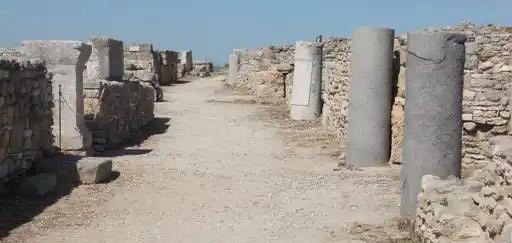
The Roman honorary columns and bases still visibile were aligned along the decumanus in Medieval times as ornaments. These include granite columns, inscriptions, cippi and statues from disused monuments.

Finally you arrive at the remains of two early Christian basilicas (major and minor). These kind of sanctuaries built in the 4th and 5th centuries were not similar to pagan temples but the Roman basilica, which served as a hall of assembly,
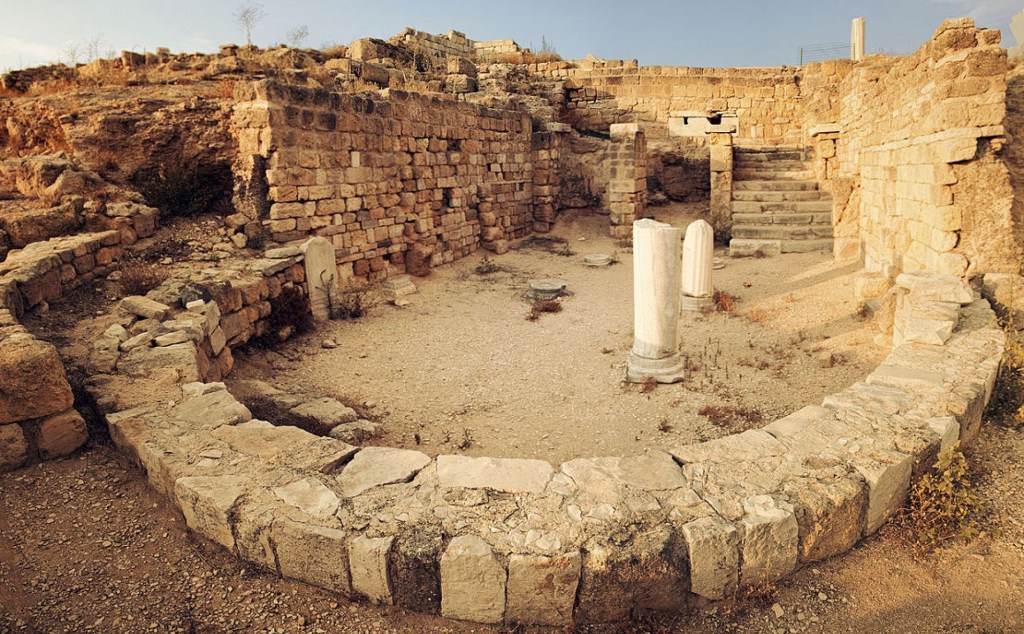
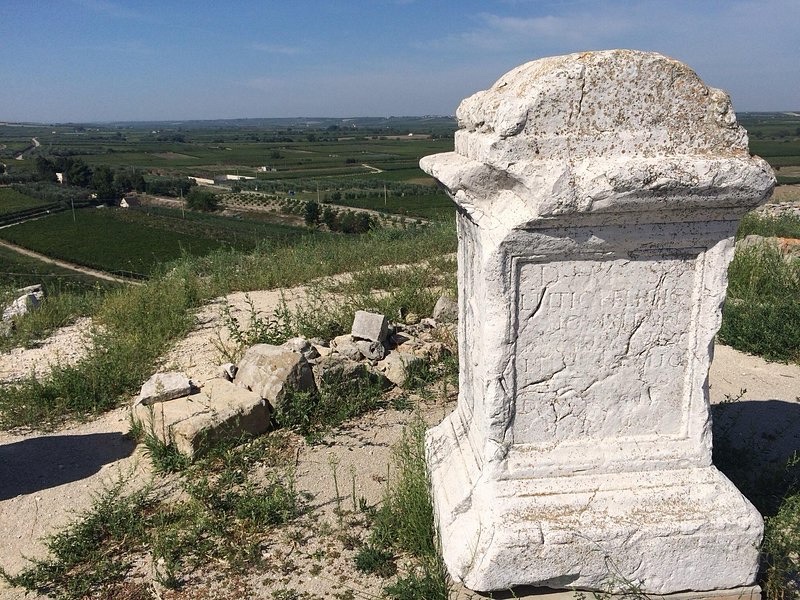
In a panoramic corner you can see an isolated three-meter-high Roman granite column, found during the excavations. On the base in 1938 were engraved the words of Livy and Polybius about the battle.
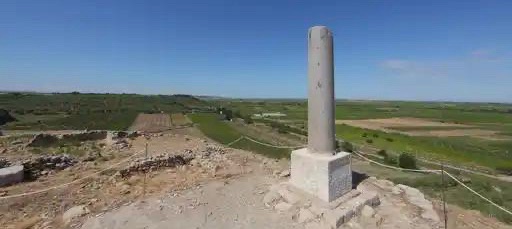
The Latin Inscription, on the left side of the base, is taken from Livy’s Ab Urbe condita: NVLLA ALIA GENS TANTA MOLE CLADIS NON OBRVTA ESSET (it can be translated as “No other people could have resisted such ruin”).

The Polybius quote is “They were brave men, and worthy of Rome.”
Recent excavations near the Cannae station have revealed a bath complex of San Mercurio from the 1st century AD with a cistern and its water system. They were part of a larger complex of structures from the Antonine period (dating back to around the 1st-2nd century AD), presumably belonging to a large private villa.

History and Roman Legacy
Cannae, universally known for the battle of 216 BC stands on the hills overlooking the valley of the Ofanto river, to which the settlement owed its prosperity from the Neolithic to the Late Middle Age.
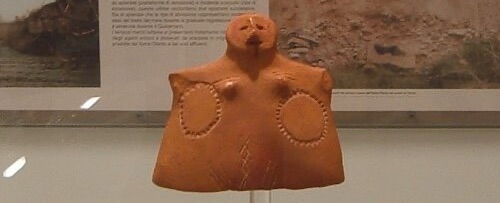
Just 9 km away from the sea, Cannae, like many Apulian cities, originated between the 6th and 4th centuries BC as a simple village, the offspring of prehistoric settlements dating back to the Iron Age.
In Roman times, it became a vicus (a village within a rural area) and the river emporium for the city of Canosa that is only 9 km away.
THE BATTLE – The Second Punic War was fought in the Italic penisula: rather than confronting Rome at sea or in Spain, Hannibal took the bold step of invading Italy itself. He bravely crossed the Alps with his army, including elephants. Although he lost many men during the journey, he arrived in northern Italy and won major victories at the Trebbia (218 BC) and Lake Trasimene (217 BC).
Rome appointed Quintus Fabius Maximus as dictator and his cautious strategy of avoiding direct confrontation came to be known as “Fabian tactics.” But when Hannibal moved to threaten Cannae, a key Roman supply center near the Adriatic, the Senate decided to face him head-on.
The Roman consuls for the year, Lucius Aemilius Paulus and Gaius Terentius Varro, gathered Rome’s largest army yet – about 80,000 infantry and 6,000 cavalry. On August 2, 216 BC, Varro was in command (the consuls alternated days). Despite Paulus advising caution, Varro decided to engage Hannibal directly.

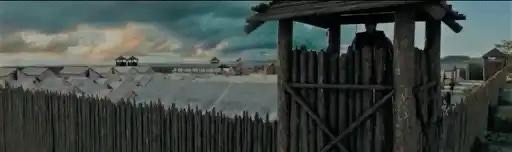
Hannibal, before the arrival of the new consuls, moved south with his troops from Geronium (in today’s region of Molise, near Casacalenda) and occupied the fortress of Cannae, a strategically advantageous position. The Romans positioned themselves between the Aufidus (Ofanto) river and nearby hills, deploying 70,000 infantry in the center, flanked by 1,600 cavalry on the right (commanded by Paulus) and 4,800 allied cavalry on the left. A reserve force of 10,000 triarii remained in the camp.
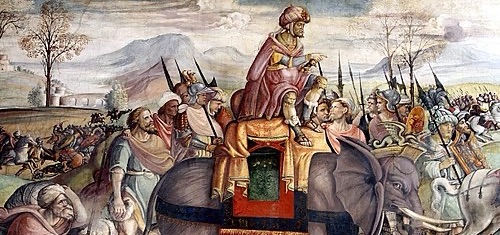
Hannibal’s army was smaller, with about 40,000 infantry and 10,000 cavalry, including Numidians, Spaniards, and Celts. Aware that Romans preferred head-on attacks.
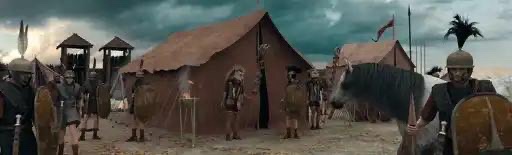
Hannibal set a genial trap with his double envelopment strategy, surrounding and destroying a larger army. He placed his weakest troops in a curved formation at the center, with his strongest forces – Libyans and Phoenicians – on the flanks. Hannibal’s strategy aimed to establish an “elastic defense”, absorbing the Roman thrust while enveloping their flanks.
The ground was dry and dusty and Hannibal used to his advantage the Volturnus wind (so called for its blowing from the peaks of Mount Vulture) arranging his troops so that dust would blow into the Romans’ faces and blind them. His cavalry played a decisive role, not just in defeating the Roman horsemen but in encircling the infantry.
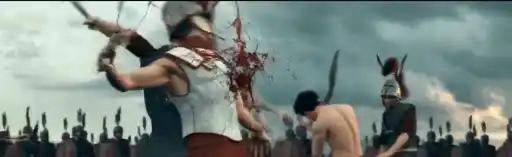
The battle went just as Hannibal wanted: at first the legions advanced at the center but the Carthaginian flanks held firm and then swung inward, wrapping around the Roman formation. Meanwhile, Hannibal’s cavalry had pushed away Roman horsemen and then it went back to attack the Roman infantry from behind.
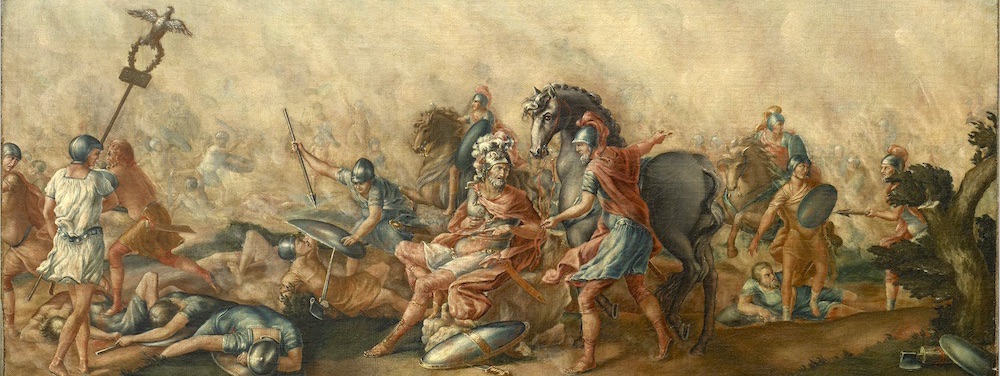
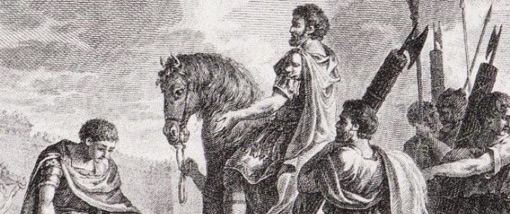
The consul refused to flee after the defeat when military tribune Lentulus offered him to mount a horse and escape with him.
The Roman army was surrounded on all sides: with no room to maneuver and no cavalry support, the tightly packed Roman soldiers were cut down. According to Livy, 48,000 Romans were killed and 19,000 were taken prisoners. Carthaginian losses were minor by comparison but the total tall of 60,000 dead in one day is more than the American casualties in nine years of war in Vietnam.

The rout at Cannae taught Rome an important lesson. It reformed its army, strenghtened its cavalry and adopted more flexible strategies. These improvements allowed Romans to win later battles and ultimately defeat Hannibal at Zama in 202 BC, ending the Second Punic War.
As a consequence of the battle, Cannae was depopulated. In the 2nd century BC, three neighboring villages disappeared and Cannae itself also declined. But nearby Canosa soon rose again to become one of the most important cities in southern Italy due to its loyalty to Rome.
Cannae benefited from this growth as its main commercial hub thanks to its port at the mouth of the Ofanto River, which connected it to the nearby port of Barletta (Bardulos), in the Adriatic Sea.

In the 1st century BC Cannae and Canosium (Canosa) were in the Italic League in the revolt against Rome. Consul Gaius Cosconius was sent to Apulia with his soldiers and he devastated Cannae and then laid siege to Canosa, which, however, did not surrender. When the Samnite reinforcements arrived, tradition holds that the two armies confronted each other on the Ofanto River, and that Cosconius pretended to retreat while the enemy was crossing the river to then attack it causing the slaughter of 15,000 men.
After the Italic or Social War, in 88 BC Rome granted citizenship to all its allied cities, including Canosa and Cannae, which became municipalities with a certain administrative autonomy.
In the Imperial Age, under Tiberius (1st century AD), the Empire’s great agricultural market in Apulia was supplanted by Sicily and Spain. In 114 AD, however, Trajan ordered the construction of an alternative road to the Appian Way, which took his name.

The 300-kilometer road ran from Benevento to Brindisi: it skirted Cannae before it arrived to the sea. A bridge was built over the Ofanto River.
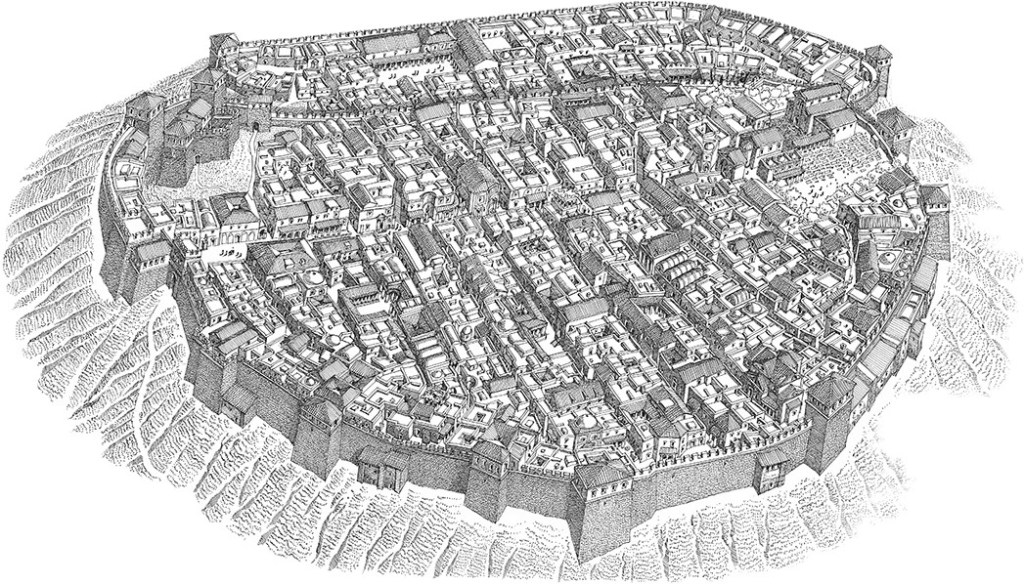
(Reproduced with the kind permission of Fondazione Francesco Corni)

(Reproduced with the kind permission of Fondazione Francesco Corni)
With the fall of the Western Roman Empire, Cannae was destroyed by Totila’s Ostrogothic troops in 547 AD during the Gothic War. After a slow recovery, the city of was reborn and continued to exist in the shadow of Canosa until the latter’s destruction by the Saracens in 872 AD. It thus gained new importance with the establishment of a diocese, whose bishopric, Saint Roger (patron saint of Barletta), took office in 1100.
Ancient Rome itinerary
CANOSA – Once an important Roman colony known as Canusium, it preserves significant remains from antiquity, including tombs, mosaics, and early Christian catacombs. It is known locally as ‘Little Rome‘ due to the fact that it is built over seven hills.

In the Villa comunale, the gardens contain a monument dedicated to Scipio Africanus and a lapidarium, a collection of archaeological finds including sections of columns and lintels with inscriptions of Roman and Daunian origin.
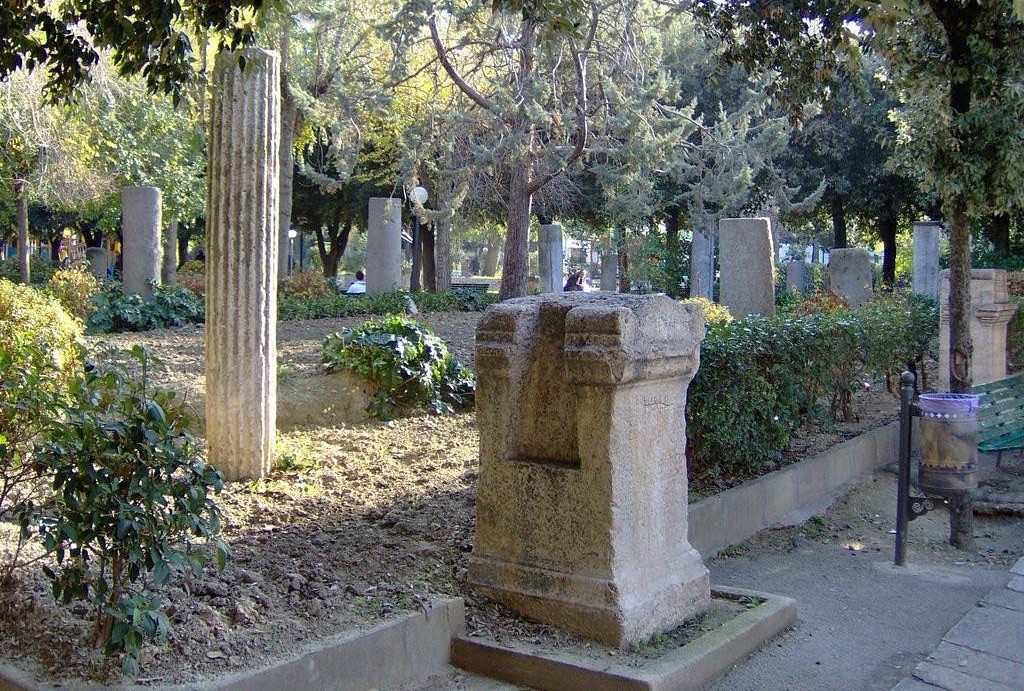
Along the tree-lined avenues, you can admire epigraphs, columns, architraves, capitals, and other architectural elements from ancient villas.

Below the city are ancient tombs (named ‘hypogeum’ because they are underground) which were used for burials and worship from 6000 BC to 200 AD.
A number of these are accessible today, decorated with frescoes. In Via generale Luigi Cadorna is the Hypogeum Lagrasta.

Located inside a high school, Liceo Scientifico Enrico Fermi on Viale Iº Maggio, 58, is the Hypogeum of Cerberus.

On a hill south-east of Canosa you can’t miss the San Leucio Archaeological Park (Strada Comunale Santa Lucia).
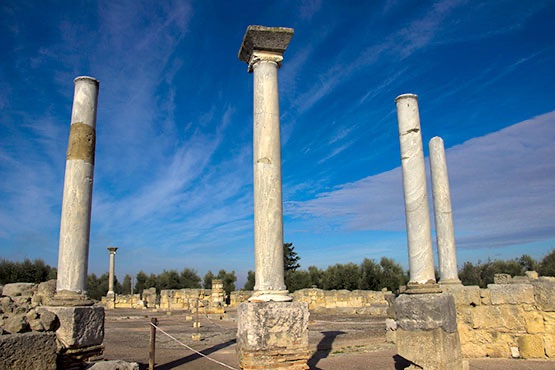
On the hill Romans dedicated a temple to the goddess Minerva, which was destroyed at the end of the 5th century AD. An early Christian basilica was later built on the ruins and dedicated to Saint Leucio.
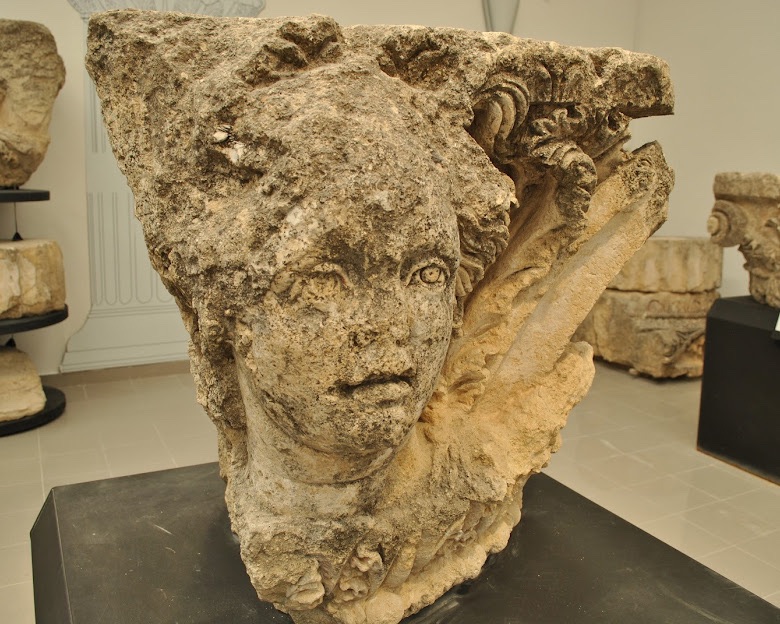
There is an Antiquarium housing many artifacts from the Temple of Minerva and the Christian basilica.
ROMAN BRIDGE ON THE OFANTO RIVER – The Roman Bridge on the Ofanto River dates between the 1st and 2nd centuries and stands on the ancient Via Traiana (Trajan’s Way) which provided the link between Canosa and the Daunia territory for centuries.

Approximately 3km from the centre of Canosa, the bridge has an imposing “donkey-back” structure, which balances on a solid construction of oak wood covered with plaster.

It is articulated in 5 round arches, supported by enormous pillars with pointed bases. Its central span was probably one of the longest among the bridges of the Roman age. A pathway was built in the cement during World War II so that tanks could pass by. The arch has undergone many restoration works over the centuries while the pillars, supports and foundation plateau have remained untouched.
The ‘Fun Fact’ – Busa, the pitiful widow
The rout at Canne brought shame on Rome but it left the Republic with some new heroes. The tribune Publius Sempronius Tuditanus led hundreds of survivors to Canosa, daring to pass in front of the Numidian cavalrymen and to resist their attacks. In Canosa there was a noblewoman, a rich heiress, who helped Roman soldiers and was honored by the Senate for her generosity. She was a widow and she supplied them with grain, clothing and money.

Her name was Paola Busa, she descended from a wealthy family of Greek merchants, the Busos, and had inherited the administration of their estates, which she operated with great responsibility. For her wisdom, she enjoyed a great following and respect among her fellow citizens.
In 216 BC she not only opened the doors of her house but also of the pantry. She sent the servants out to buy more food and she gathered all the surgeons of Canosa. Once Hannibal had left, Livy narrates that Busa completed the work by providing the survivors with the clothing, footwear, horses and carriages to allow them to return to Rome. Hence, at the end of the war, Rome’s gratitude.
Livy described Busa as a very wealthy patrician, ‘compassionate’ and of exemplary Roman sentiment.
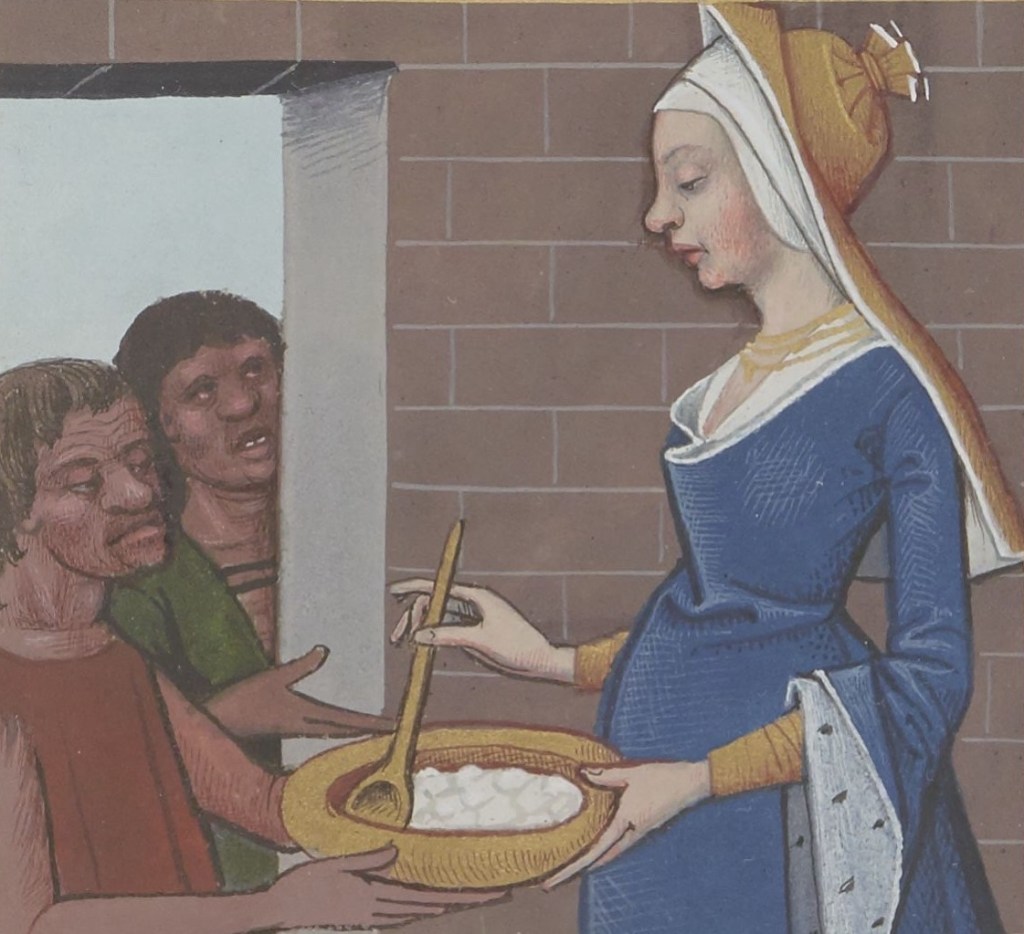
Busa’s fame resonated throughout the Middle Ages and we find her among poet Giovanni Boccaccio‘s famous women.
She is considered a precursor of the International Red Cross and in Canosa di Puglia there are still ruins of a Roman house, in the heart of the city, which according to tradition corresponds to the house of Busa.
Useful Informations
To get to Canne della Battaglia, the best base is Barletta: you can get there by car (A14 Barletta exit, then SP142) or by train (Barletta station), and from there take a taxi, a local bus, or drive about 10-14 km to the archaeological park along SP142. The nearest airport is Bari (BRI), from which you can continue by train, is or car.
For the visit of the archaeological park and Antiquarium check the opening times at the site of Museo e Parco Archeologico Canne della Battaglia The park is usually closed on Sunday, Monday and Tuesday.
• From October to March: 9 am – 5,30 pm
• From April to September 10 am– 6.30 pm
Tickets: 6 euro (2 euro from the age of 18 to 25)

CANOSA – San Leucio Archaeological Park (Strada Comunale Santa Lucia) (+39)333.8856300 info@canusium.it
Our ‘Tabernae’, where to eat
CASA 28 CUCINA E CAMERE CANOSA –
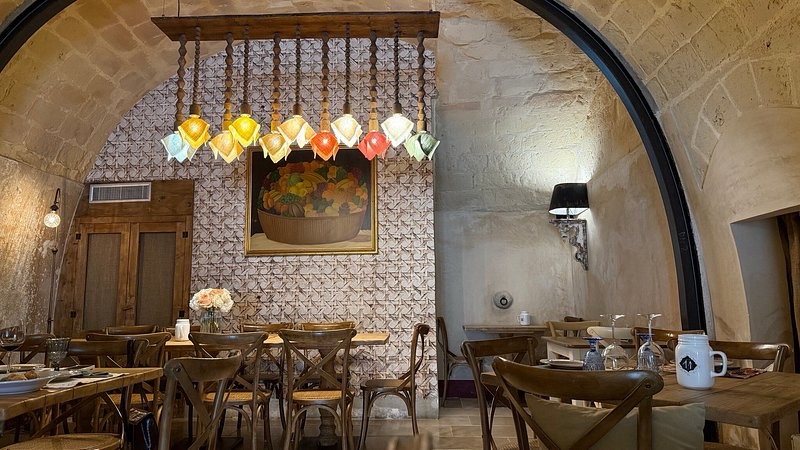
Vico Ticino 15, 76012 Canosa di Puglia +39 333 442 2938
A 20 minutes drive from Canne della Battaglia, in Canosa di Puglia, it offers typical cuisine from Apulia with fresh and high quality ingredients.
 Italy as the Romans did
Leave a comment