The ‘Must See’ – The MAN, more than a museum
Founded in 181 BC for defensive and commercial purposes, Aquileia soon became one of the main Roman ports on the Adriatic Sea, a great cosmopolitan city at a crossroads of religions and cultures.

This city in the North-eastern region of Friuli-Venezia Giulia is only 10 km. away from the golden sand beaches of Grado and it is part of Unesco World Heritage since 1988.
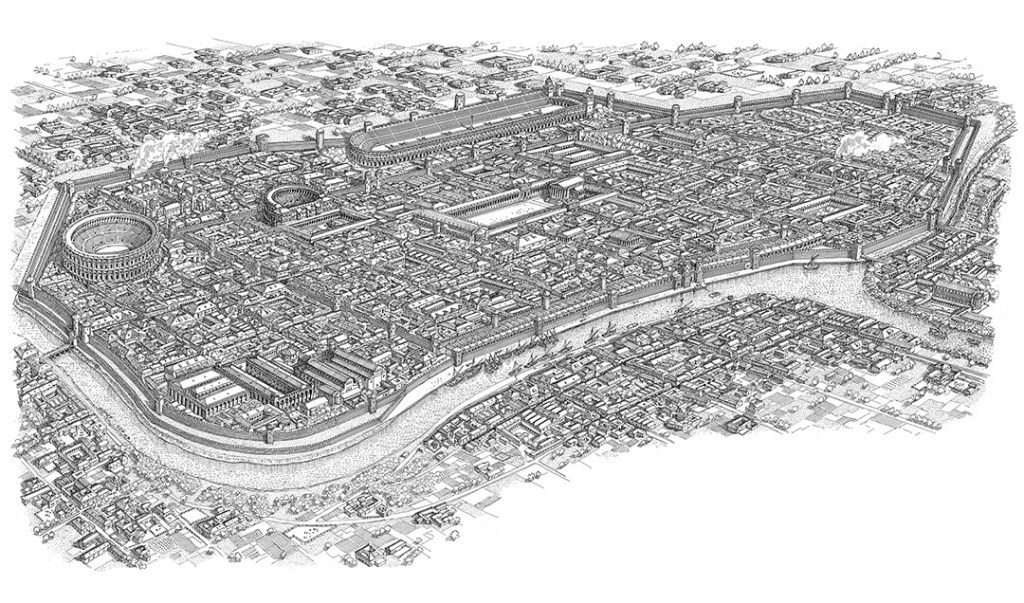
Aquileia, today inhabited by 3,000 people but with a population of more than 100,000 in Roman times, is an open air museum itself with the spectacular ruins of the Forum, the Roman port, the necropolis and several Domus. Its visit may well start from the National Archaeological Museum (MAN in the Italian acronym), a real treasure chest for anyone who is interested in Roman history.
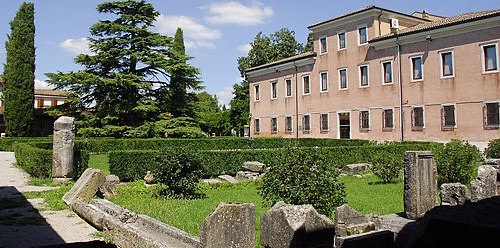
The Museum was established by the Habsburg Monarchy in 1882 in a Villa that belonged to the Cassis Faraone family. The inauguration of the Imperial Royal State Museum or Caesareum Museum Aquileiense, took place at the direct initiative of the Austrian Emperor Franz Joseph.
Trade brought people from all over the Mediterranean to Aquileia, giving it an exceptional cosmopolitan character, documented in the Museum through inscriptions, funerary steles, portraits, statues of different divinities and commonly used artefacts of different origins.
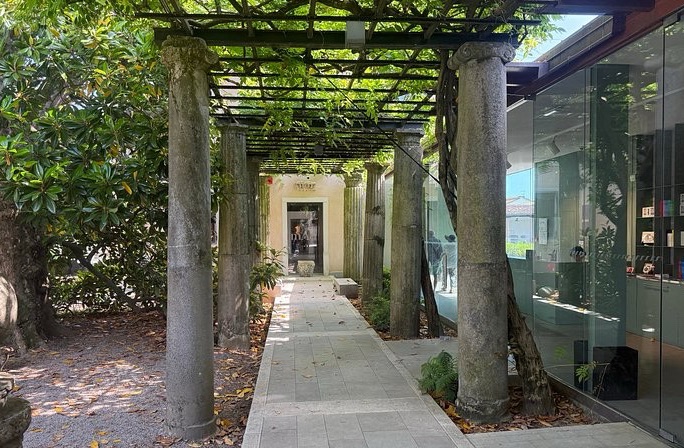
GROUND FLOOR
The itinerary opens on the ground floor with a room where the visitor can orient himself within the city and the overall geographical framework in which Aquileia was built in the 2nd century BC
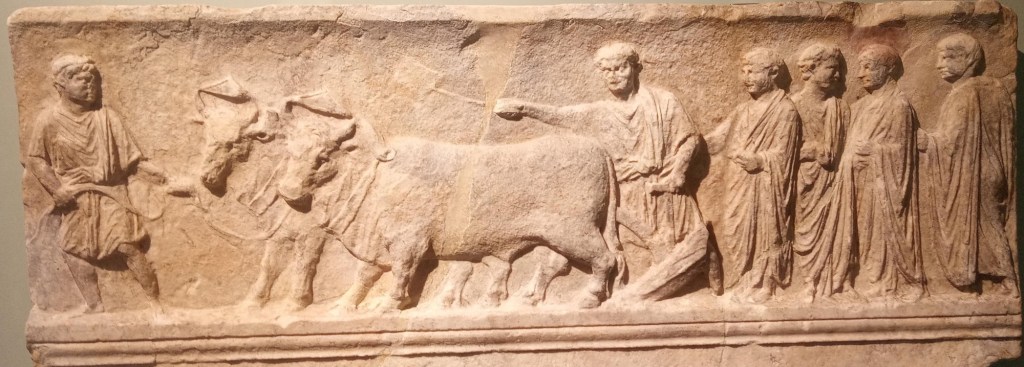
Take a look at the 183 BC limestone table of foundation of the colony of Aquileia: the pomerium, the ‘primitive furrow’ left by the plough pulled by an ox and a cow, marks the sacred perimeter of the city traced in front of the magistrates.
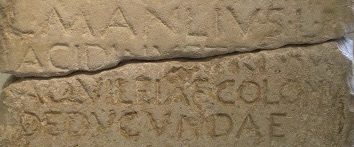
The headstone reads “Lucius Manlius Acidinus, son of Lucius triumvir in charge of the foundation of the colony of Aquileia”.
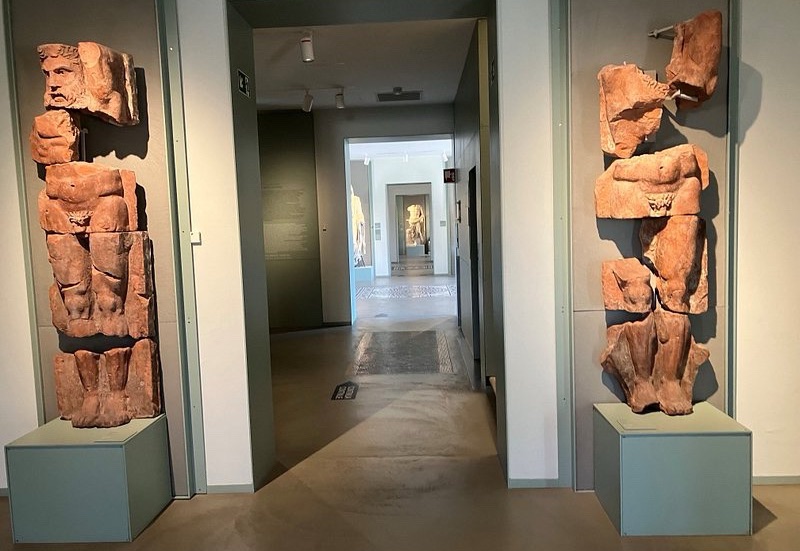
In the other rooms on the ground floor, inscriptions, architectural fragments, reliefs and sculptures tell the story of the monumental public Aquileia and its spaces dedicated to the world of the living and that of the dead.
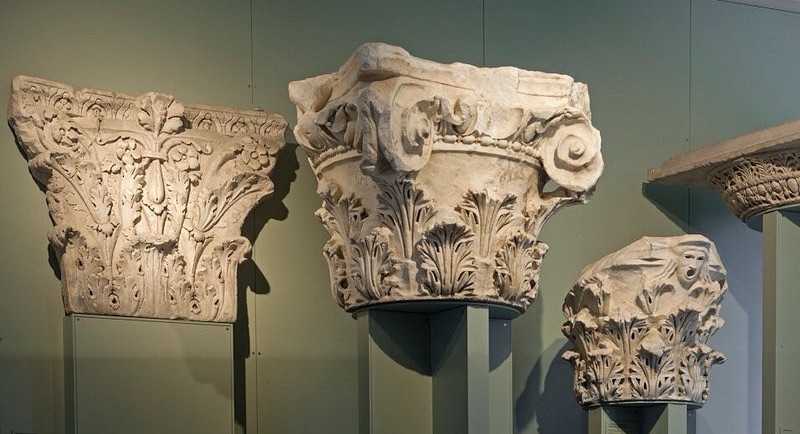
Public monuments formed the backdrop of the city’s political, economic, religious and institutional life. Their construction was started since the foundation of the colony according to the typical Roman urban plan with the contribution of private citizens, whose names are frequently mentioned in inscriptions.
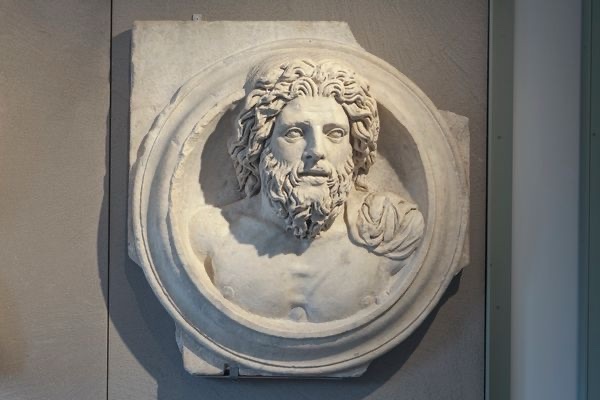
Subjects often drew on mythology, as was the case with the clypeus (medallions) of the Twelve Gods and the two depictions of a victorious general inspired by the model of the Greek hero Diomedes.
In the hall dedicated to the various necropolis of Aquileia don’t miss the cylindrical Cinerary urn of spells, in Aurisina limestone, from around the 1st century BC. It belongs to the typology of the cist funerary urns, reminiscent of wicker baskets and woven vegetable fibres.
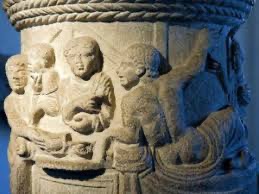
The urn is decorated across the surface with a banquet scene. The character represented from behind is perhaps the deceased, to whom a diner and a servant address a superstitious gesture of adjuration: it is probably a reference to the banquet celebrated by the deceased’s family on the ninth day following the burial, at the end of the mourning period.
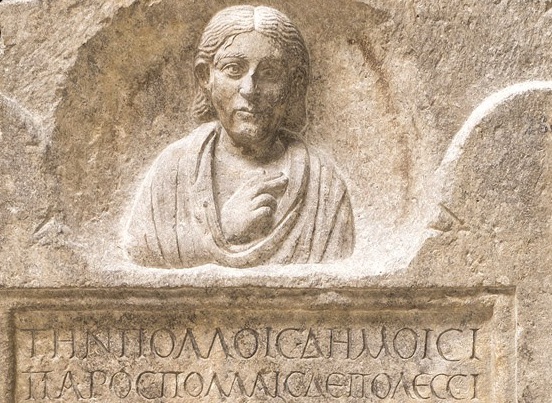
“Cheer up Bassilla, no one is immortal”, recites a verse engraved on a funerary stele for this woman, a famous dancer and mime. The Greek-language inscription indicates that the woman had Eastern roots, like many doctors, teachers, and artists active in ancient Aquileia. She was known as “the Tenth Muse”. The actor who dedicated her this epigraph remembers the theatrical successes and applause given to her versatile talent.
FIRST FLOOR
The visit continues on the first floor, where the finds are organized according to thematic sections: the domus and private space; Aquileia, gateway to the Mediterranean, a meeting place for goods, people and religions; the territory and productive activities.
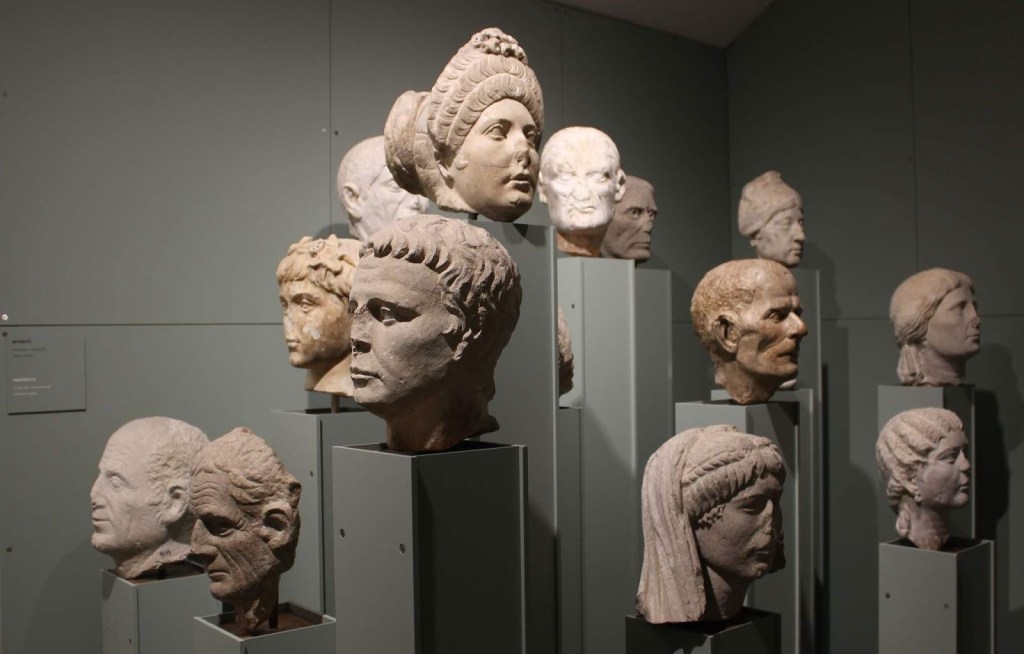
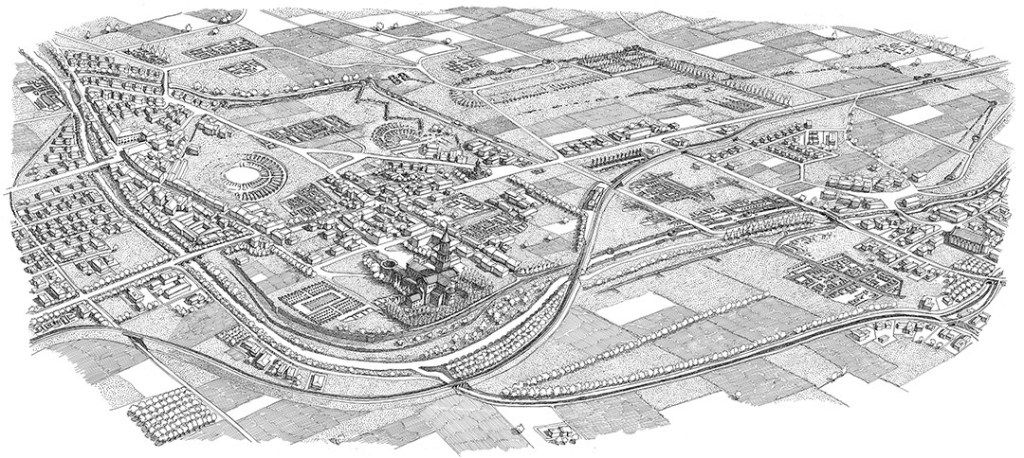
Along the staircase, the faces of the ancient inhabitants of Aquileia accompany the visitor in the discovery of the city.

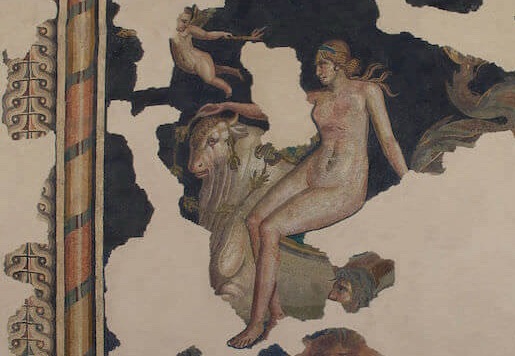
In the section of the ‘Domus and private Spaces’ you can see precious mosaics from the Aquileian dwellings that were distributed in residential neighborhoods within the city and in big villas in the suburban area. The production of mosaics owes its variety to the dense network of contacts and relationships in Aquileia within the Roman world.
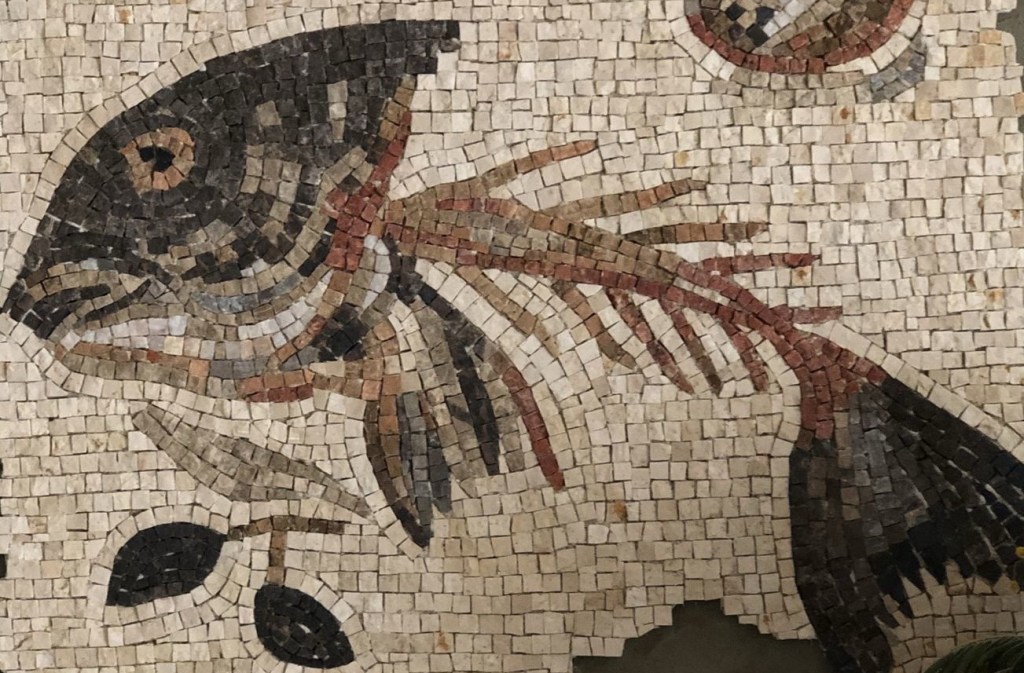
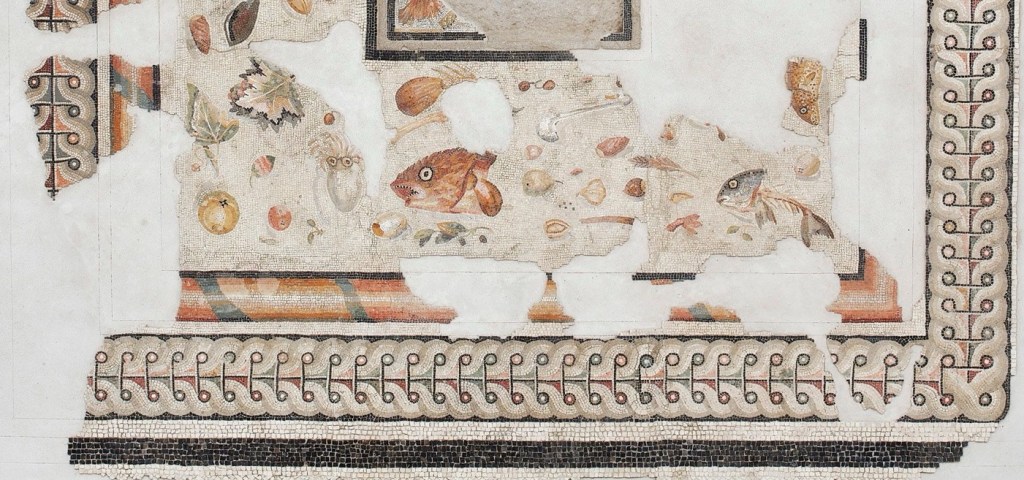
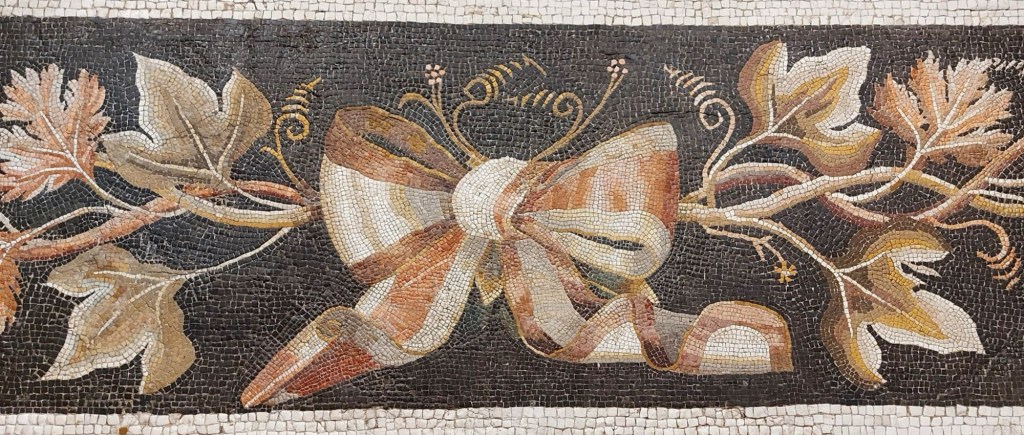
The models that inspired the three refined floors made of small tiles with bright colors come from the Greek-Eastern area: Europa on a sea bull, the remains of a sumptuous meal abandoned on an unswept floor and the mosaic with shoots joined in the center by a bow (see the picture at the beginning of this section) which embellished the triclinium of a house in the same neighborhood.
In the section of Aquileia as a ‘gateway’ you can see its role of link between the Mediterranean and Danubian and Rhenish Europe. Its port system, located at the northern end of the Adriatic Sea, was a center for the redistribution of raw materials, foodstuffs and artisanal and artistic artefacts that traveled between the provinces beyond the Alps, the Balkans and the Po Valley.
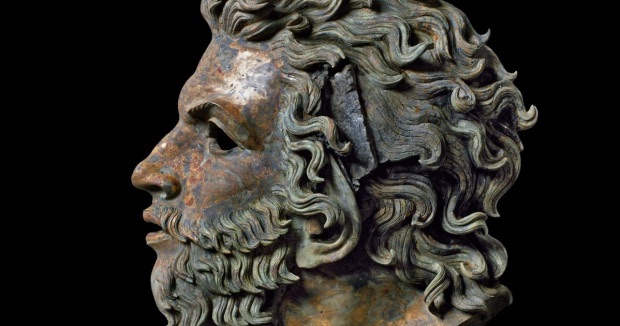
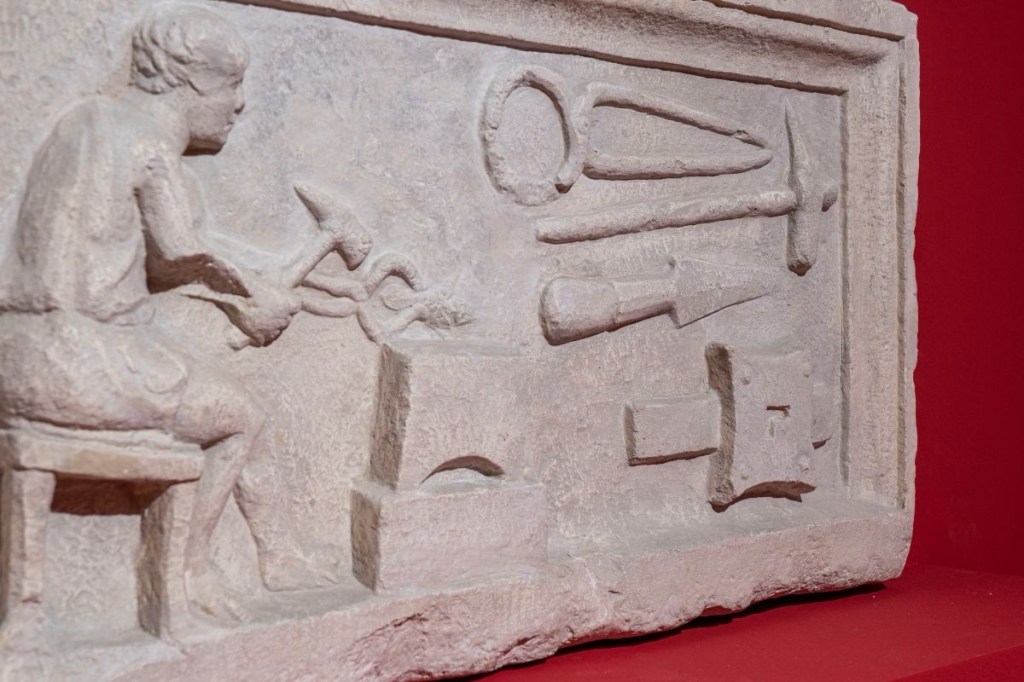
In the hall of economic activities you can find inscriptions, funerary steles and portraits narrating the myriad of figures who contributed to making Aquileia a trade and military center of primary importance,
SECOND FLOOR
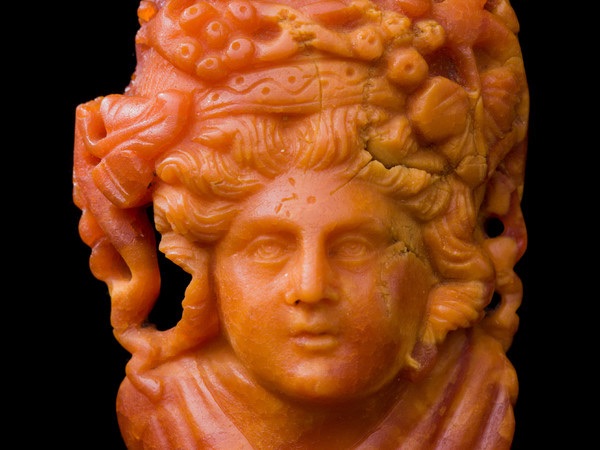
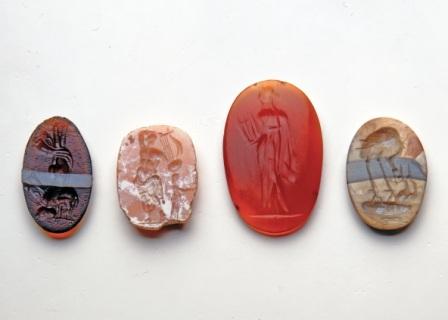
In the second floor the “Luxury and Wealth” section features the collection’s most valuable finds, organized by material and use. Gems and amber are the pinnacles of Aquileia’s artisanal production. Along with jewelry and a variety of decorative objects, they accompanied everyday life and sometimes were left on their owners for their journey to the afterlife: jewelry and cosmetics were, in fact, a way to flaunt wealth and social prestige.
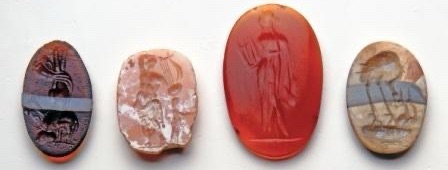
On display are 130 artefacts including personal care accessories such as ointment jars, strigils, mirrors, pins, cosmetic and hairdressing tools; 6 marble and limestone portraits; 300 jewels and ornaments in gold, silver, bronze, iron, glass and wood; 145 amber artefacts; 791 gems and cameos.
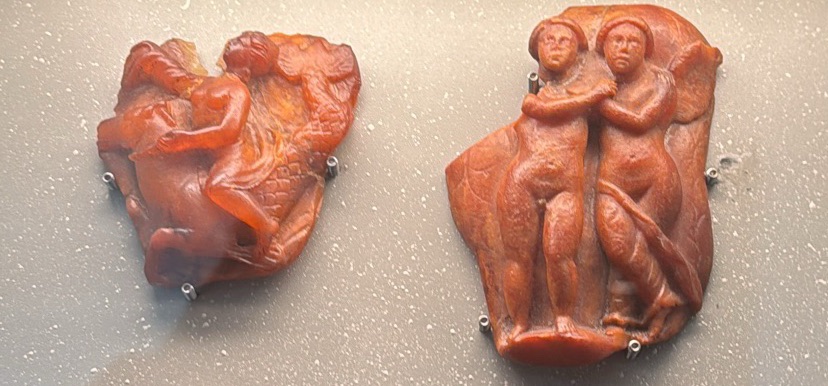
Personal care objects and refined jewelry in precious metals, stones or amber and their more affordable imitations in glass paste, demonstrate the importance placed in the Roman world on personal care and personal adornment, both for men and women.
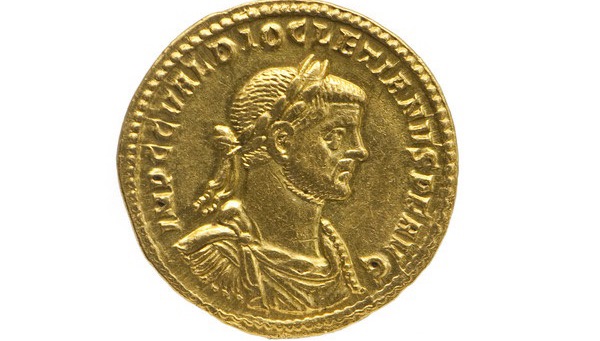
The gold coin of Diocletian (Courtesy of the National Archaeological Museum of Aquileia | Photo by © Gianluca Baronchelli). Diocletian was the Dalmatian ruler who established the Aquileia mint in 295 AD. Three mints operated in the city, whose symbol was printed on the reverse of coins
The faces of princes and empresses were universally known thanks to statues and portraits and their reproduction on coins, a rich selection of which can be admired in this section, further testifying to Aquileia’s economic dynamism. More than 1900 gold, silver and bronze coins from ancient and medieval times are on display.
LAPIDARY GALLERIES
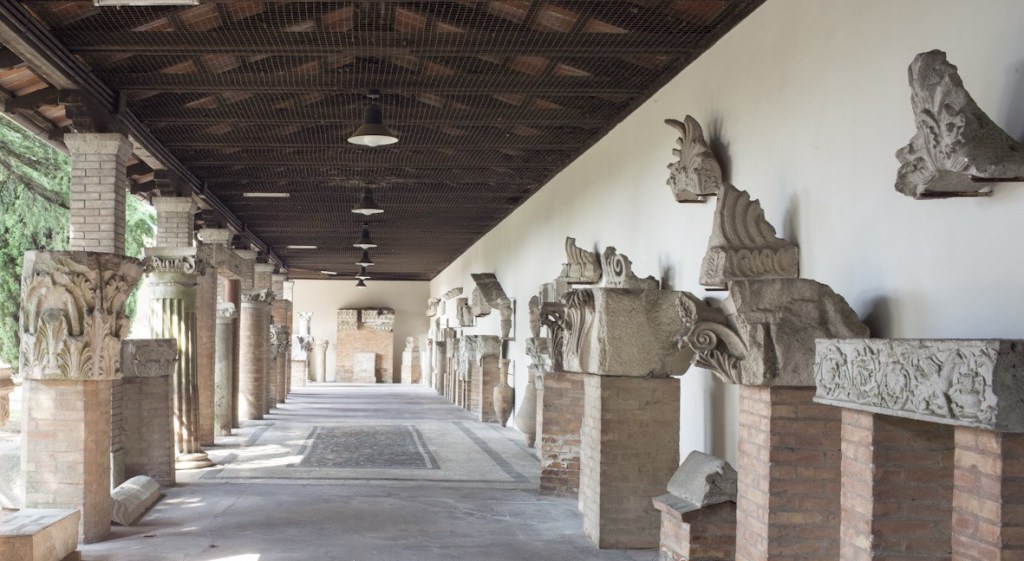
Outside the main building, in the Lapidary Galleries, the hundreds of inscriptions and funerary monuments testify to the social customs and religious beliefs of the inhabitants of the colony; the new space hosts more than 5,000 artefacts.
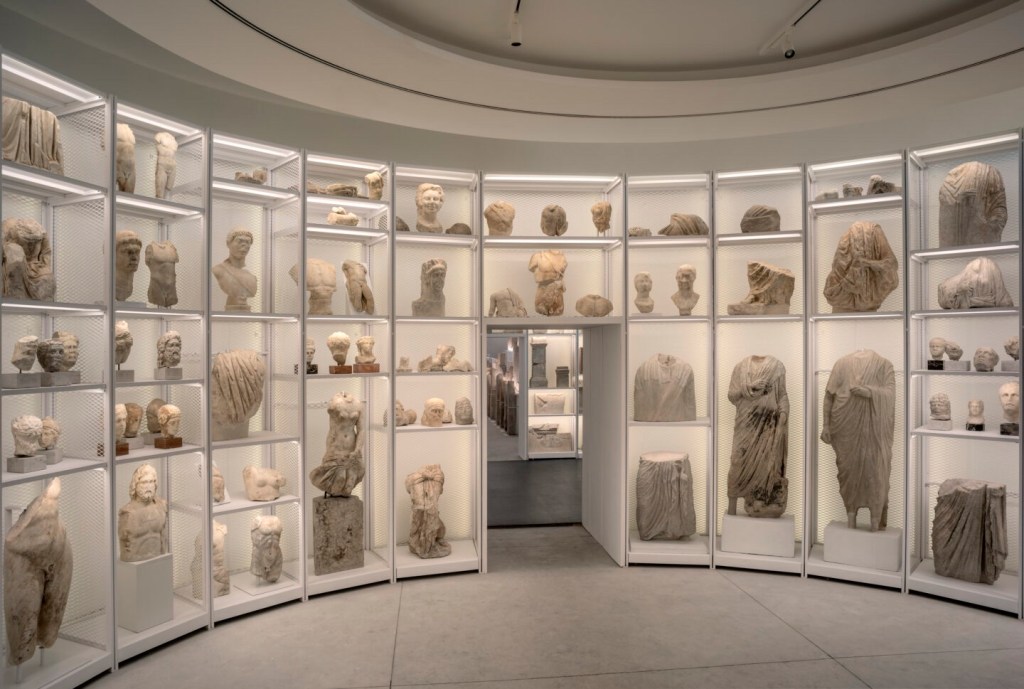
The exhibition structures in the “warehouses“, built in the 1950s with a distinctive system of porticoed galleries, showcase artifacts of varying materials, weights, and dimensions.
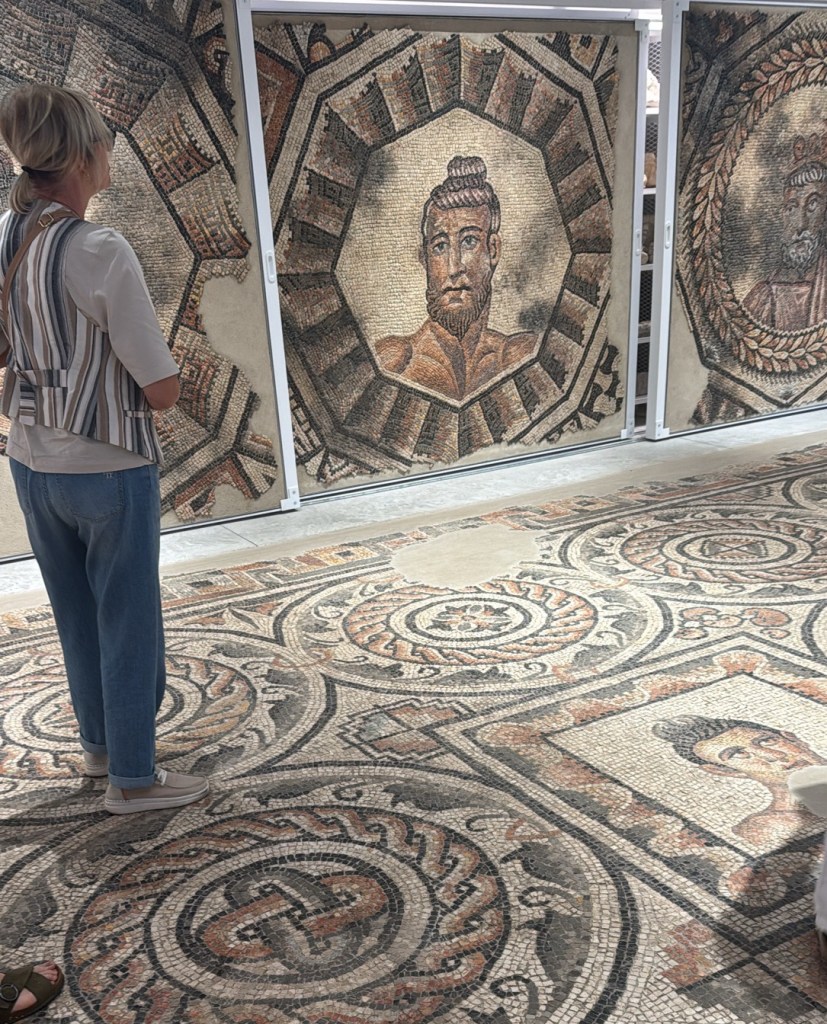
The splendid collection of mosaics is noteworthy, especially those with the busts of athletes from the excavation of the Great Baths. The three portions of mosaic floor have been mounted on sliding panels, to act as a backdrop for those entering the room and, at the same time, as a closure for the shelving behind, dedicated to stone materials.
Visitors are encouraged to ask questions and suggest new interpretations, and the captions themselves are written in a question-and-answer format. All artifacts are accompanied by descriptive notes that can be read using QR codes, and the tour concludes in a classroom featuring an unusual stone bestiary of animals and fantastical creatures. The spaces are open Tuesday through Friday from 2:15 PM to 7 PM and Sunday from 10 AM to 7 PM.
History and Roman Legacy
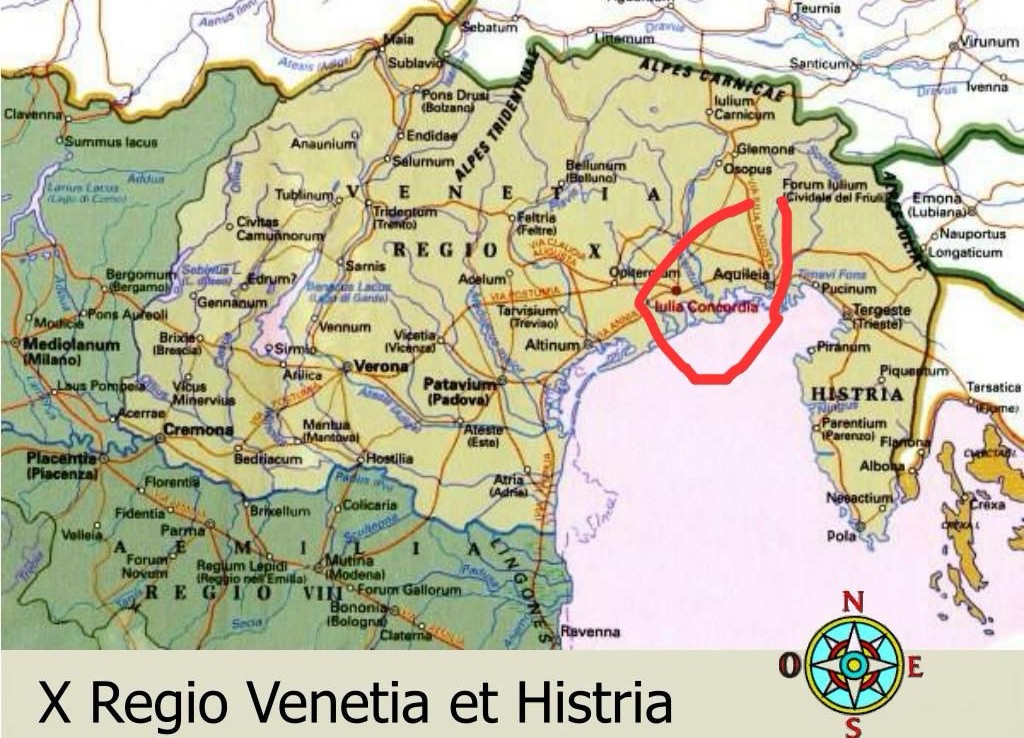
In 181 BC Rome sent 3,000 infantry and an unspecified number of centurions and Samnite cavalry from Lazio and Molise to found the colony of Aquileia as an outpost against neighbouring tribes such as Carni and Histri who threatened the eastern borders. Its position on the Natissa (Natisone) River, with access to the sea, made it a thriving port and trading center.
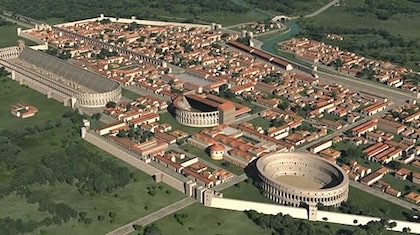
The name Aquileia probably derives from a pre-Roman term: the watercourse that ran alongside the settlement was called Aquilis or Aquilegium. The suffix –eia, suggests a strong Celtic influence, with a possible base –aqui(l) indicating “waters“.
The colony was established with Latin rights by the triumvirate of Publius Cornelius Scipio Nasica, Caius Flaminius, and Lucius Manlius Acidinus: the families from Picenim, Samnium and Campania settled in the area meaning Aquileia probably had a population of 20,000 soon after its founding. Their origin also explains why the colony was Latin and not Roman.
Aquileia turned into a melting pot of cultures, attracting merchants, artisans, and travelers from across the Roman world. It was known for its wealth, impressive public buildings, and luxurious residences.
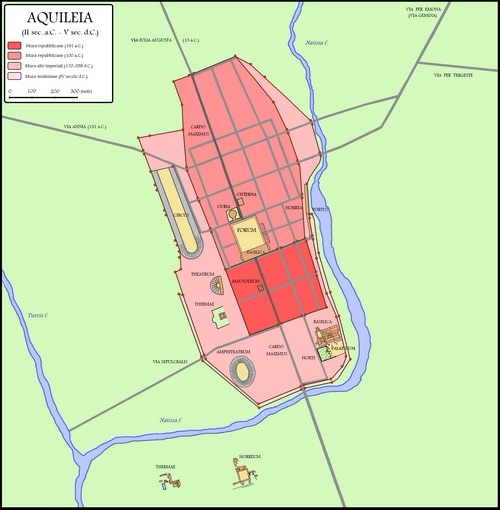
Aquileia served as a key military outpost and a regional capital also in the Imperial age: Jewish artisans established a flourishing trade in glass-work. Metal from Noricum was forged and exported. The ancient Venetic trade in amber from the Baltic continued. Wine, especially its famous Pucinum, was exported.
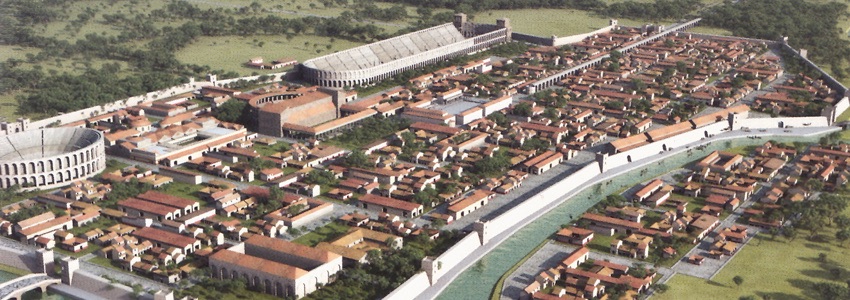
By sea, the port of Aquae Gradatae (San Canzian d’Isonzo) was developed. On land, Aquileia was the starting-point of several important roads leading outside Italy to the north-eastern portion of the empire.
The Roman poet Martial praised Aquileia as his hoped-for haven and resting place in his old age. In 11 BC Julia, daughter of Augustus and wife of Tiberius, the future emperor, gave birth in Aquileia to a son but the child died as an infant.
In 168 Marcus Aurelius made Aquileia the main fortress of the empire against the barbarians of the North and East. Aquileia later became one of the main centers of the Roman Empire under Maximian with a population of around 50.000 inhabitants.
It even had its own mint and fleet under Emperor Diocletian.
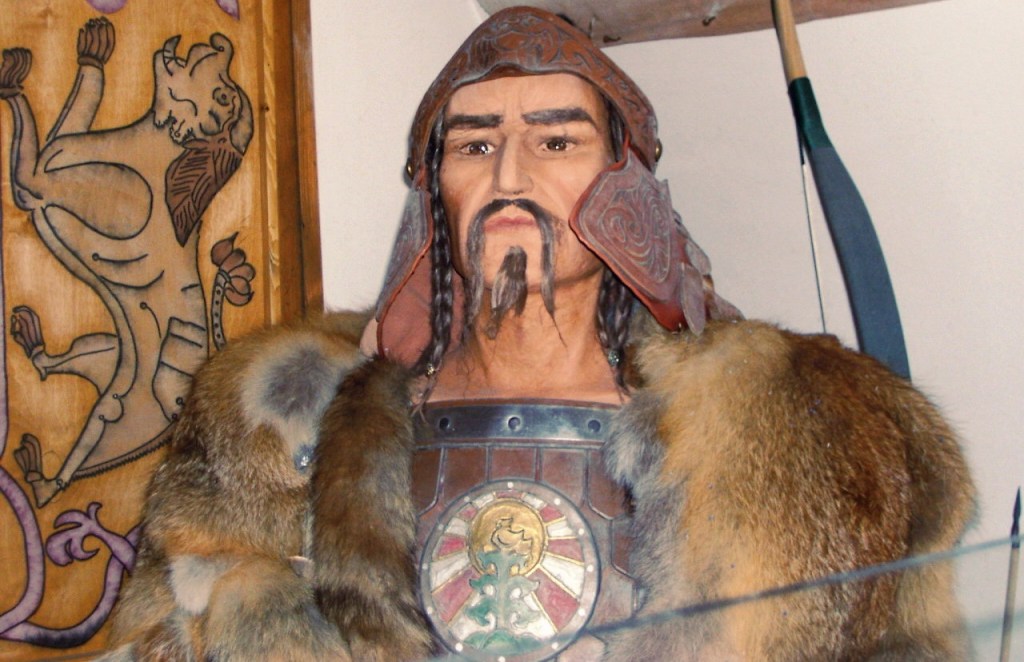
Aquileia was destroyed by Attila in 452 AD. In his advance across the Alps, the king of Unns, at the head of his troops, had reached Aquileia and laid siege to it. The city held out for many days, so much so that, according to the legend, Attila was about to lift the siege and retreat. While walking around the walls to reflect, he noticed a stork flying, carrying away its chicks from the nest in a tower.
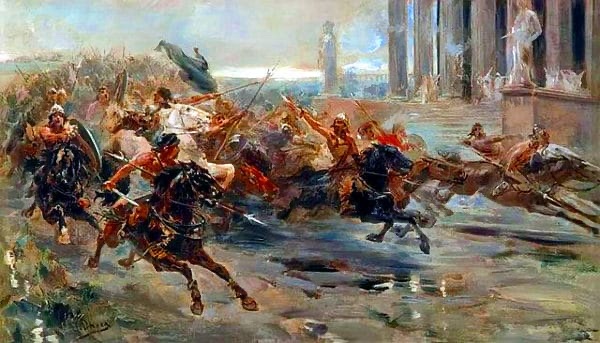
The Hunnic king interpreted this as a favorable omen. He told his men that birds could predict the future, and that they were fleeing because they understood that Aquileia would soon fall. This restored his men’s morale and they resumed their attack on the city. Soon the walls collapsed right where the stork had nested, and the Huns were able to invade Aquileia, which suffered a tragic fate. The city was sacked and devastated, while the inhabitants who failed to escape were killed or taken prisoner.
Roman Itinerary
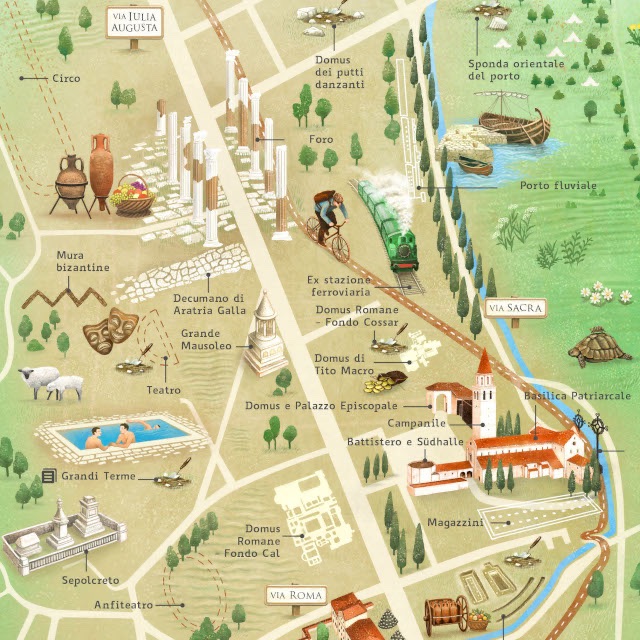
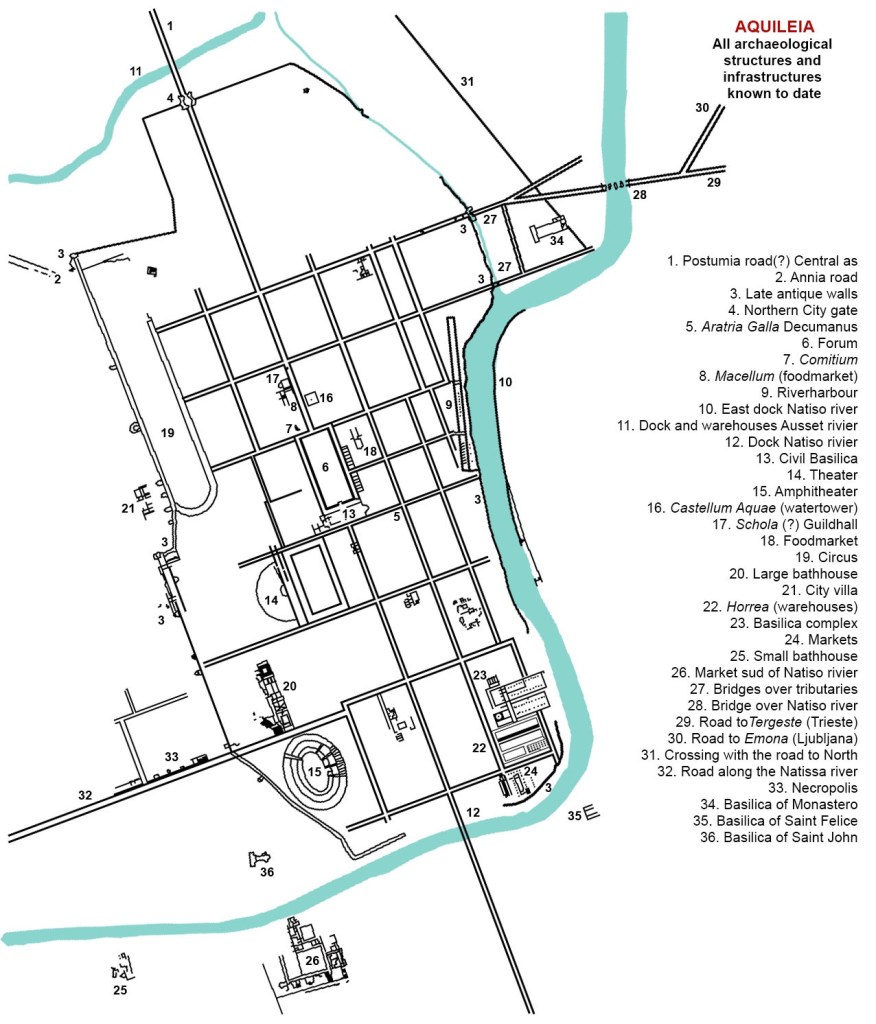
Aquileia today is an evocative site where scattered housing and fields cover the once-busy Roman urban streets. The ruined port is silent, and noticeboards explain how the local residents built frantic defences against Attila the Hun, erecting protective walls with any marbles and sculptures that came to hand.
THE PATRIARCHAL BASILICA– The itinerary of Roman Aquileia may start from the Patriarchal Basilica, an extraordinary architectural complex with origins that go back to the second decade of the 4th century.
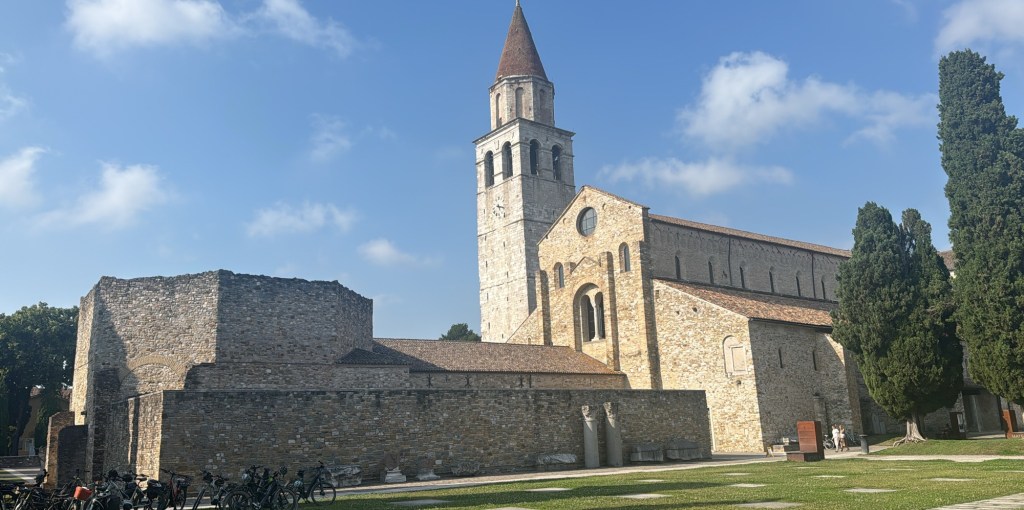
By the end of the same century, under the rule of bishop Chromatius, the edifice had grown into the current dimensions, except for the transept and apse with the underground crypt.
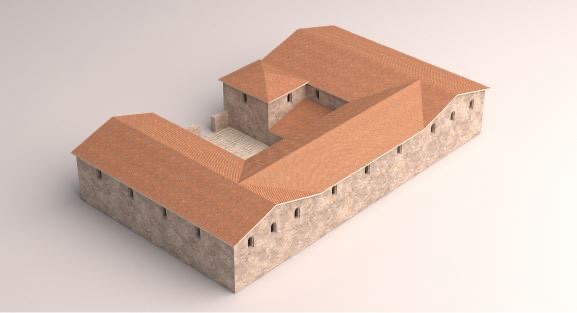
4th century at the iniziative of Theodore
The mosaic floor of the Basilica offers a most stunning evidence of the original place of worship built at the initiative of bishop Theodore immediately after the Edict of Toleration of 313 AD.
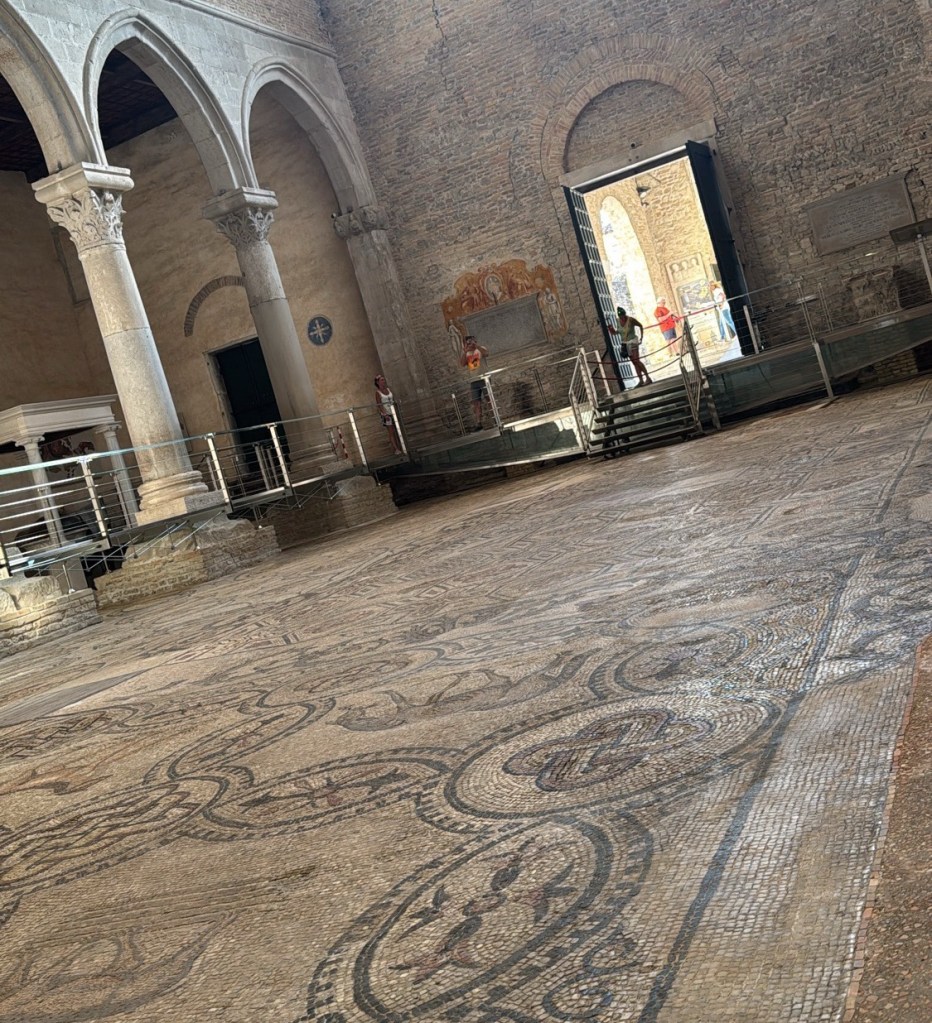
The church used to include two parallel halls (the second one can be seen in the Crypt of the Excavations), a connecting hall, a circular baptistery and several rooms, probably related to the bishop’s residence.
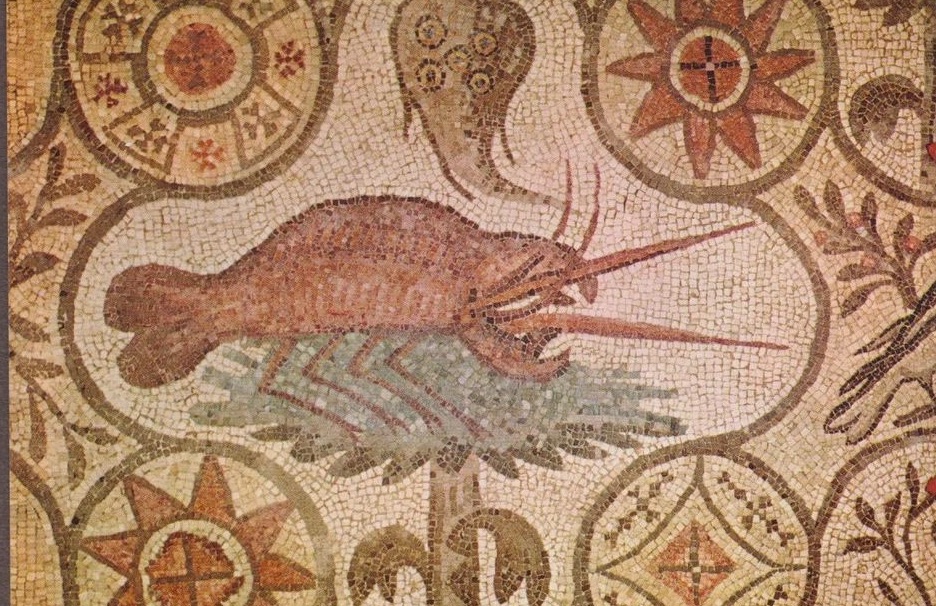
(©G. Baronchelli)
Crypt of the excavations: excavations here have made visible the foundations of Poppo’s campanile standing on the mosaics of Theodore’s northern hall (in early 4th century).
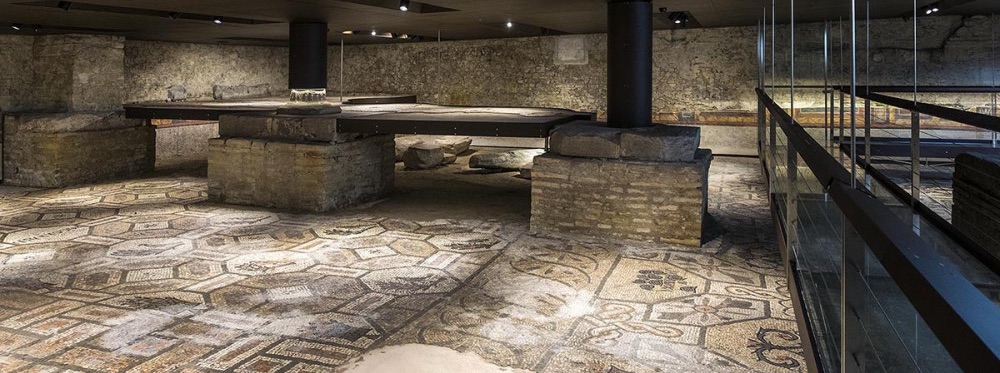
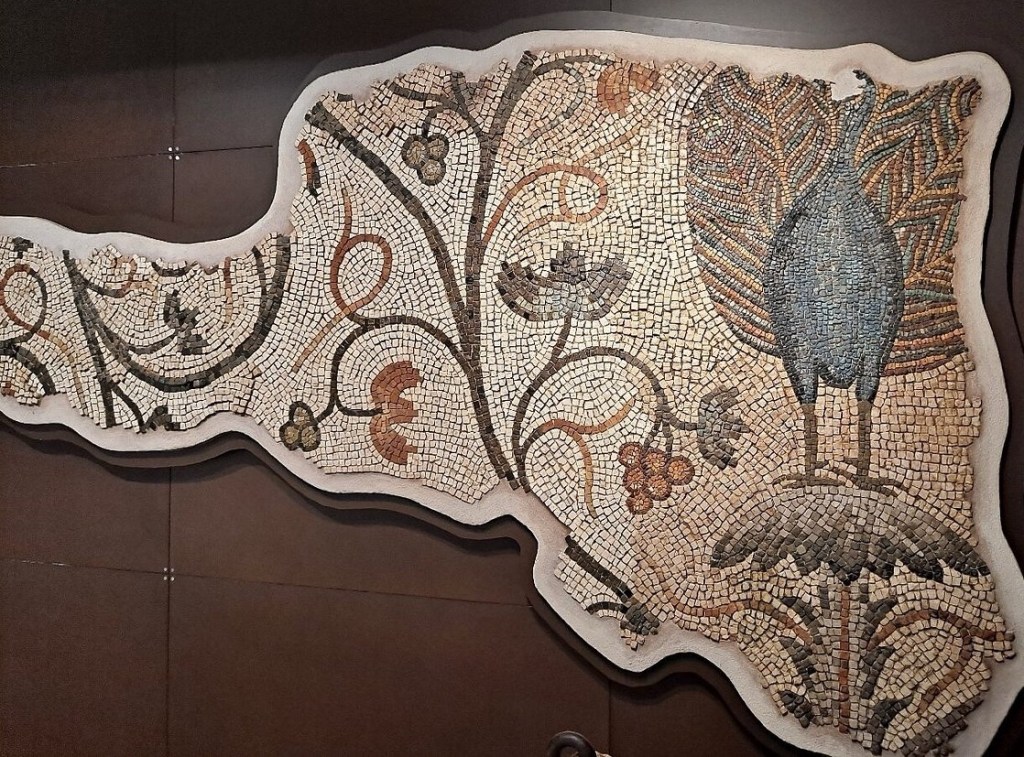
The basilica complex also includes the baptistery built under bishop Cromatius in the 4th century, with a hexagonal basin inside an octagonal structure; the so-called Südhalle, the southern hall of the early Christian baptistery recently turned into a museum, with over 300 square metres of mosaic floor dated between the late 4th and early 5th centuries, and the wonderful mosaic “of the Peacock” coming from the narthex area of the basilica.
( ©G. Baronchelli)
DOMUS AND EPISCOPAL PALACE – The venue is the result of the redevelopment of a private rustic courtyard named “stalla Violin”.
The vestiges belong to a neighbourhood of Roman Aquileia that developed outside the city walls erected in 181 BC. The site encompasses structures lying at different levels (down to 4 metres below) from a house of the 1st and 2nd centuries.
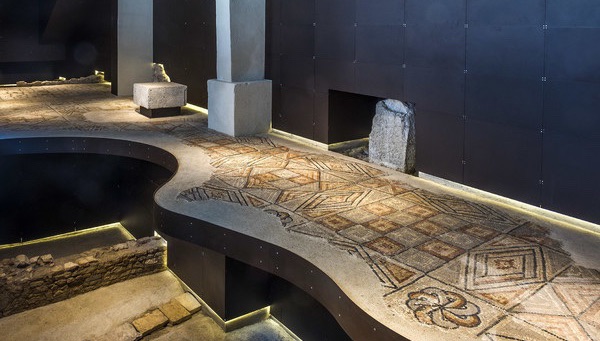
The oldest level refers to a small portion of a house built in the 1st century AD, now visible at the centre of the path at the deepest level of the excavations.
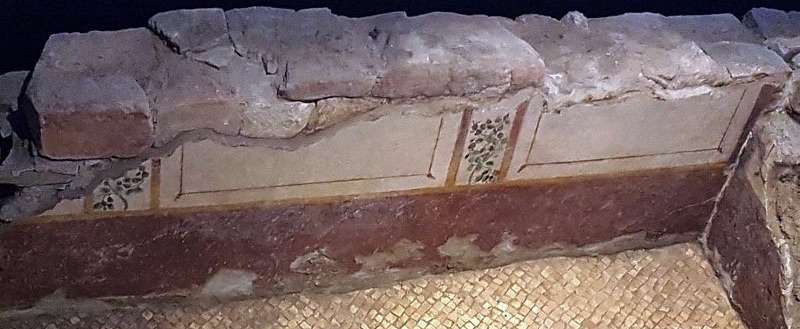
The walls, which still stand for over one metre, are decorated with an elegant fresco pattern.
The path ends with a beautiful apsed hall of the 4th century, which may have been part of the bishop’s residence. The apse, over five metres large, was raised and connected to the hall by a large step. The walls and ceiling were painted with refined frescoes such as leafy grape shoots, grape bunches and birds on a red background that made the dome of the apse stand out from the simple white ceiling of the hall.
TITUS MACER’S HOUSE – The “Domus of Tito Macro”, one of the largest dwellings of Roman times found in northern Italy, was built in the 1st century BC and it covers an area of 1,700 square meters.
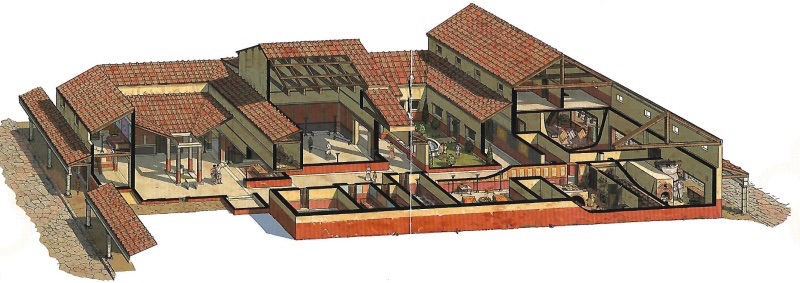
The Domus extends for 77 metres in length and 25 in width, between two paved streets of the city within a southern block of the colony. The modern brick roofing structure that covers it is the largest for an archaeological area built in Europe. It alludes to the forms of the Roman house, built around an atrium, and it reproduces the original size of the Domus.
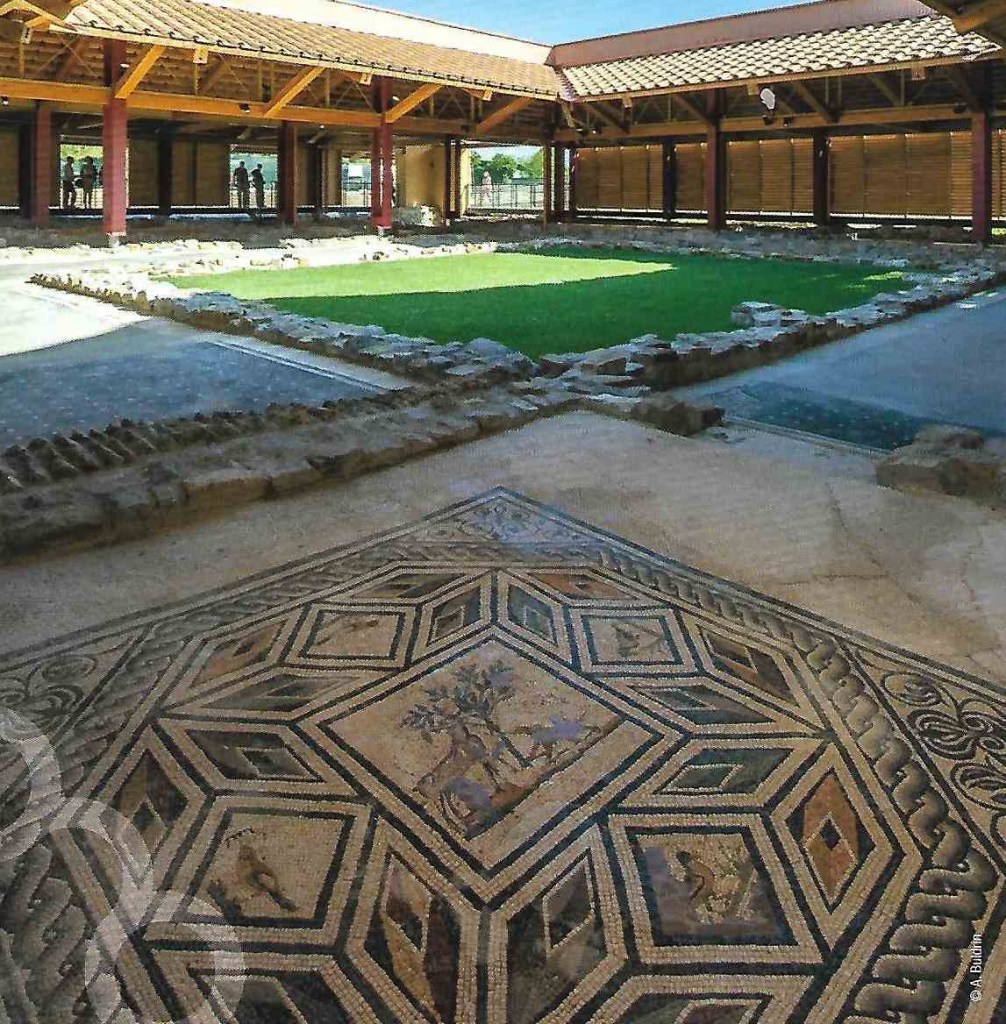
The house was attributed to Titus Macer, a wealthy inhabitant of Aquileia, based on the discovery of a stone weight with an iron handle with the inscription T.MACR. It has a typical Pompeian layout with an atrium, a tablinum—the room where the owner of the house received his guests— and a large reception room of almost 100 square meters. The rear garden provided coolness to the entire space in the summer.
A treasure of 560 coins was found in the area of the atrium, hidden by its owner in a hole around 460 AD, in the turbulent years following the capture of Aquileia by Attila, king of the Huns, and never recovered.
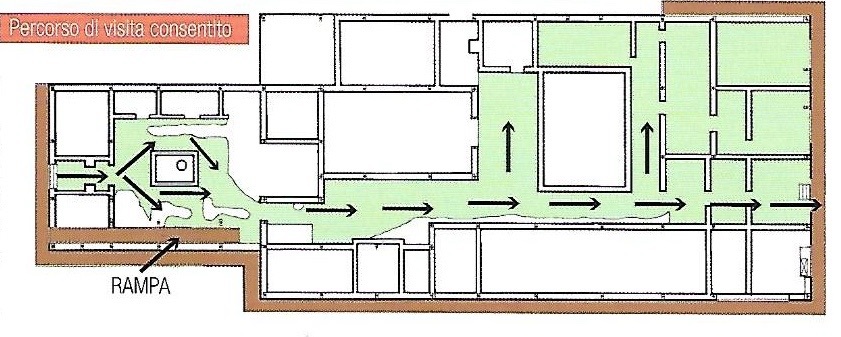
The house was accessed from the west through an atrium supported by four columns and featuring a central pool for collecting water and a well, partially preserved and integrated into the missing section.
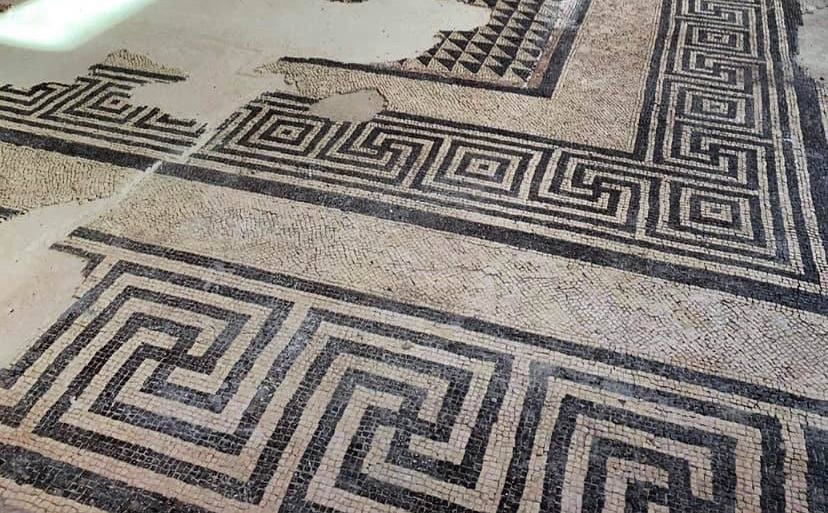
Aligned with the entrance was the tablinum, the master’s reception room, with a rich mosaic floor.
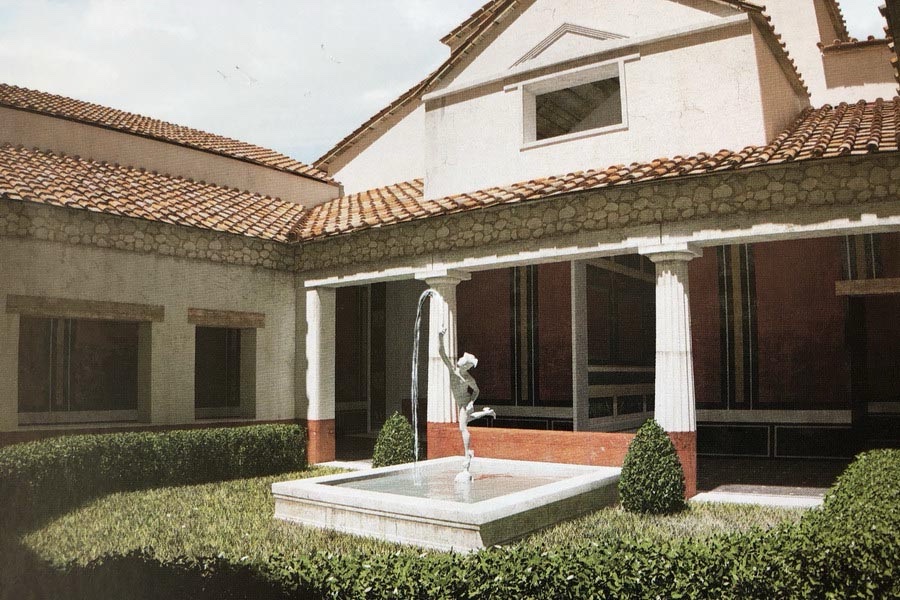
with Nudesign and Ikon)
The rear of the house gravitated around a central open space, the garden, surrounded by a mosaic corridor and featuring a fountain. The large reception room opened onto it, and to the south was the triclinium, flanked by living rooms and a bedroom (cubiculum). To the north was the kitchen with a brick counter, while in the eastern section, four shops have been identified, including a baker’s shop with a bread oven, the remains of which remain in the garden.
RIVER PORT – When you visit the remains of the Roman port of Aquileia, with its well preserved embankment, quays, inclined planes and road ramp connections, it is hard to imagine that a river 50 metres wide used to run below today’s pedestrian path called Via Sacra.
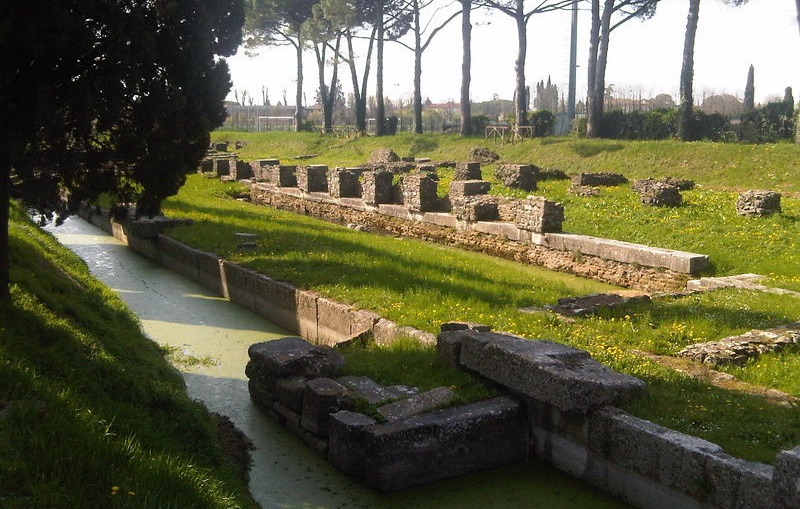
Here, all sorts of boats from the whole Mediterranean basin would land. Also, a very long structure used to stand behind the embankment, with only three entrances connected to the ramps.
The port facilities, excavated in the 1930s, stretched for over 300 meters along the right bank of the river, very close to the Republican walls.
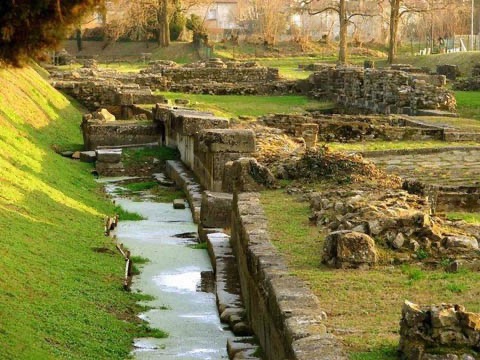
Risen above much older installations, the river port was entirely reorganized in the 2nd century AD, with the addition of new quays and a long building opening onto the river. Three ramps would run transverse to the quays to ensure connections with the urban road system.
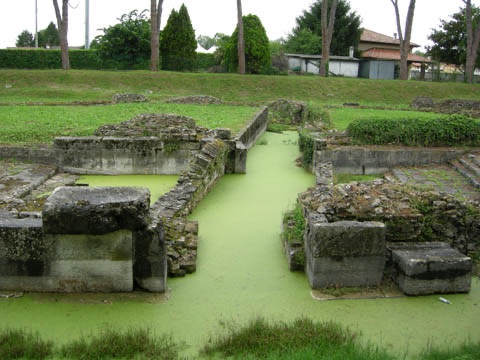
Quays: they consist of a powerful system of upright limestone slabs surmounted by interlocking parallelepiped blocks, which were used as loading and unloading floors. Some two metres below the top of the quay, a long walkway helped dockers carry out loading operations in smaller boats.
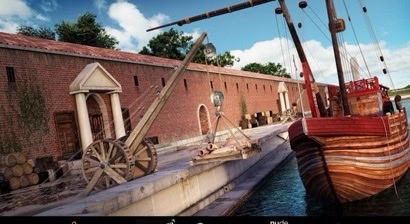
(Fondazione Aquileia with Nudesign and Ikon)
From the lower level, ramps would connect the quays to the city roads, which were also served by wide inclined planes allowing access to the warehouses.
A curiosity: the walkways sometimes bear small signs of play schemes used by sailors and dockers during their free time.
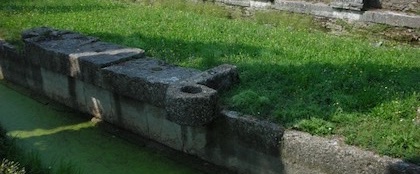
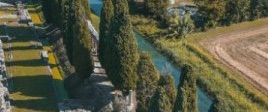
Via Sacra: it makes a charming archaeological path under cypress trees connecting the river port and the basilica. It was created in the 1930s with the backfill of the port excavation works.
MARKET AND WAREHOUSE – South of the ancient city, where the Natissa River flows from east to west, a complex identified as the public market has been discovered. Studying the materials used and its structure, it is thought to have been active for a very long time, from the beginning of the Imperial period until Late Antiquity.
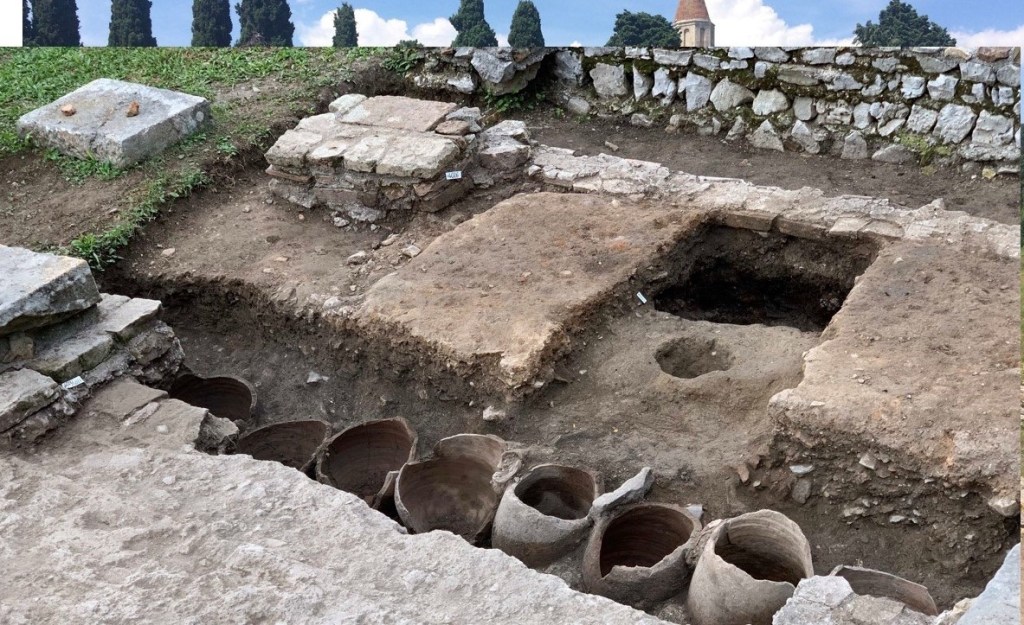
The complex is square in shape, with sides measuring 150 meters, and is composed of two interconnected sections: both contain porticoed rooms, corridors, and apses arranged around a courtyard made of sandstone slabs, square in the case of the northern section, rectangular in the other; it is possible that some of these rooms were used as storage rooms or offices.
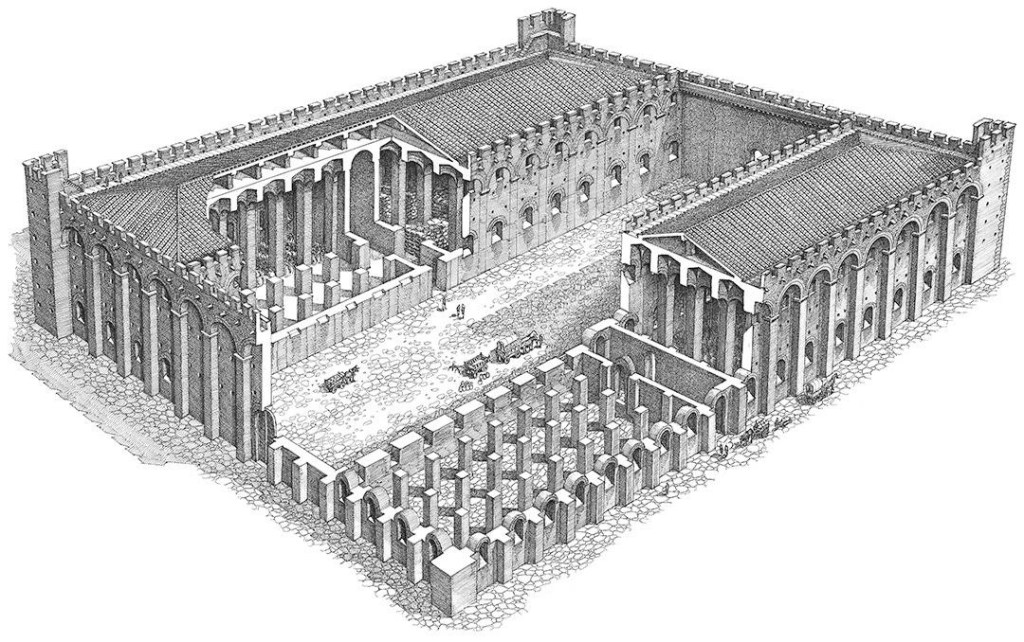
The warehouses located south of the Basilica were identified as horrea or grain warehouses, following the discovery of several layers of burnt grain. The building is rectangular, 90 meters by 66 meters, and consists of two elongated spaces separated by a central courtyard. The warehouse’s roof was likely supported by sturdy pillars, arranged in relation to the reinforcements of the external walls to achieve a correct static system.
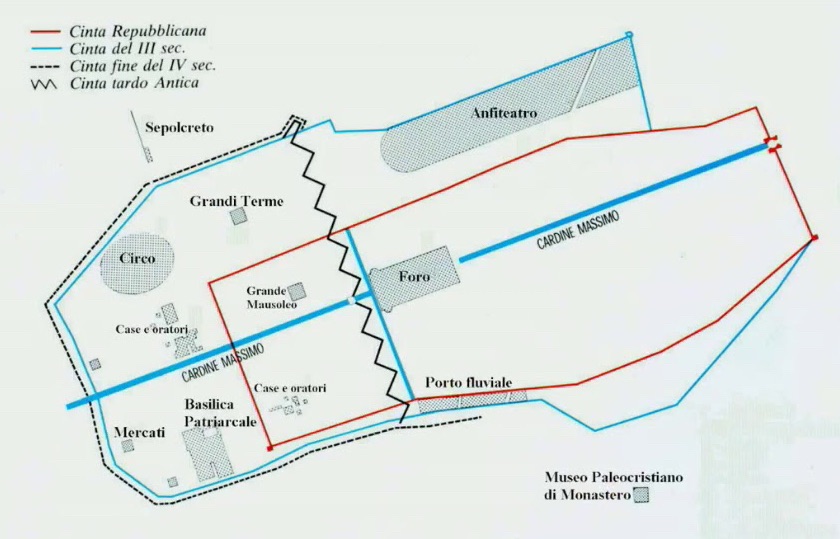
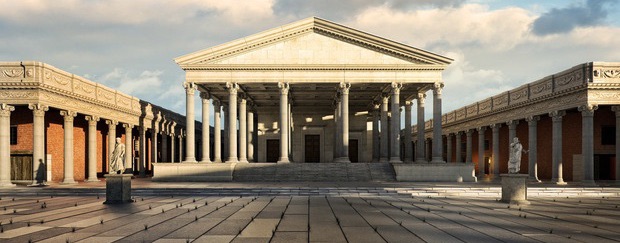
ROMAN FORUM – The Forum, heart of the political, administrative and social life of Aquileia, was a square surrounded by public buildings. It was first built in the 2nd century BC. The square was located along the cardo maximus.
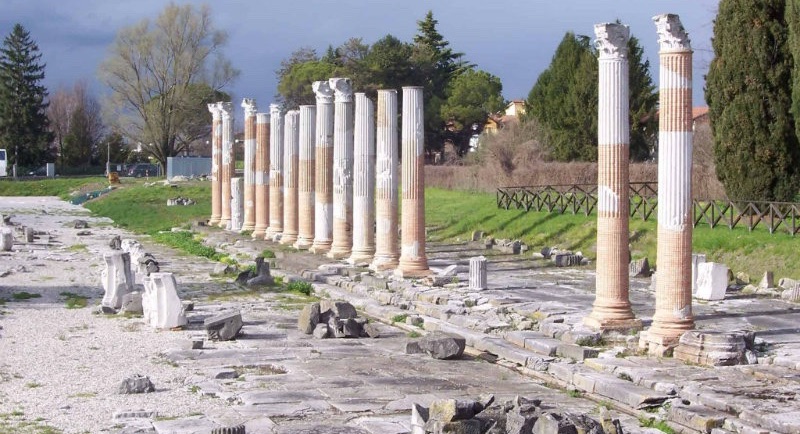
In the first half of the 1st century AD arcades were erected to house several shops; the courthouse used to stretch onto the southern end of the square. A round building, the Comitium of Republican times, accommodated the gatherings of the citizens.
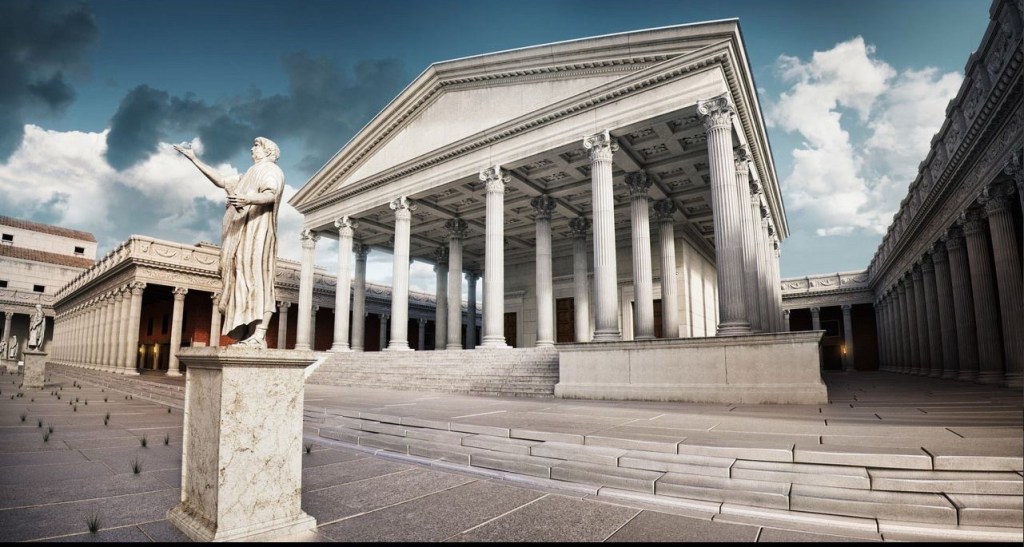
The square is 141 metres long and 55 metres wide and it is entirely paved with Aurisina limestone slabs of same width and variable length. They date back to the time of the Julio-Claudian emperors (first half of the 1st century AD), but some of them were replaced over time with recycled materials.
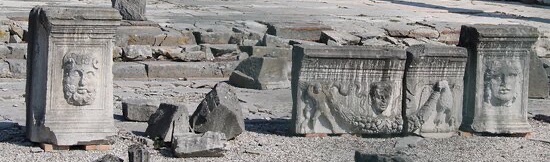
Cycle of Jupiter Ammon and Medusa: a balustrade of parallelepiped blocks used to run along the architrave of the arcades, just above the capitals, interspersed with slabs above the spaces between columns. The slabs were decorated in relief with putti or eagles holding wreaths, while the blocks held the heads of Jupiter Ammon and Medusa. The two motifs had been chosen to recall the width of Roman dominions: from the west (Medusa) to the east (Jupiter Ammon, a deity cherished by Alexander the Great), that is, almost the entire world then known by man.

Inscription of Titus Annius: the inscription carved on a base or altar in 2nd century BC mentions Titus Annius (Luscus), a triumvir entrusted to lead the second contingent of colons who had reached the city in 169 BC. It provides an important list of the magistrate’s duties: drafting laws for the colony’s administration, replacing the members of the local senate, and erecting a temple.
Civilian Basilica and road: a long stretch of an urban road of Aquileia can still be seen south of the forum. It is named Decumanus of Aratria Galla from the name of the matron from Aquileia who munificently sponsored the paving of the road in the 1st century AD.
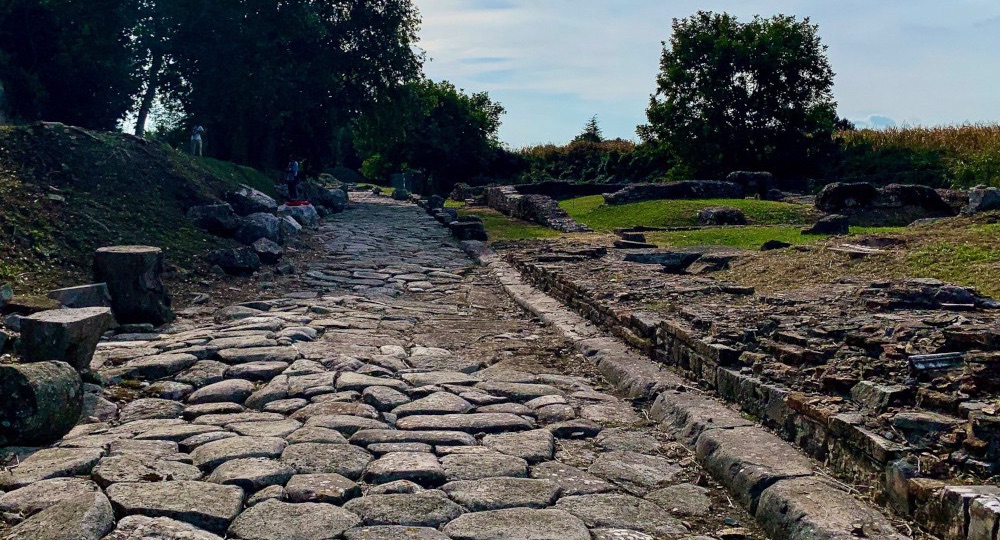
The road leads to the civilian Basilica, which used to stand along the short side of the forum, only partially visible today. The large building (90 x 29 m) serving judiciary and other purposes was built during the early Augustan era, but was entirely reconstructed in the late 2nd century AD, with the addition of two opposite apses.
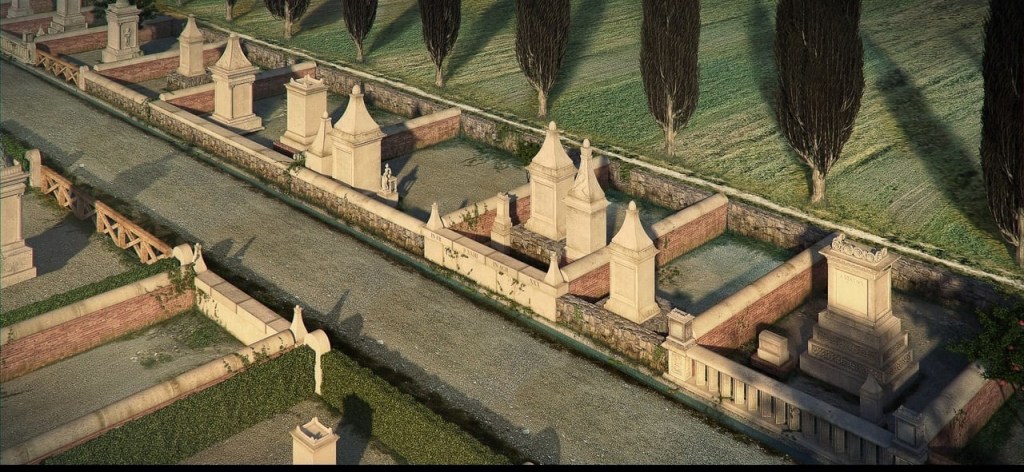
Necropolis – The only section of the necropolis currently open to visitors in Aquileia consists of five funerary enclosures, which were arranged along a secondary road leaving the city.
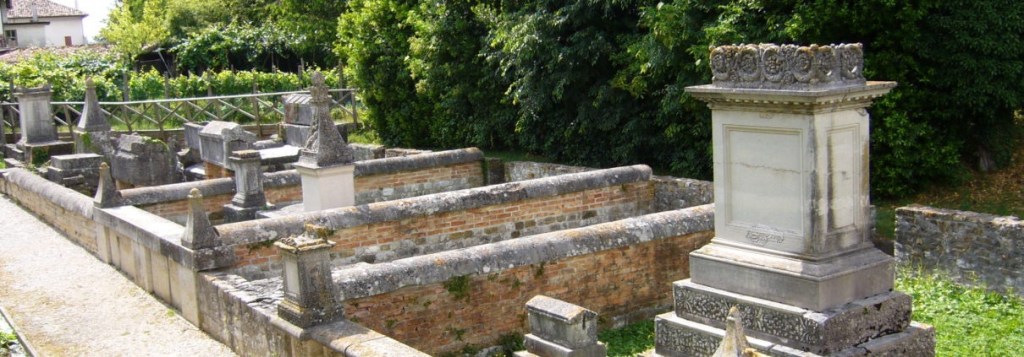
They are along Via XXIV Maggio, located outside the walls: Roman law prohibited burials within inhabited areas. Varying in length but of equal depth, they belonged to various Aquileian families (Stazia, Anonymous, Giulia, Trebia, Cestia). Based on the monuments still visible today and the tombs excavated there (1940-1941), the enclosures were used starting from the 1st century AD.
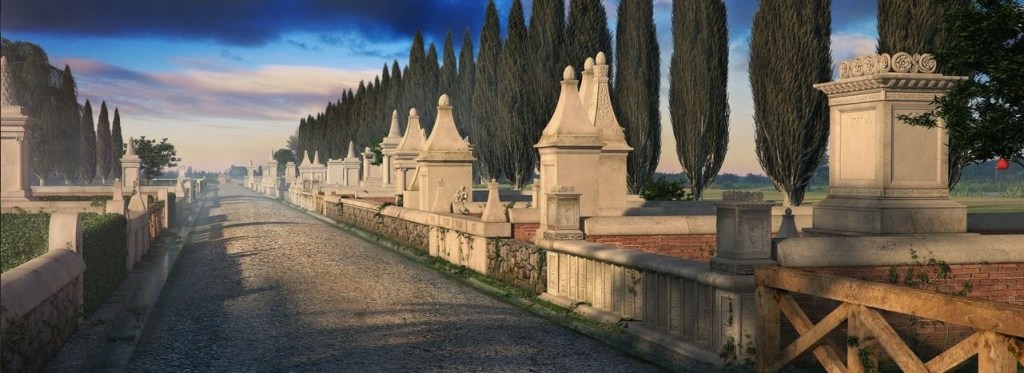
The fourth funerary area remained in use until the 4th-5th century, as evidenced by several late antique sarcophagi, some placed on brick pillars to give an idea of the original height of the find.
Two Domus with an extraordinary mosaic floor have been discovered in the area of the so called Fondo Cal in Via Giulia Augusta, not far from the Archaeological Museum.
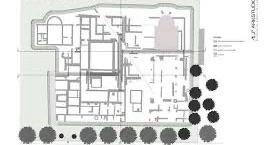
In the 4th century the domus were united in a single complex of 34 rooms.
The Eastern Domus (house of the columned yard, house of Dionysus with satyrs and silens, house of the small baths) – In the north are visible the remains of a large apsed hall, now protected under a modern structure, formerly introduced by a columned yard.
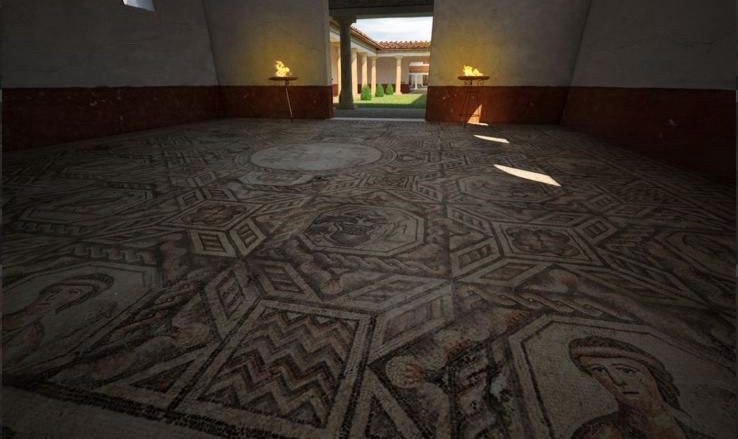
With its “Good Shepherd” mosaic floor (4th century AD), the hall was a representation room in the house of a rich owner. The main character of the mosaic lies inside a circle at the centre of the carpet with an elaborated geometrical pattern of rhombuses and squares with inscribed octagons.
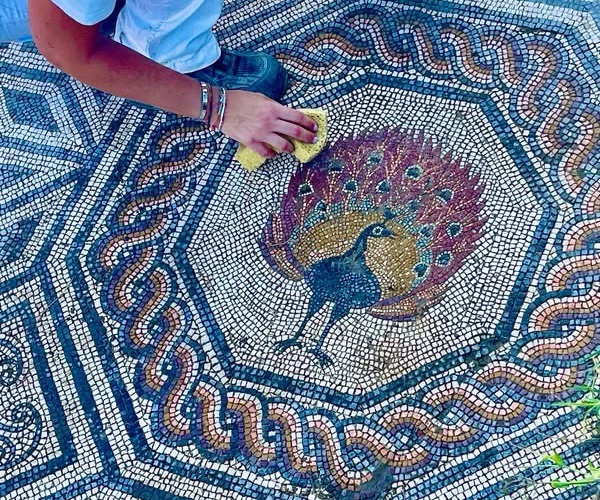
The subjects (beside the Good Shepherd, the octagons embed fish, dolphins, peacocks, ducks, male and female busts) are not necessarily Christian symbols as they were use by Pagans and Christians alike in 4th century.
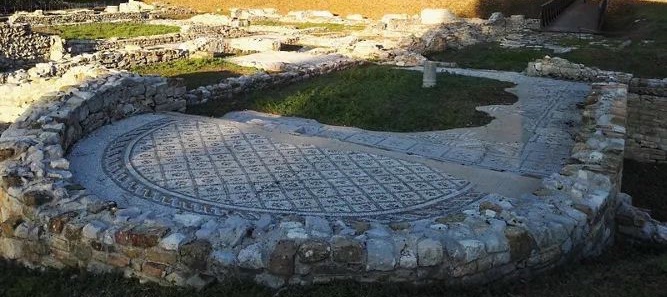
Western Domus (house of black-and-white mosaics)
The remains of another dwelling can be seen to the west of the residential site. Developed around an internal peristyle, it consists of several halls and service aisles. The geometrical pattern of black and white tesserae of the mosaic floor indicate that the main house had been built at the time of Emperor Augustus.
Early Christian Museum – In the site of an ancient early Christian basilica that later became a Benedictine convent, this building in the northern area of Aquileia has been turned into a museum since 1961.
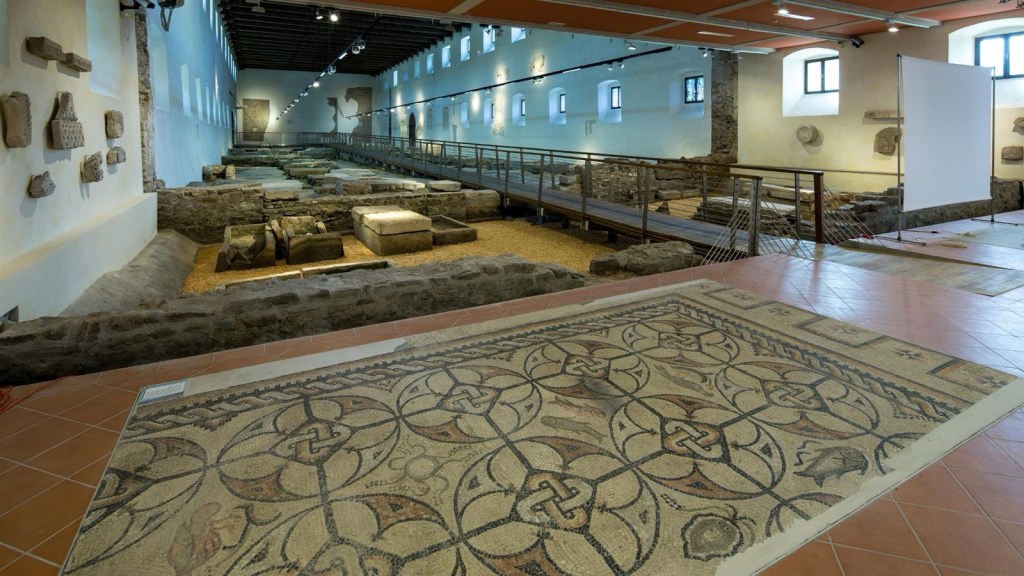
Beside the vestiges of the early Christian basilica with its multicoloured mosaic floors, the Museum displays wonderful mosaics from the early Christian basilica of Fondo Tullio in the area named Beligna, as well as some other mosaics from Aquileia and a massive collection of Christian inscriptions.
Useful Informations for Aquileia
National Archaeological Museum
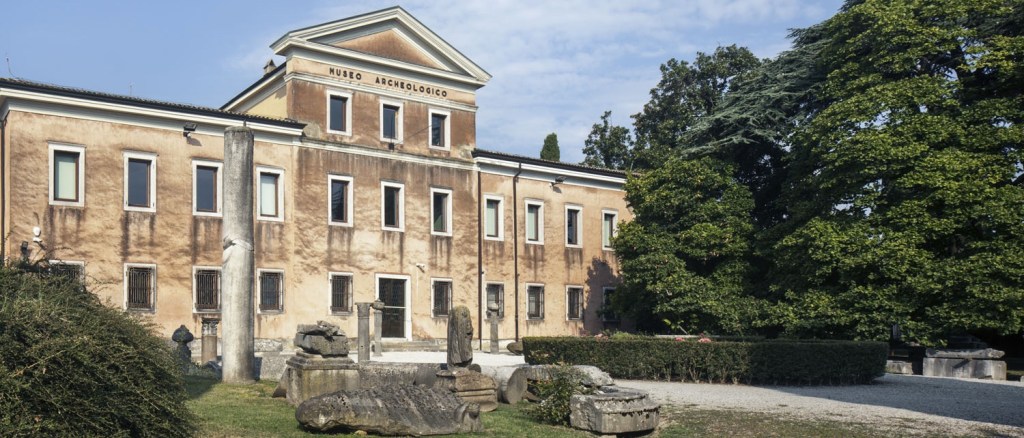
TUE – SUN 10 am-7 pm
museoaquileiaeventi@cultura.gov.it email address or at the +39 043191035 number.
CLOSED ON MONDAY
Full price: 9,00 € Reduced price: 2,00 € (for people between 18 and 25 years old)
For updated informations on the opening times and tickets for the Museum, the Basilica and other sites:
Tickets
Our Tabernae – Where to Eat
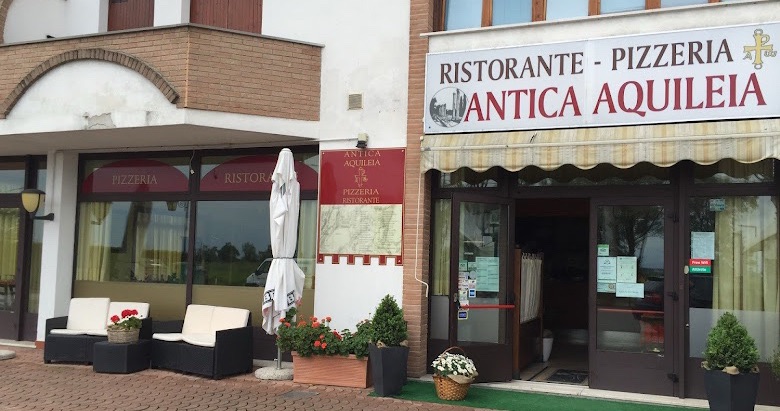
Antica Aquileia Ristorante e Pizzeria –
Via Bertrando de S. Genies 2 +39 0431918825
Pizza and Italian cuisine with a good quality, open for lunch and dinner, close to the archaeological area.

 Italy as the Romans did
.jpg)
Leave a comment