
Romans buried their dead outside city walls. This tradition, inherited from Etruscan and Greeks, was also a practical measure to avoid the spread of disease. Burials were forbidden within the city’s pomerium, a sacred boundary that separated Rome from the rest of Italy.
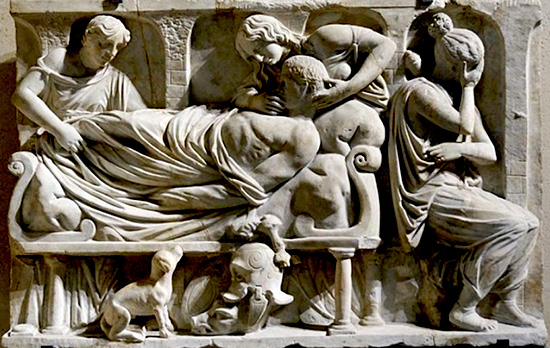
This is why many tombs lined the roads just outside Rome, with all kinds of size and magnificence reflecting the social status of the various families.
The Tombs of Via Latina is an extraordinary archaeological site in the south-eastern suburbs of Rome that has been opened regularly to the public only recently. It is overlooked by most visitors but it is probably the best preserved example of the grandeur of Rome’s funerary customs.
The site is home to a series of impressive tombs built between the 2nd and 4th century AD. Each one of the burial structures showcases architectural features and inscriptions that tell stories of the deceased. The site is a testament to the rich history of Roman society, highlighting its beliefs about life and death.

It is an archaeological marvel and an open-air museum where history and nature inspire the visitor.
THE VIA LATINA
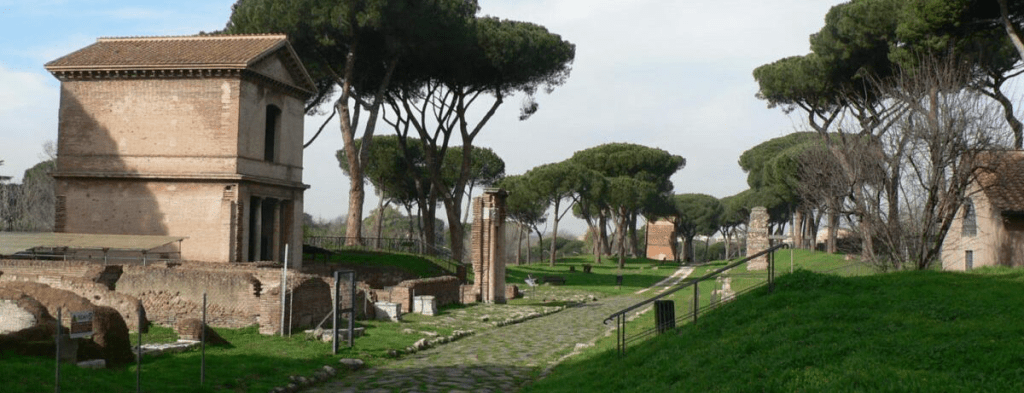
The Tombs are part of Parco archeologico dell’Appia and they are located between the modern Via Appia and Via Tuscolana, where a stretch of the third mile of the ancient Via Latina is still perfectly preserved.
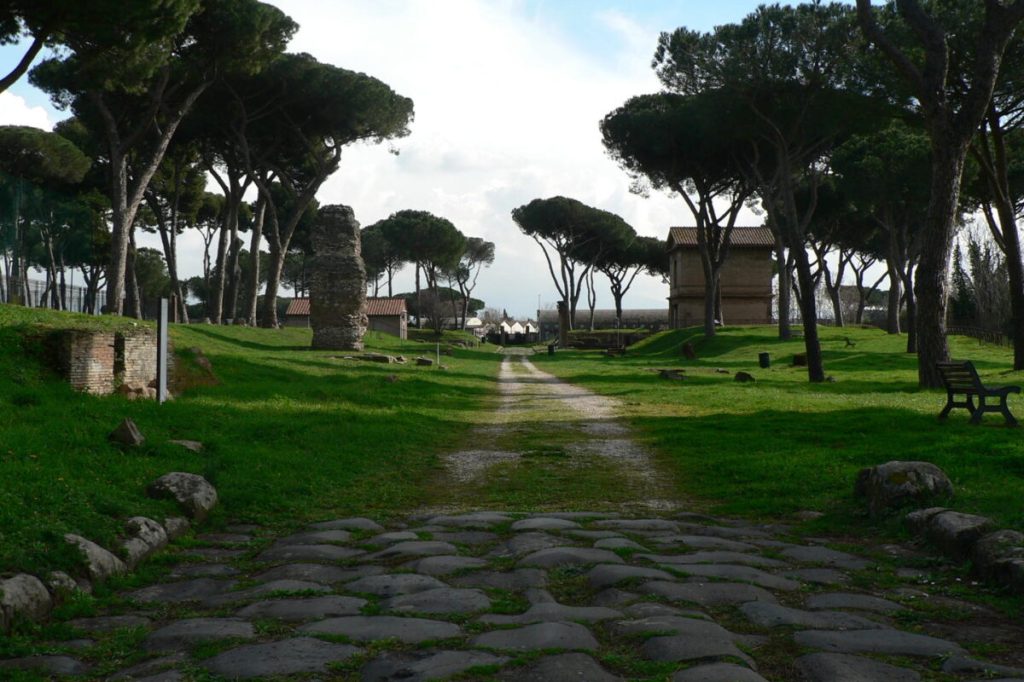
Via Latina has remote origins: the natural route, already followed in prehistoric times, was used by the Etruscans to colonize Campania in the 8th-6th century BC.
Definitively traced by the Romans in 318-312 BC, the Via Latina connected Rome to Capua crossing the Lepini, Ausoni, Aurunci mountains and the valleys of the Sacco and Liri rivers, maintaining its importance throughout antiquity. The Via Latina was created for commercial needs, while the Appian Way was mainly a military road. Even in the Middle Ages, in fact, it was preferred as a road to Naples due to its better conservation compared to the Appia and to the presence of a series of Christian buildings of worship along the route.

With a pleasant walk on the original pavement you arrive to the rich tombs dating back to the 1st-2nd century AD. The tombs and the surrounding buildings came to light during excavations led by Lorenzo Fortunati, a teacher passionate about archaeology who between 1857 and 1858 obtained from the Papal State the concession to excavate in the estate.
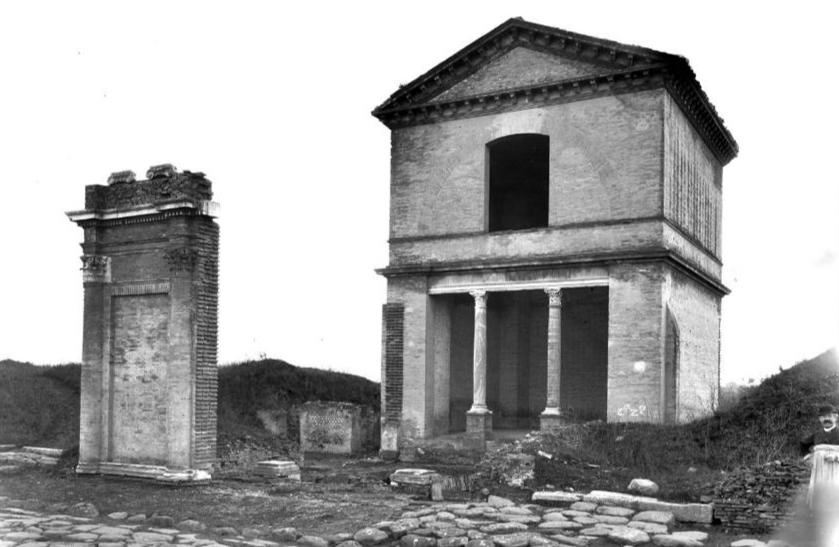
BARBERINI OR CORNELII TOMB – It is the first tomb that can be visited at the entrance to the park. The funerary monument, dating back to the 2nd century AD (Antonine dynasty) consists of two floors above ground and a hypogeum underground in excellent conditions.
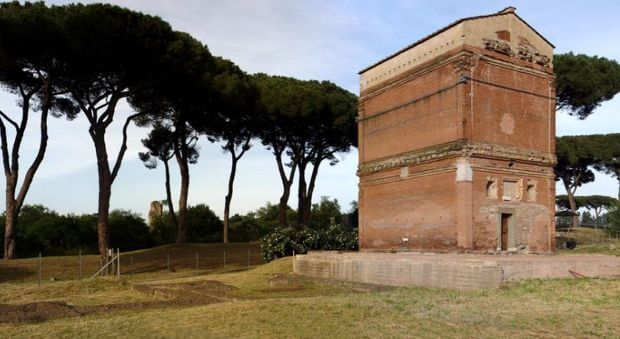
It is the only building on the Via Latina that has remained upright and in its original form because it was used over the centuries as a shelter for agricultural and pastoral activities.

The external wall shows three walled-up openings: the two lateral ones were rectangular windows, while the central one was a panel for the sepulchral title, a marble plaque with the inscription of the names of the deceased.
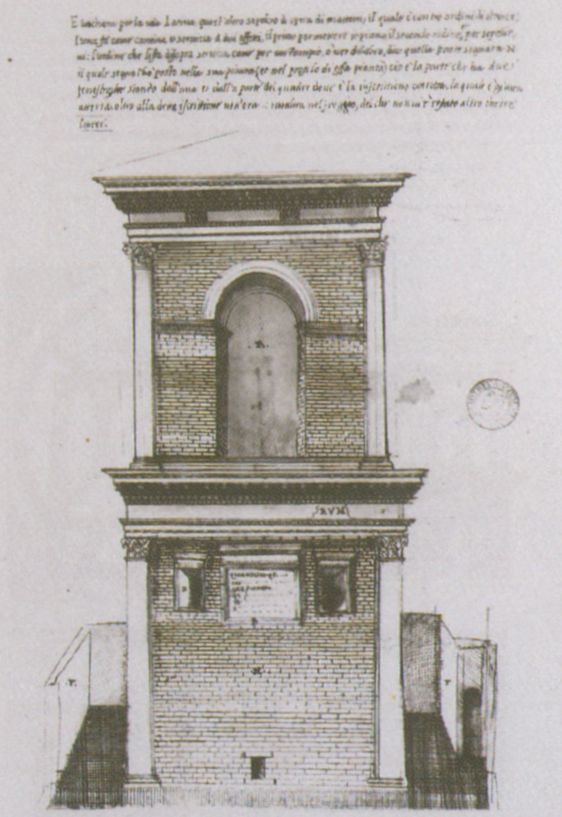
An old drawing shows an epigraph with the name of L.Cornelius and that is why this is also called the Cornelii tomb.

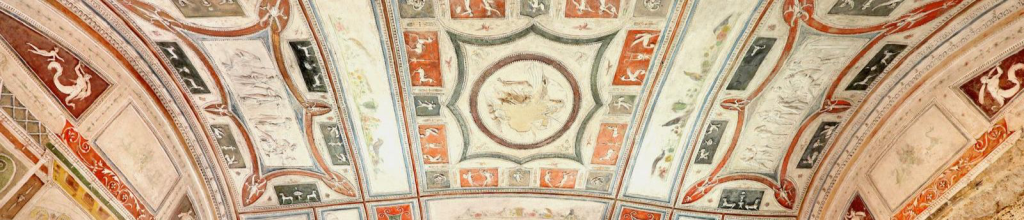
The upper floor is covered by a cross vault entirely in frescoed plaster with a red background and stucco elements.
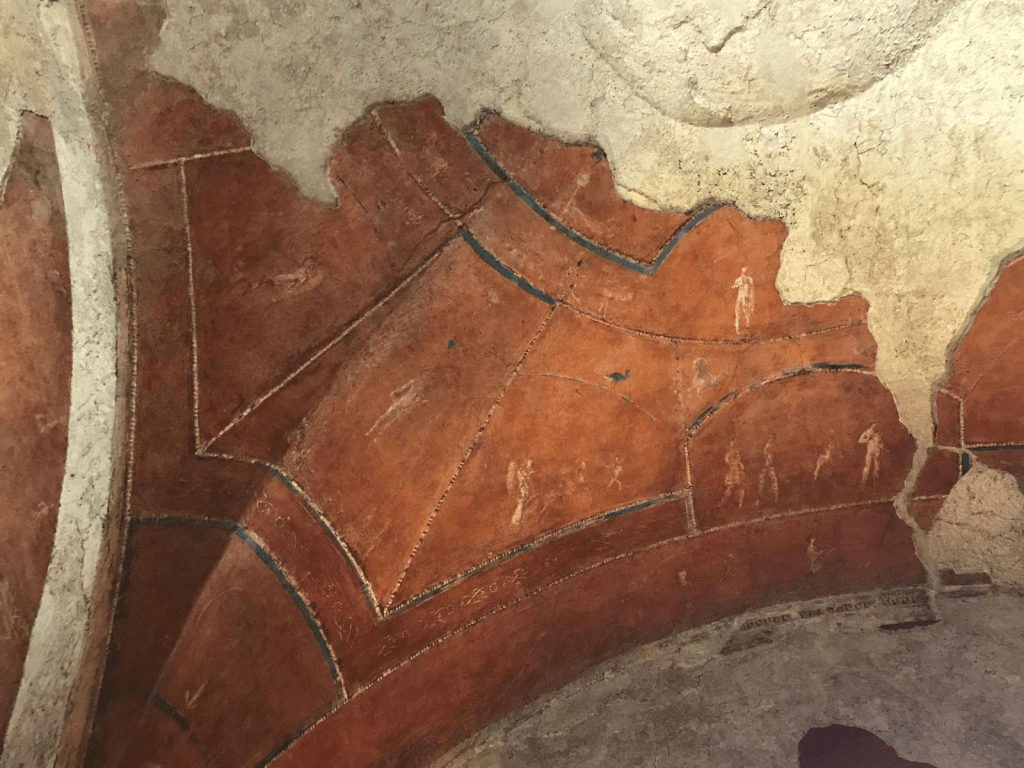
We can recognize groups of characters, winged victories on chariots, cupids, birds, marine animals, mythological subjects and architectural backgrounds.

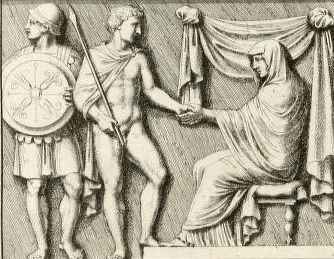
In the basement there is the burial chamber, where the sarcophagus with the myth of Protesilaus and Laodamìa was found. After Protesilaus was killed in the Trojan War he was allowed to return to his wife but only for three hours, a concession because they had just married.
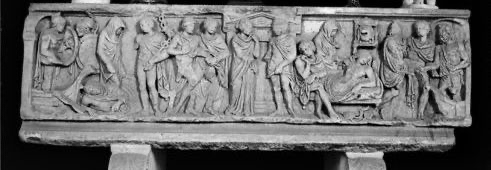
When Protesilaus returns to the Hades, Laodamia stabs herself to death rather than be without him.
The interior is illuminated by a slit window and by oher smaller ones, protected by a stucco border. A corridor paved with refined mosaics surrounds the main room where wall tombs are decorated with ovoli and palmettes.

The central floor was used for funeral rites, in which relatives feasted remembering the deceased and thinking that he participated in spirit and that he was happy with the family feast.
THE TOMB OF THE VALERI – The richly decorated underground rooms are preserved, dating back to 160-170 AD, while the elevated part is a hypothetical reconstruction carried out in the mid-19th century.
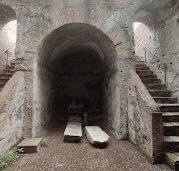
The underground chambers were accessed by two parallel and symmetrical staircases that still exist. The underground structure and the stairs were covered with white marble slabs, some fragments of which remain in the floor of the main burial chamber.
The most spectacular part is the decoration of the vault: both the ceiling and the lunettes present a festive spectacle all in white stucco and medallions, in which you can see maenads (possessed girls) and satyrs (woodland deities) dancing together with pistrics (fabulous marine animals) and nereids (nymphs).
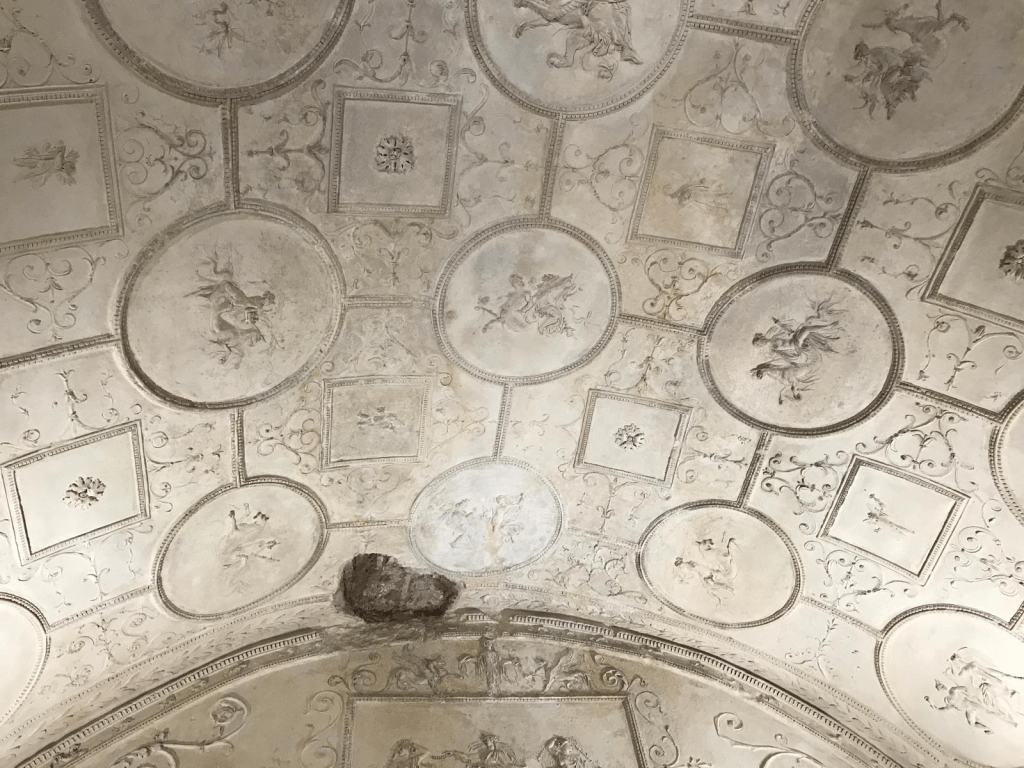
An elaborate white stucco covering, divided into 35 medallions and panels, adorns the lunettes and the barrel vault of the underground environment.


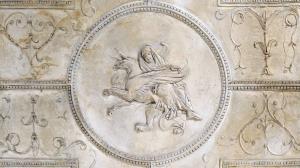
Dionysian subjects, female figures and marine animals are represented in the medallions, while in the central roundel there is a delicate veiled figure on the back of a griffin, which represents the deceased being taken to the afterlife.
THE TOMBS OF THE PANCRATIANS – It’s the jewel of the Tombs of Via Latina. Much of the visible structure is a modern construction that protects the monument below by setting itself on the original walls from the end of the 1st century AD which are preserved for approximately one meter in height.
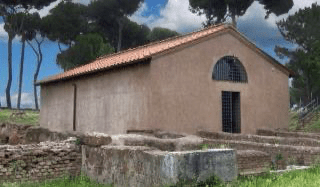
The name of the Sepulchre derives from two inscriptions that mention the funeral college of the “Pancratii” whose members chose to be buried there in 3rd century AD. It was one if the funerary associations that took care to provide adequate burial for their members who paid directly for their tomb while they were alive. Behind the sepulchre, there are traces of a villa from the end of the 1st century AD.
Entering the tomb you can admire the underground rooms splendidly decorated with mosaics on the floors and vaults and walls frescoed in bright colors and stuccos in an excellent state of conservation.

The rooms are astonishing for their sumptuousness. The first, entirely frescoed, has on two sides a long and high brick counter, intended to accommodate the sarcophagi, while below a series of small arches were intended for cinerary urns.
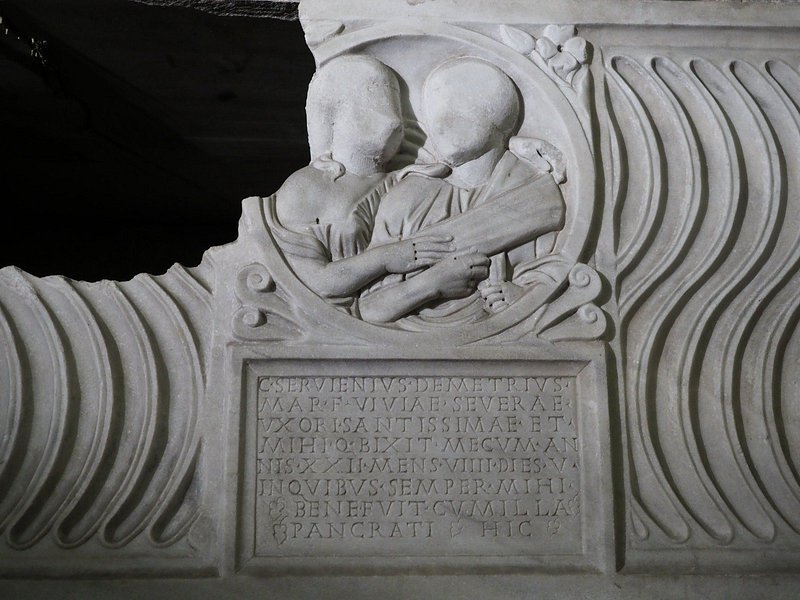
The sarcophagus reproduces the image of the two deceased spouses, with an inscription that refers to the Pancratii Collegium Funerarium. On the left side of the sarcophagus, there is a big hole in the marble, a destruction clumsily made by tomb raiders to view the interior.
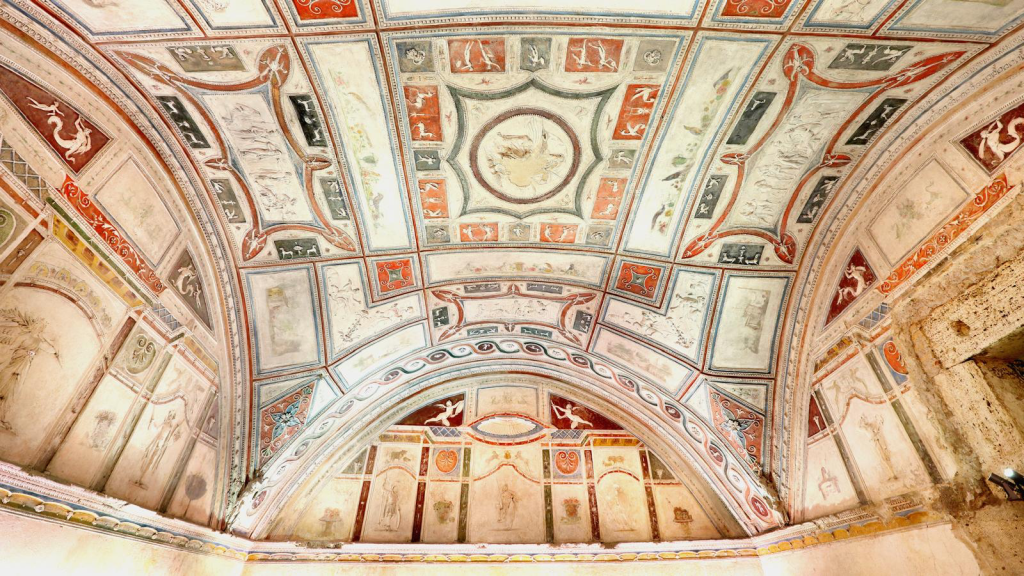
The second underground chamber, connected to the first by a much larger door, contains an elaborate decorative apparatus in the vault, one of the highest executions of the ancient world.

Entirely made of polychrome fresco and stucco, it presents a rich and dense group of images, symbols and figurative panels.
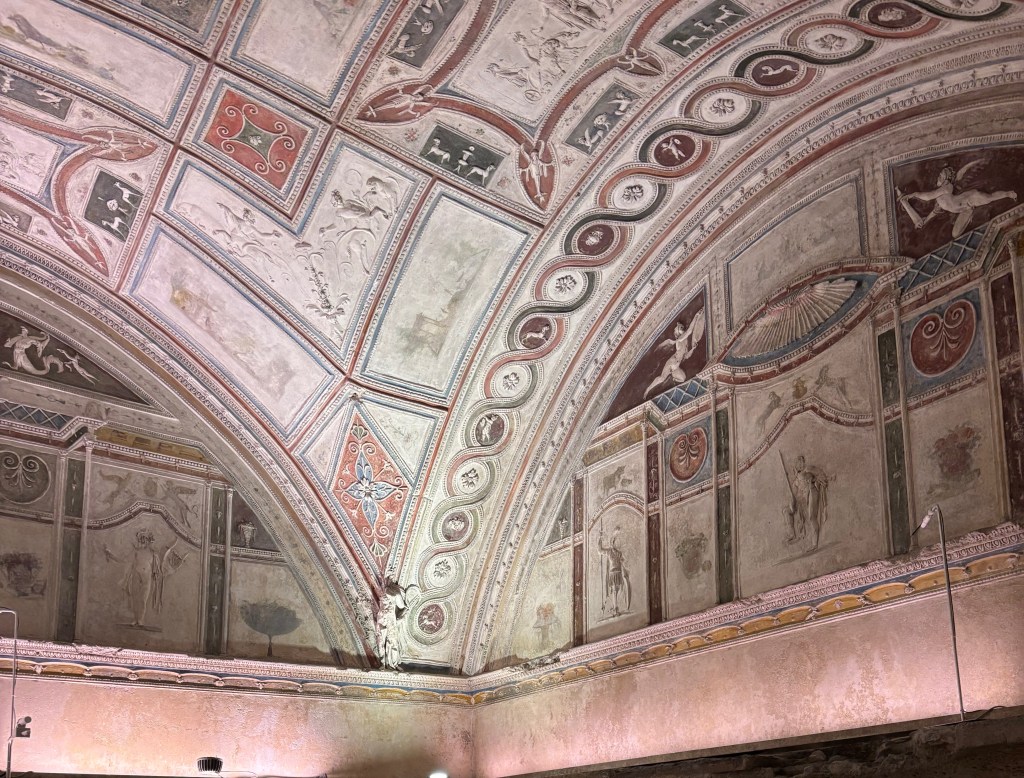
The most important are the four panels (one on each side) with mythological and epic scenes: the Judgement of Paris, Alcestis and Admetus, Priam and Achilles, Hercules on Olympus.

Each image refers to a good quality to which Roman men and women aspired.
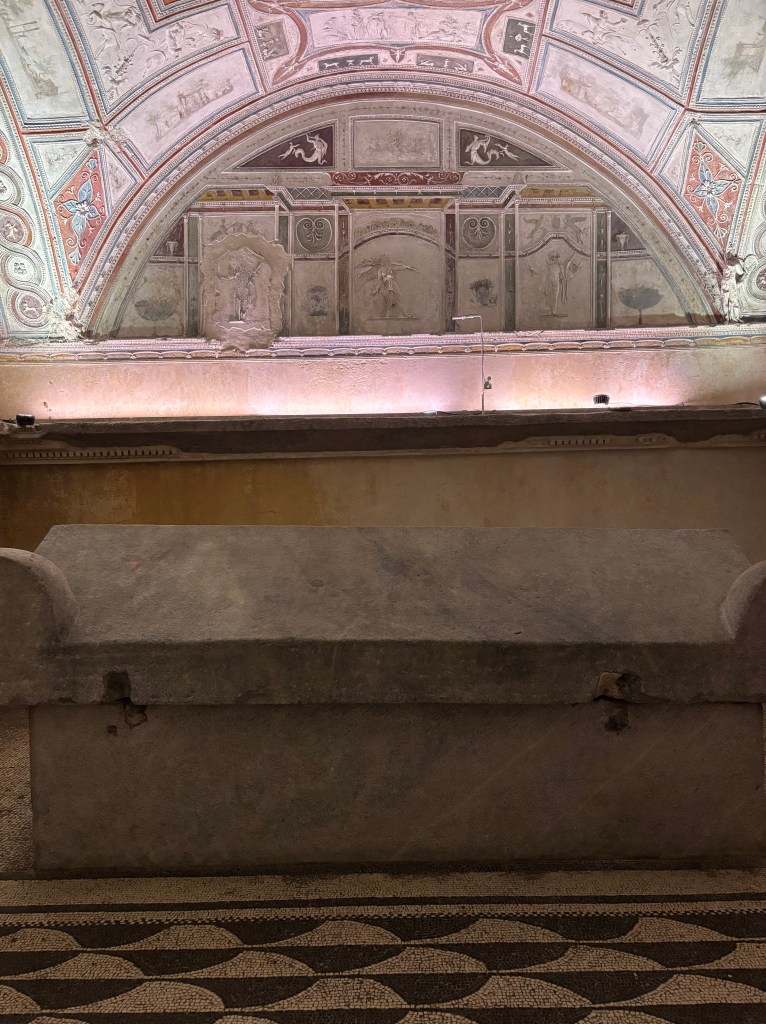
The sarcophagus in Greek marble and in oriental style was conceived for two deceased and it was is so large that it could not pass through the door of the room and the stairs, so the walls were certainly erected around it.
BASILICA OF SANTO STEFANO – From the road it is also possible to reach the Basilica of S. Stefano, a rare example of an early Christian structure built under the pontificate of Leo the Great around the middle of the 5th century. The remains of an apse and confession are placed under the altar of the Basilica dedicated to Saint Stephen the Protomartyr.

He was a highly venerated saint to whom numerous, basilicas and chapels were dedicated: in Rome alone there were around 30 of them and the most famous is the Basilica of Santo Stefano Rotondo al Celio.
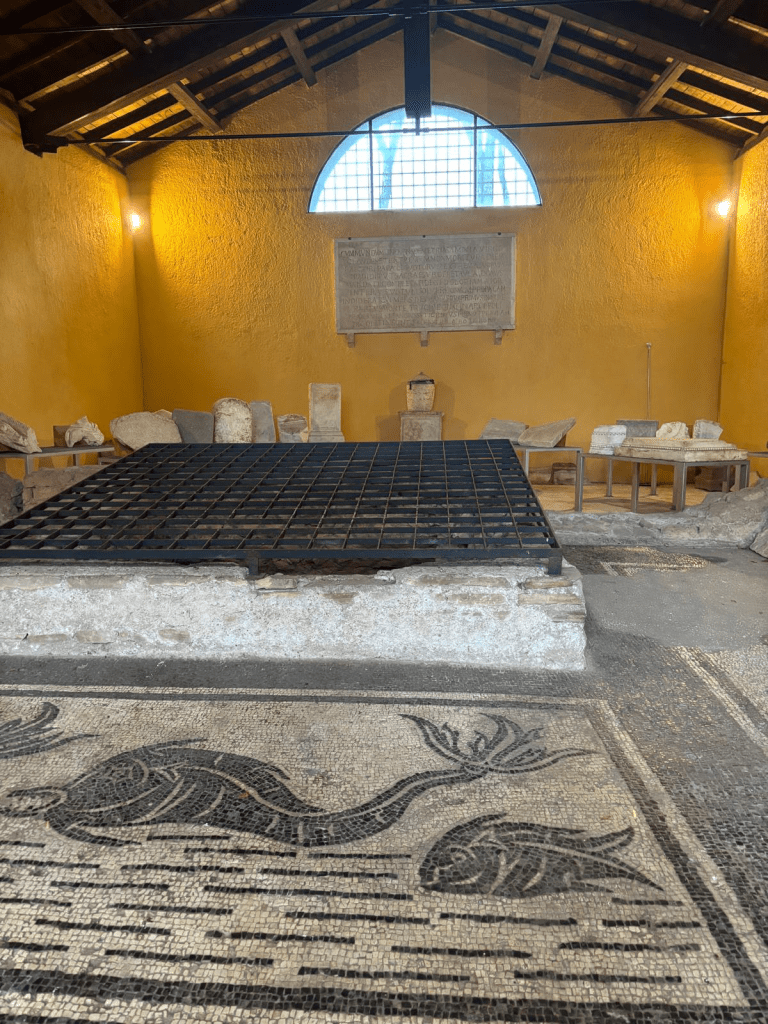
It is one of the most important early Christian basilicas and it contains the remains of the best preserved baptistery in the suburbs of Rome: a baptismal font for the rite of immersion.
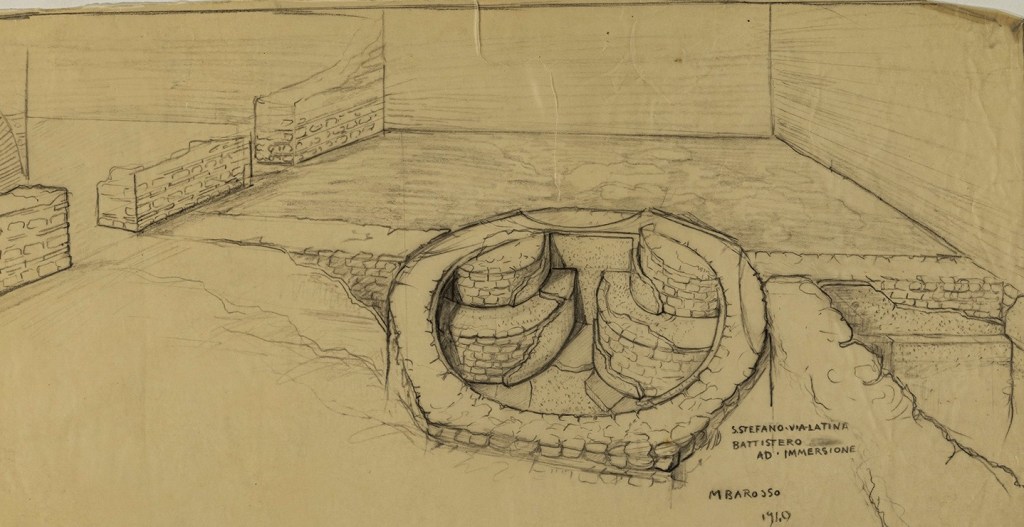
In the area there was a Roman Villa built in the 1st century AD, in the Flavian age, that in the 4th century became the residence of a powerful aristocratic family of the Constaninian age, the Anicii. One of their heirs, Demetriade, had the basilica of Santo Stefano built in the 5th century.
During the excavations light wall structures have been found, along with ceramics. One of the most peculiar finds is a small reused slab, perhaps from the 3rd century, with an inscription in Greek, which bears the engraved drawing of a small dog. It could be the funerary slab of a dog.
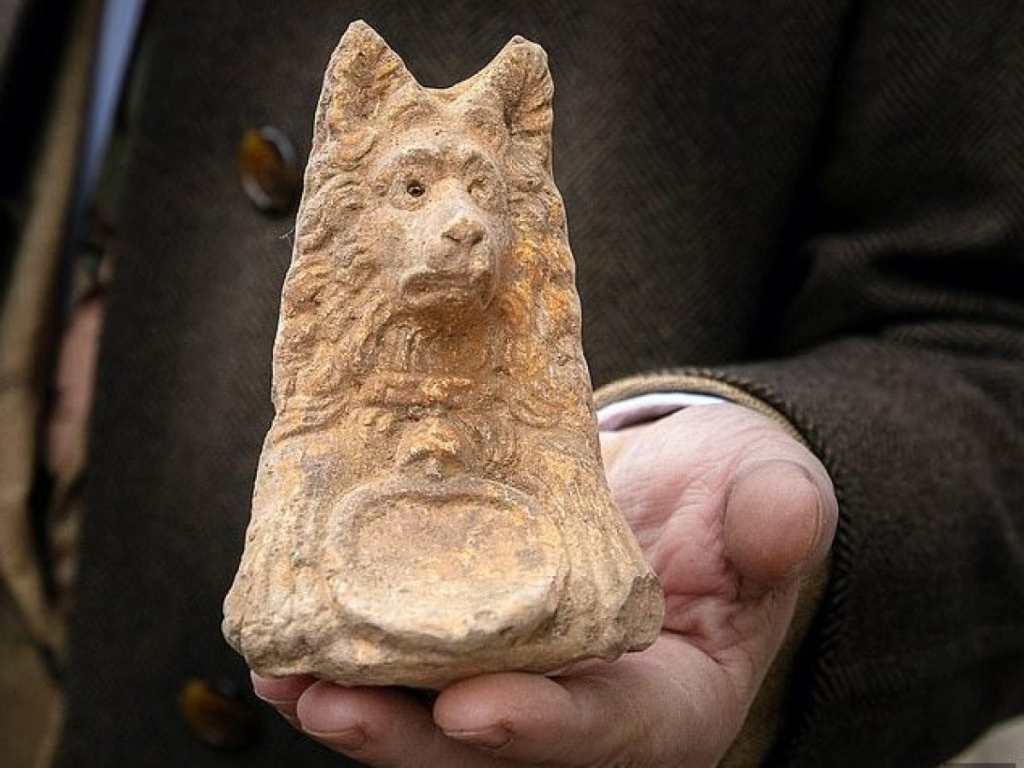
Not far from the area, in Appio Latino quarter, in 2023 was unearthed an ancient burial complex with a terracotta dog statue and an urn.

Useful Informations
Access to the Park is free. To visit the interior of the tombs it is necessary to book guided tours on the days and time slots indicated on the Italian Museums website and in the App available on Google Play and the App Store.

Tickets – only Tombs of Via Latina: full price 6€ / reduced 2€. The ticket allows you to book a guided visit to the Tombs of Via Latina site, during the opening hours to the public.
Address: Via dell’Arco di Travertino 151 How to get there: Metro Line A, Arco di Travertino stop and them you can walk for 400 meters.
ARCHAEOLOGICAL PARK OF APPIA ANTICA
The Park of the Appian Way is one of the biggest archaeological areas of Europe embracing 4580 hectares.
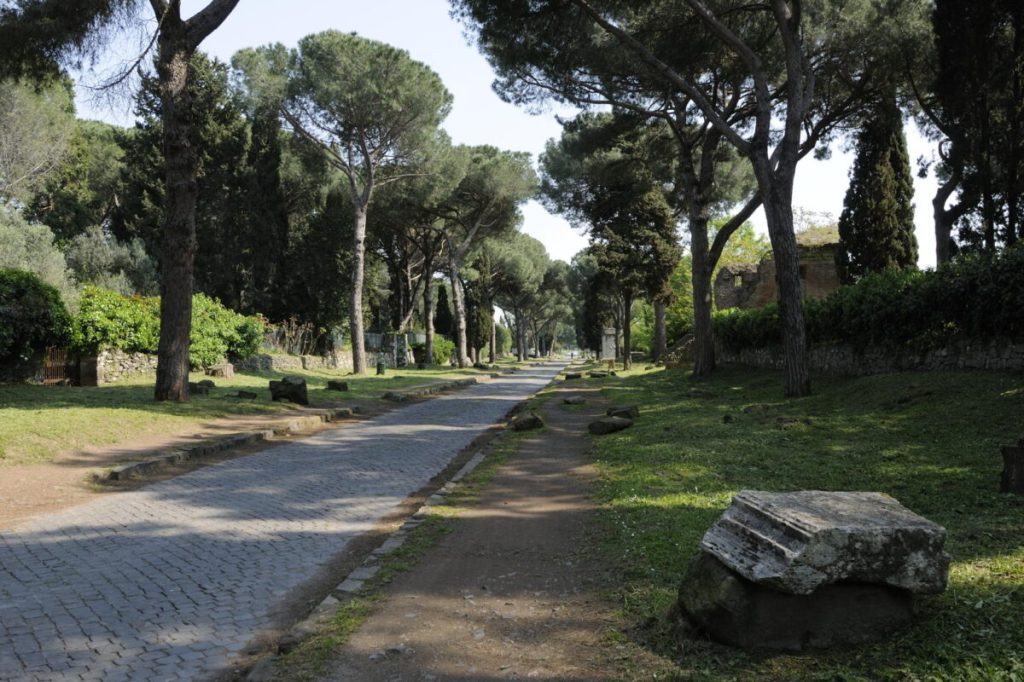
The Park is crossed by the Appian Way, surrounded by several macroareas, such as the Caffarella Valley, the Aqueducts areas and other areas.
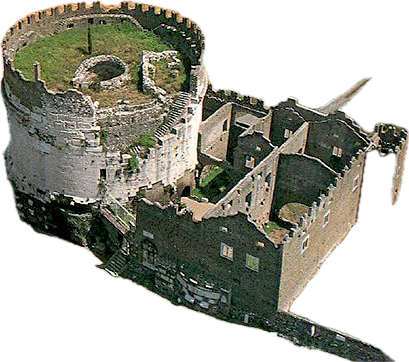
One of the most interesting attractions is the Tomb of Cecilia Metella. It was built during the reign of Augustus in honor of Cecilia Metella, daughter of the Roman consul Quintus Cecilius Metella who conquered Crete by defeating the pirates of the Mediterranean. Her husband was a son of triumvir Marcus Licinius Crassus who bloodily suppressed the slave revolt led by Spartacus (the final battle took place in the area of the mausoleum) and who formed the first triumvirate with Caesar and Pompey.
It is a circular mausoleum built on a square base, similar to that of Augustus himself, only smaller and decorated in the upper part with a marble frieze with festoons and ox heads, symbols of afterlife in Ancient Rome. The presence of these reliefs takes the name of “Capo di Bove” by which the area was known in the Middle Ages. In the entrance there is an inscription with the name Cecilia Metella.
Our Tabernae – Where to Eat

OSTERIA BONELLI – Viale dell’Acquedotto Alessandrino, 172/174 +393298633077 Typical Roman cuisine
 Italy as the Romans did
Leave a comment