The ‘Must see’ – Roman ships in the Archaelogical Museum
- The ‘Must see’ – Roman ships in the Archaelogical Museum
- History and Roman Legacy
- Ancient Rome Itinerary
- ‘Fun fact’ – The Roman Navy, the Masters of the Seas
- Useful informations for Olbia
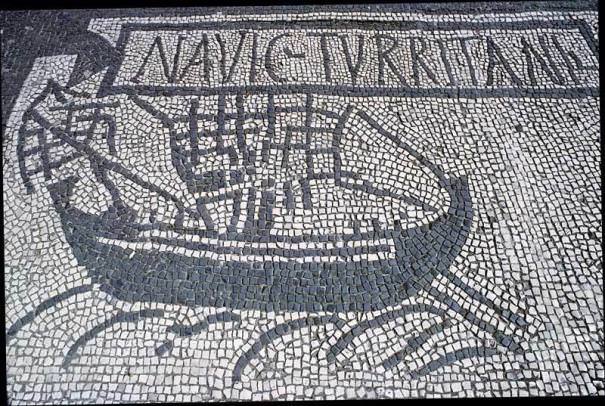
Military supremacy of the seas was crucial for Ancient Rome: its powerful naval fleet, developed in the Punic wars against the Carthaginians, became a perfect war machine. Propelled by both sail and oars, Roman ships had multiple levels of rowers, from the fast and maneuverable triremes to the large quinqueremes, with three banks of rowers.
Olbia was a strategic Phoenician, Greek Carthaginian and then Roman port in the North-East of Sardinia.
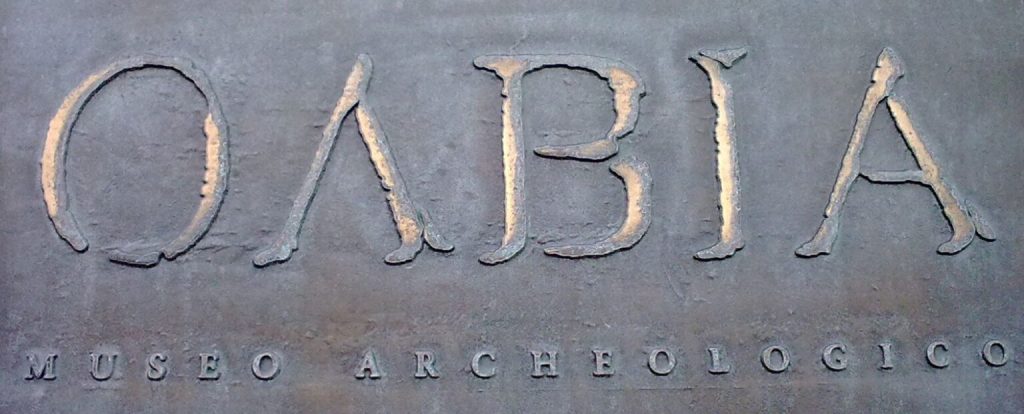
Whether you are disembarking from a cruise in Olbia or just visiting Sardinia, the Archaelogical Museum is a must for anyone who loves ancient history and navigation: it has a unique collection of Roman vessels and a real treasure: it is the only one in the world displaying masts and rudders of Roman age.
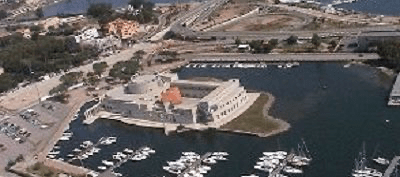
The museum is on the sea side of the small island of Peddone, a short walk from the old port. It is shaped like a ship at anchor, with portholes and hanging walkways, and it documents the history of the city focusing on the Phoenician, Greek, Punic, Roman and medieval eras.
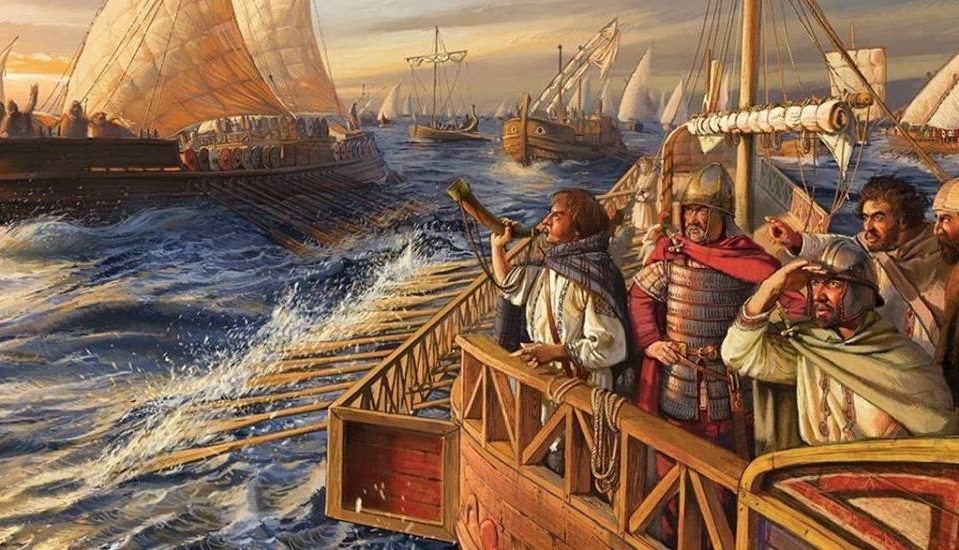
Roman Olbia was attacked and devastated around 455 AD, when a Vandal fleet blockaded its port and partially burnt cargo ships in order to force the population to surrender.
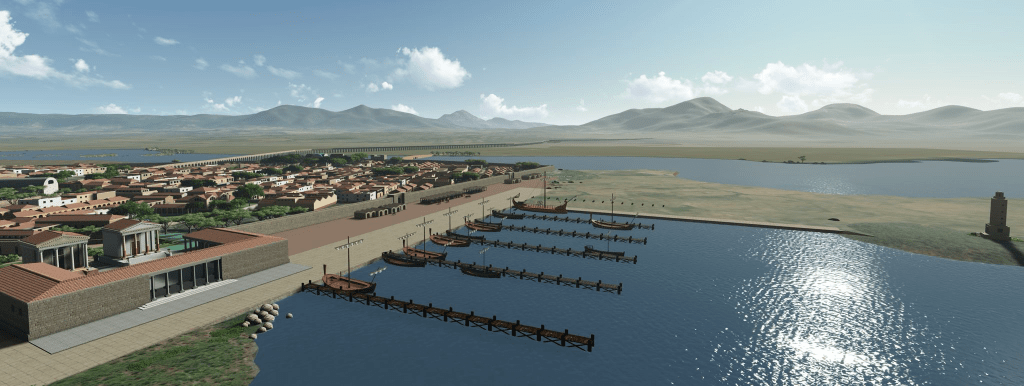
In 1999-2001 the wrecks of 11 Roman vessels were found during the excavation of a road tunnel in the ancient port of Olbia.
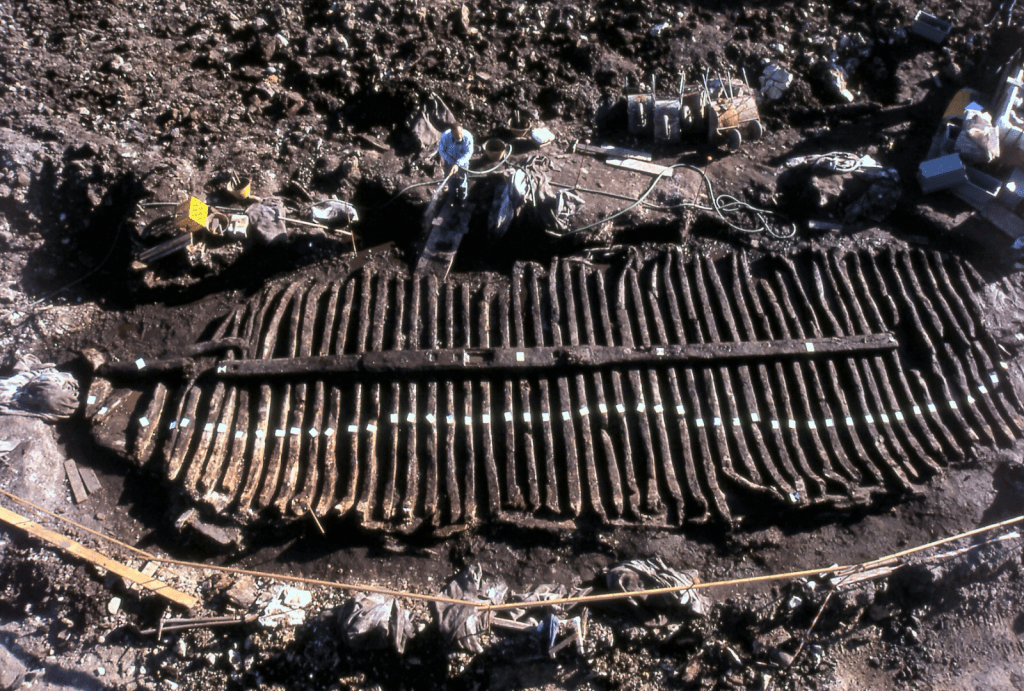
Along with the remains of the ships were found lots of objects and artifacts such as oil lamps, pottery, amphorae, bronze coins, silver coins and a gold one, rings, a necklace of glass paste, an Egyptian statuette of Osiris, a sapphire from Ceylon, granite columns, glass jars, a phallic amulet, fragments of a life-size bronze statue of Emperor Nero.
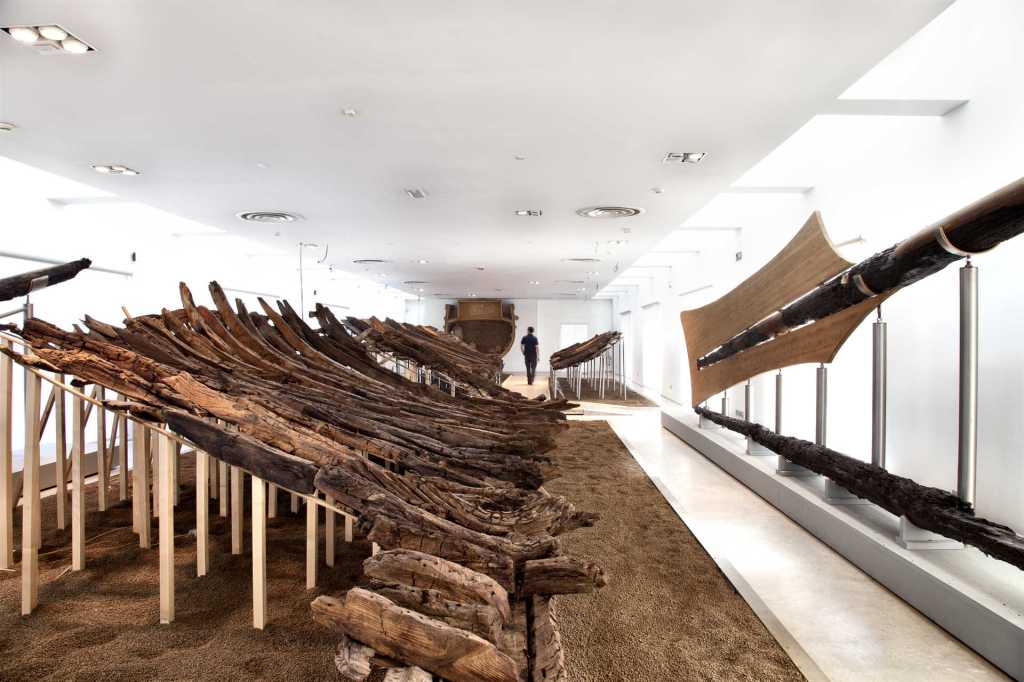
The museum has two levels. In the first hall on the ground floor are the ancient masts (almost entire with the original height, 7-8 meters) along with two real Roman ships with rudders.

The room displays two of the 11 wrecks of commercial ships that were 15 to 30 meters long. They were sunk in very shallow water and therefore only the half of the hull below the waterline has been saved: the rest, as it protruded out of water, was not preserved.
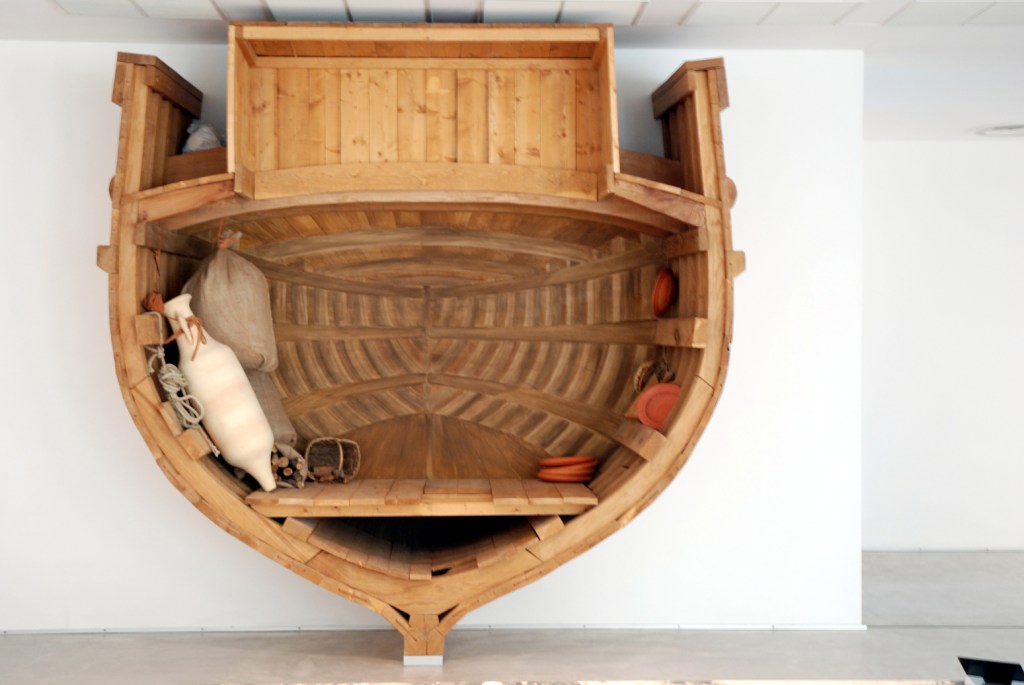
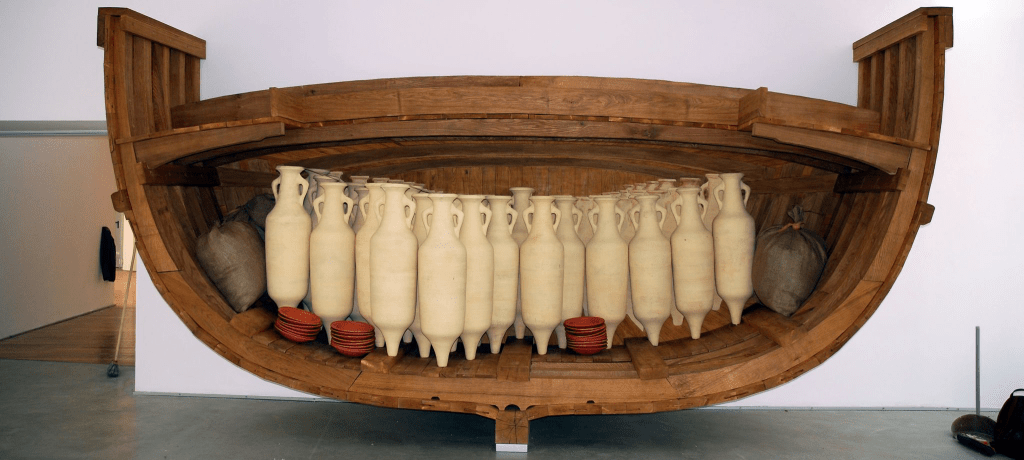
Two reconstructions at the two extreme sides of the room show the typical cross-section of these ship. The wrecks were recovered by dismantling them axis by axis and then reassembling them in the museum at the end of the long, difficult and expensive restoration.
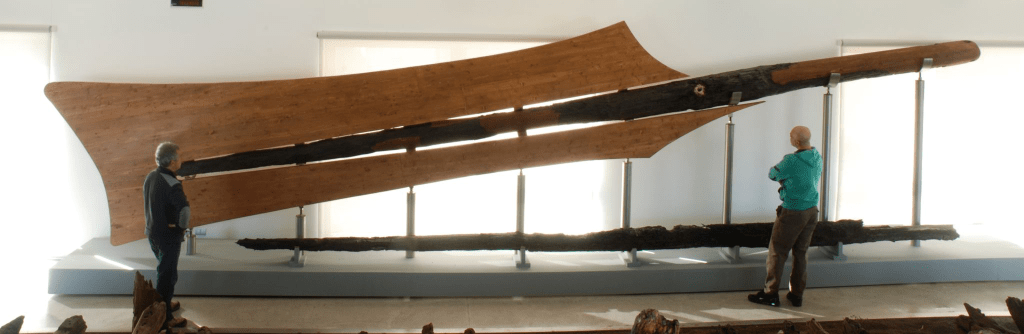
Also on display are two ship masts, placed diagonally, and three timber rudders. In one case with the rudder there is also a reconstruction of the blade, the wide part that exerts the thrust force on the water.
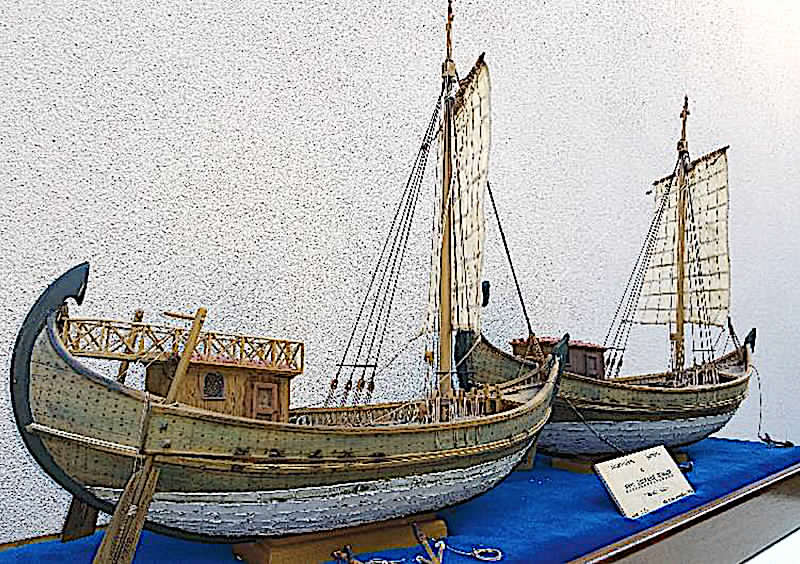
Rudders and masts date back to the 1st century AD and are unique finds in the world, not visible in any other museum; the only ship masts known to date are in fact very small portions identified in unrecovered wrecks, while the only rudders known were those of the Nemi ships, which were lost in the bombing of the museum in World War Two.
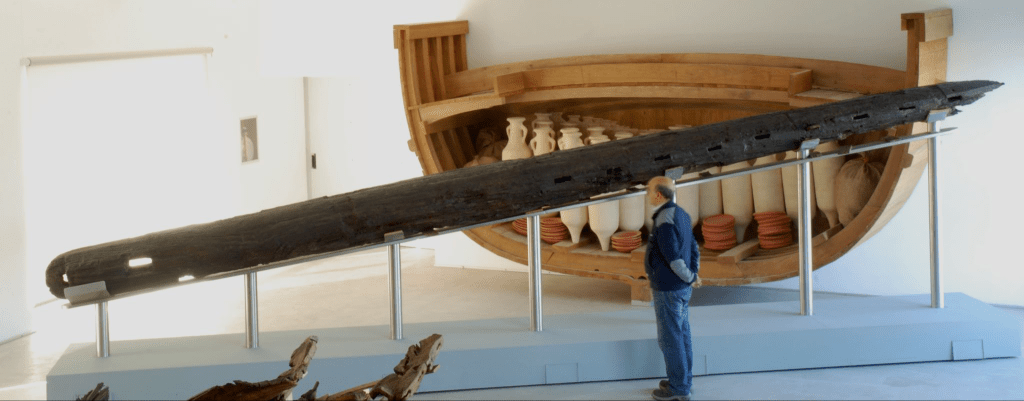
What you see is a perfectly preserved (and stabilized) wood reassembled to build a keel that seems almost ready to sail away.
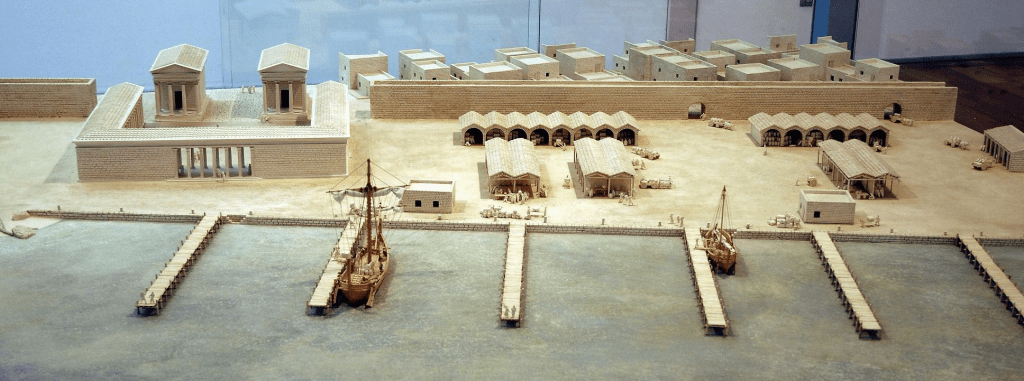
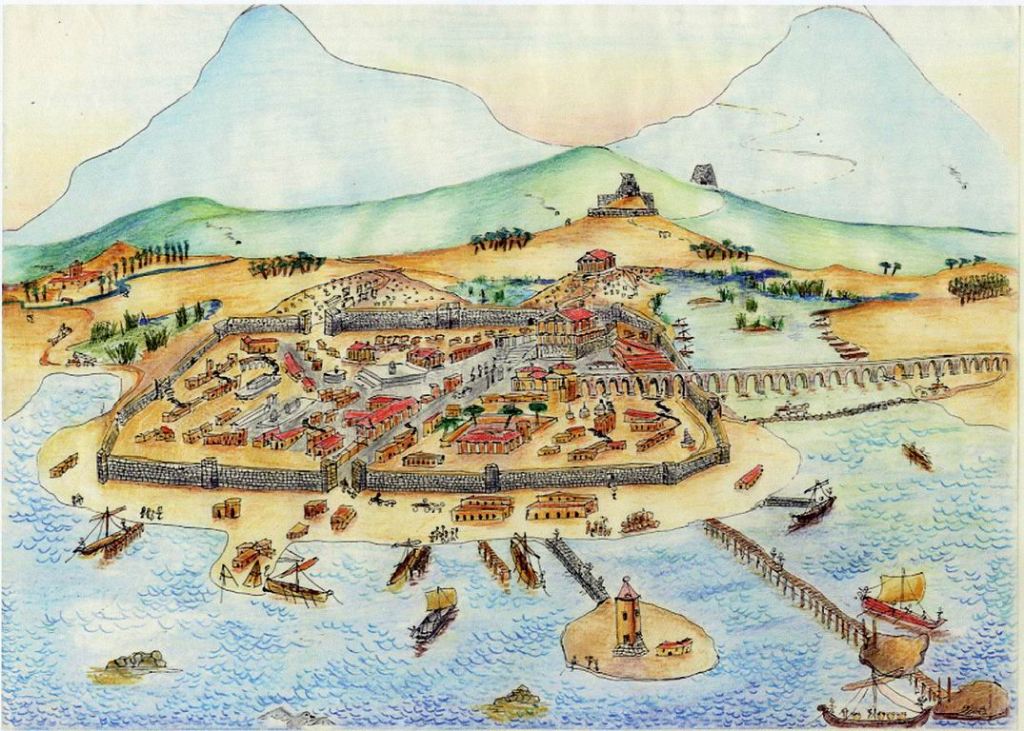
Hall 3 displays a small medieval shipwreck, the only one of its kind in Italy. Hall 4 recalls the attack of the Vandals on the Roman city with an evocative 180° projection. Hall 5 houses a large model of the port dating back to the 2nd century AD, when the Roman city was at the height of its monumentalization.
On the first floor there are objects and artifacts from the Phoenician settlement (750 BC) and Greek occupation (630-520 BC), when Olbia was the only Greek port in Sardinia.
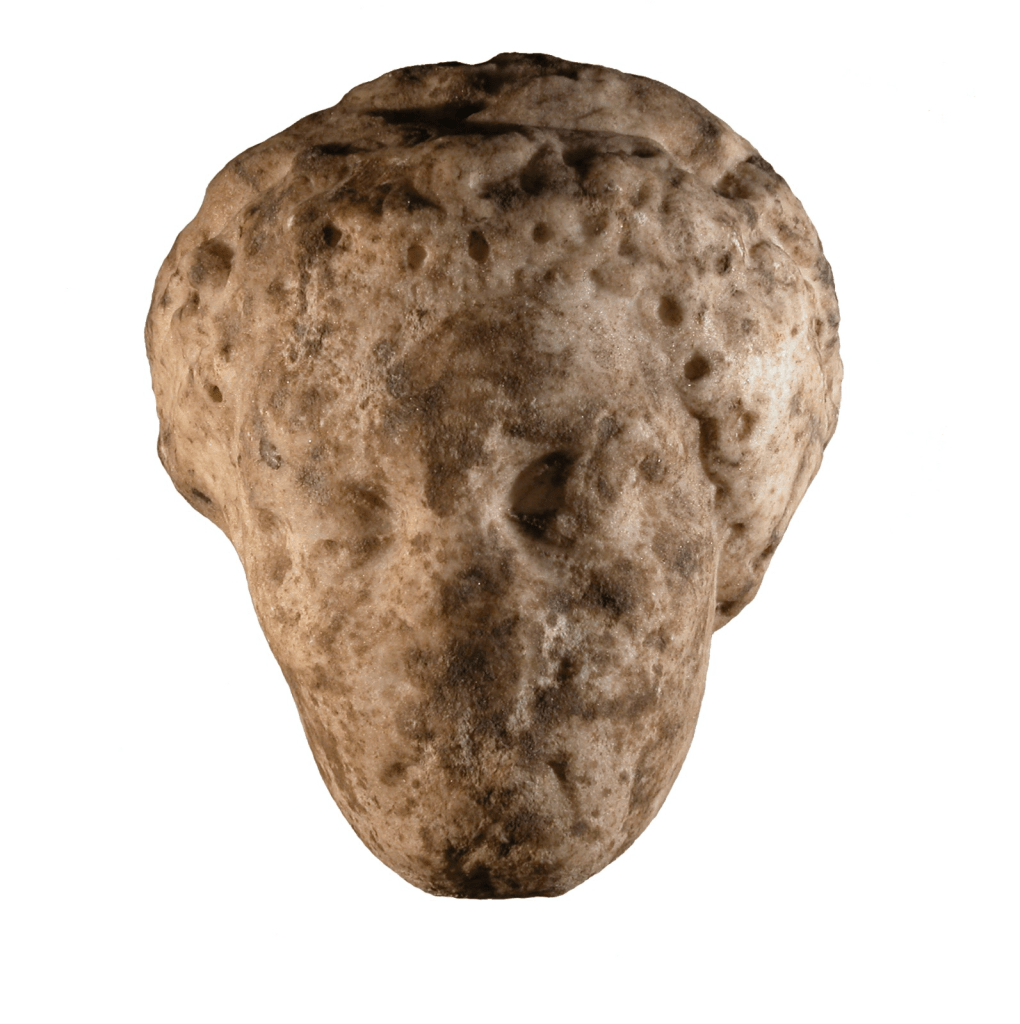
The third hall displays terracottas, funerary items and amphorae from the period when the Punic civilization gave way to the Roman one, while the following room covers Olbia from the mid-1st century BC, whern the city and its port are fully Romanized. There are sculptures like the heads of the Emperor Domitian and the Empress Domitia.
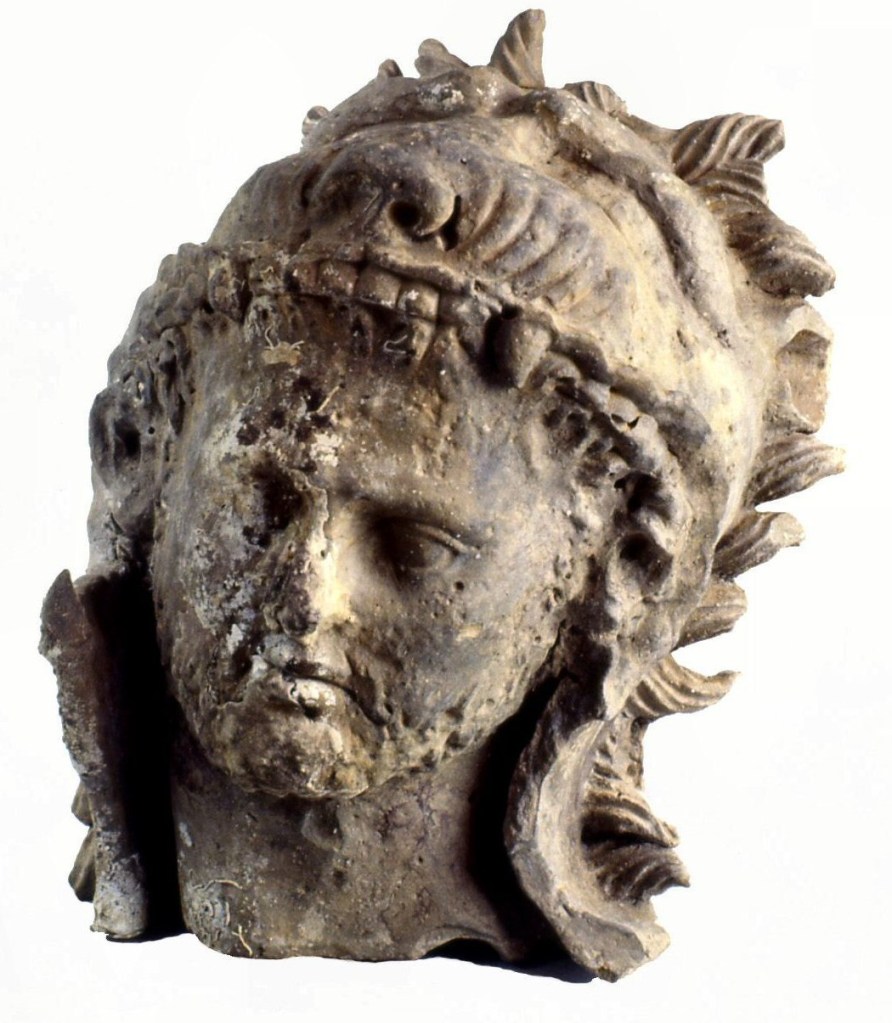
A terracotta head of a young Hercules with a beard and the head covered in the skin of the Nemean lion is displayed along with a full-size, color reconstruction of the statue: it dates back to the middle of the 2nd century AD, but is based on a Greek bronze from the 4th century BC. The cult of Eracle/Melkart/Hercules, a god that was present in the Greek, Phoenician-Carthaginian and Roman tradition, was an important element of continuity for the population of Olbia.
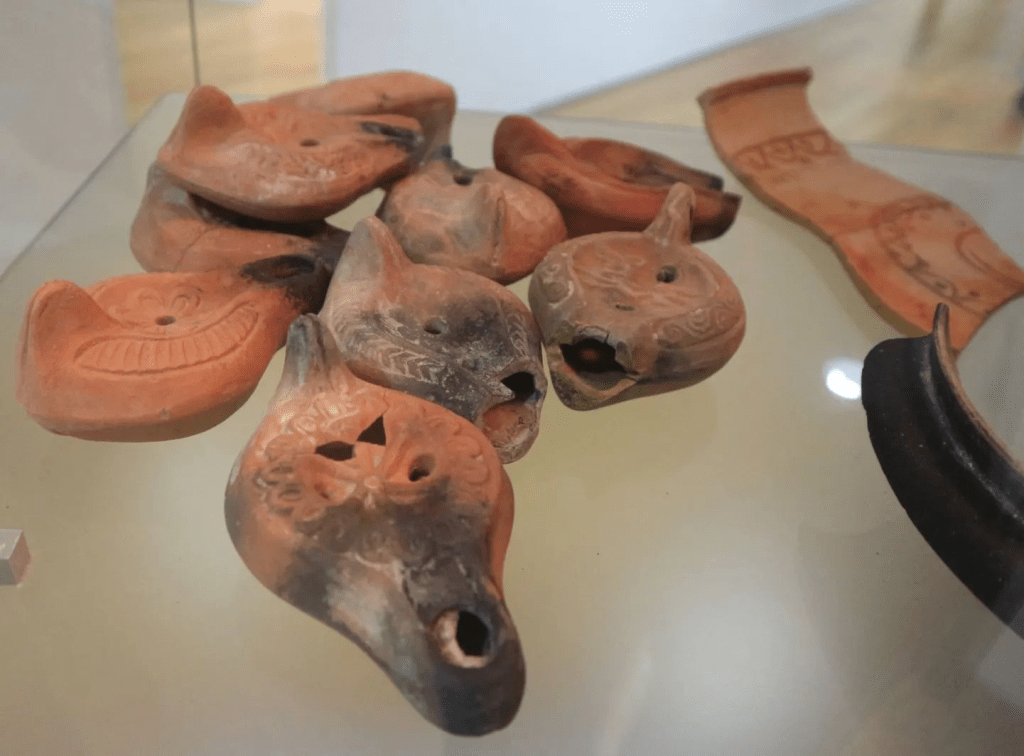

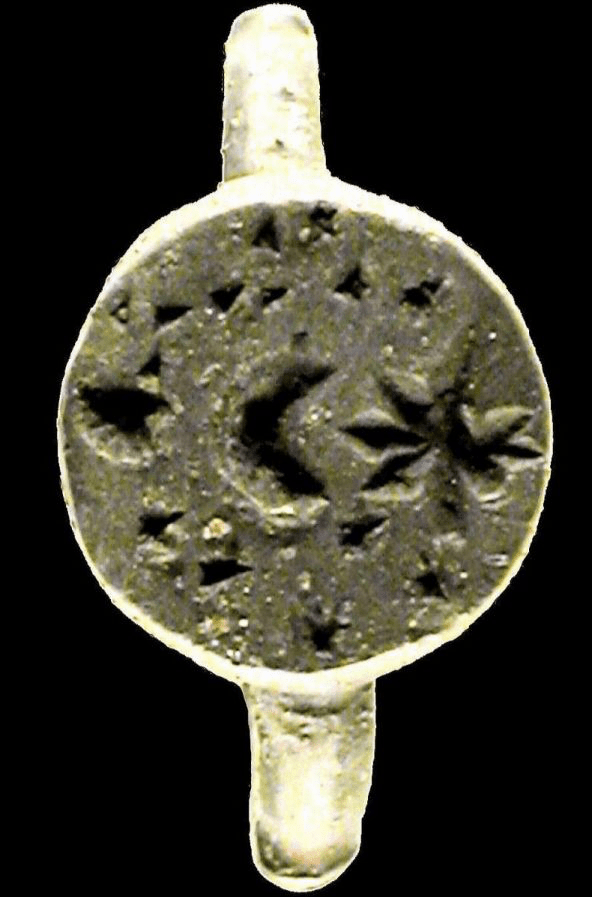
The fifth room is focused on the relationship between Roman Olbia and the Mediterranean, as well as the traumatic advent of the Vandals, with clay lamps, coins, rings (there is an extraordinary ring with an eclipse with the moon between earth and the sun) and an Egyptian little statue of the god Osiris.
History and Roman Legacy
Olbia was founded by Phoenicians and developed by settlers from Greece. Its name means happiness or prosperity in Greek. Between 540 and 510 BC it fell under Carthaginians with the rest of the island. It became Roman with the conquest of Sardinia in 238 BC.
During the first Punic War between Rome and Carthage, consul Lucius Cornelius Scipio conquered Aleria in Corsica and then sailed to Sardinia to launch an attack on Olbia in 259 BC. The Punic general Hanno was killed while he fought in defense of the city and was given a full military funeral by Scipio. Ultimately, Scipio had to abandon the city but Olbia eventually came under Roman administration once the Romans seized Sardinia following the First Punic War in 238 BC by consul Tiberius Sempronius Gracchus after Carthaginians had left the island.
In 227 BC Sardinia and Corsica became Roman provinces but there were several revolts, sometimes stirred up by the Carthaginians with whom the locals kept a special relationship. “Africa ipsa parens illa Sardiniae”, Africa itself is the parent of Sardinia, said Roman orator Cicero with contempt.
In 177 and 176 BC there was a long revolt and 80,000 Sardinians were killed or captured. The slaves brought to Rome were so numerous that the prices of servi collapsed and Sardi venales became a common saying to mean sale at a low price. Olbia was connected to the rest of the island by two important roads towards the other main ports: Karales (Cagliari), and Turris Libisonis (Porto Torres). The population of Olbia was of around 5000 inhabitants.

The role of Nero’s lover The development of the city, according to several sources, was promoted by Atte, young Nero’s slave and lover from 55 to 58 AD (probably from Bithinia, Northern Turkey). The young Emperor, married to his 13 years old half-sister Octavia (daughter of Claudius and Messalina) by his mother Agrippine, had his sexual appetites satisfied by Atte who had become a freed woman.
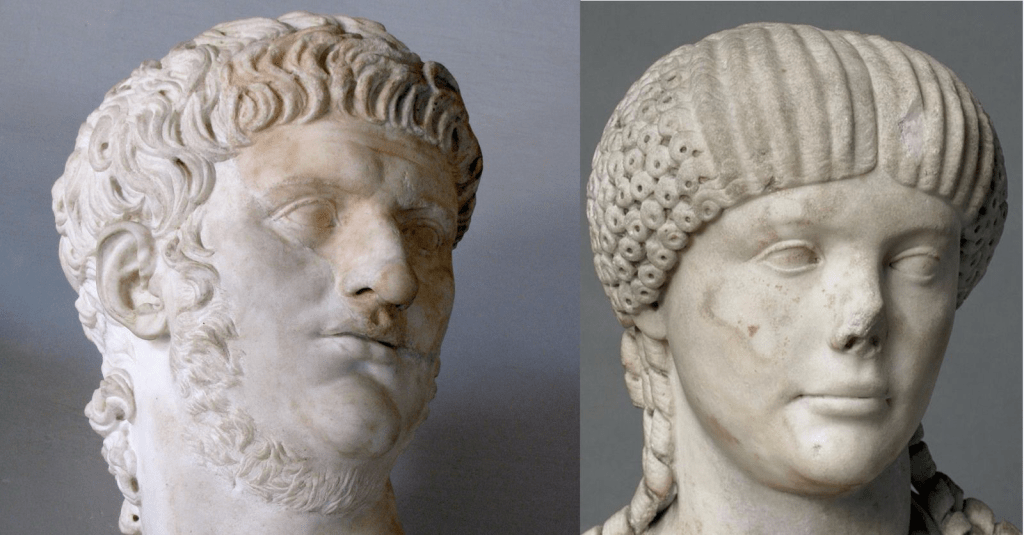
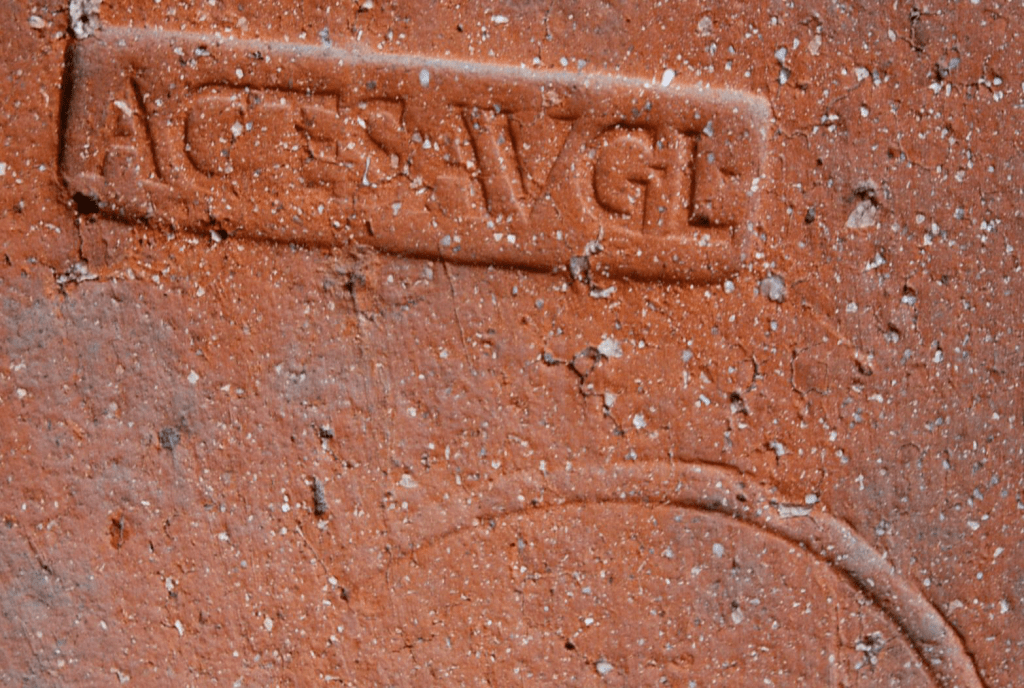
When Nero repudiated Octavia accusing her of sterility and married Poppea Sabina, Atte went in voluntary exile to the Gallura city where the Emperor assigned her vast estates and a brick factory (with the stamp Actes Aug [usti] l[iberta]).
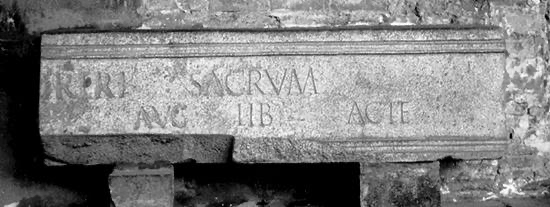
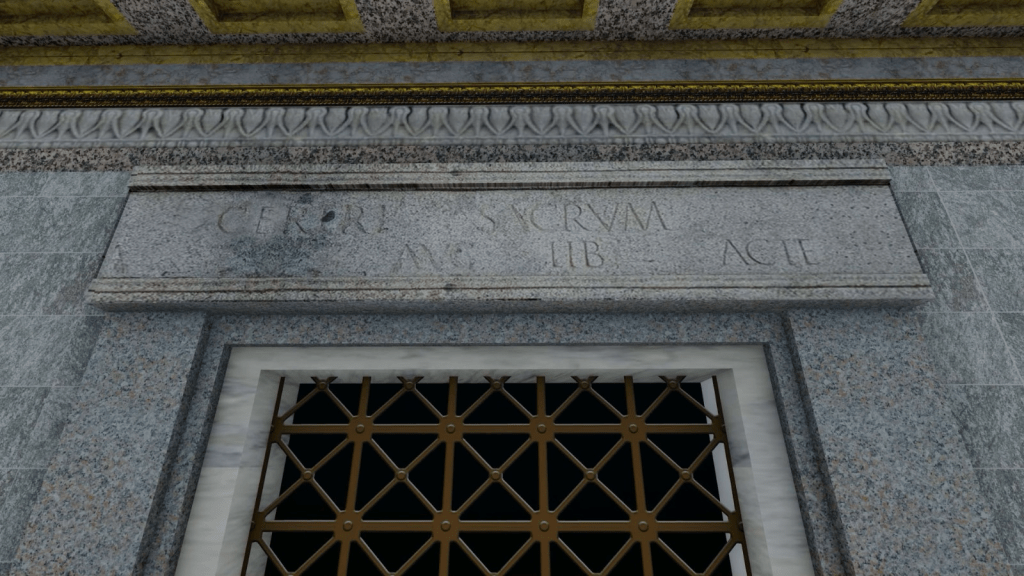
In Olbia she built a temple for the goddess of land and agriculture Ceres and its architrave with the dedication is today preserved in the monumental cemetery of Pisa.

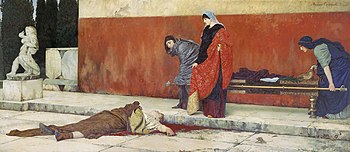
Atte always remained devout to Nero and she assisted his two nurses for the burial after he committed suicide by ordering the freedman Epaphroditus to kill him, in 68 AD, proving the “pious loyalty of her desperation”. The Emperor was 30 years old.
Olbia (not to be confused with the settlement on the Black Sea with the same name) had several public baths, but is its aqueduct that stands out: it is considered the most intact in all of Sardinia.

The Vandal invasion in the 5th century was part of a strategy of the Germanic people settled in North Africa to deprive Rome of food supplies and military support, preparing the expedition that in June 455 sacked the capital of the world for 10 days.
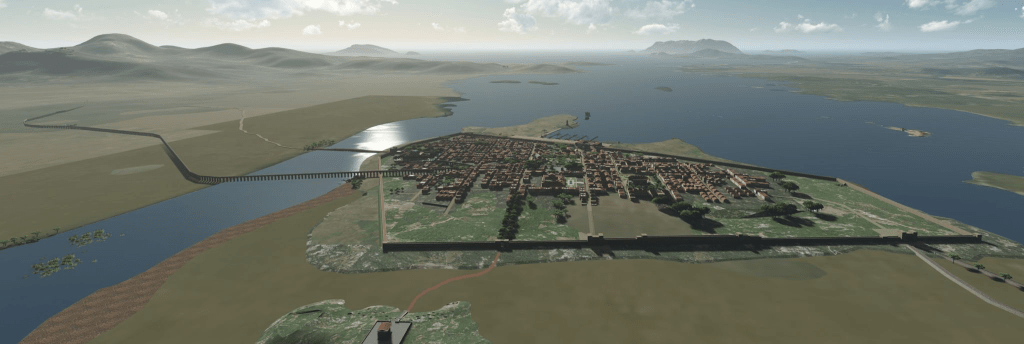
The attack on Olbia is part of this logic and will advise the other cities of Sardinia to capitulate in order to avoid the same fate. The new lords did not raze the city to the ground, but the port wasn’t restored because their trade was oriented towards Africa and the West rather than towards the Tyrrhenian Sea. So Olbia entered a period of steep decline, but it remained populated and retained its importance in later periods.
The Vandal domination of Sardinia lasted for 80 years until they were defeated by Byzantine Emperor Justinian I in 534 after the rebellion of governor Goda who had proclaimed himself Rex of the island prompting a new intervention of the Vandal navy.
Ancient Rome Itinerary
Many traces testify to the decisive role of Olbia in the Imperial age as a commercial port and as a military bastion. Some are visible in the city and its surroundings, others lie underwater or await to be discovered.
PUNIC WALLS Olbia was encircled by defensive walls built by Carthaginians around 330 BC that were also used in the Roman era. The best preserved section, 64 meters pertaining to the western sector facing the inner lands, is visible in Via Torino.

The remains of a square tower, an entrance and a section of the curtain wall are preserved. They are all made with large squared granite blocks, in some cases the ashlar masonry is still visible.
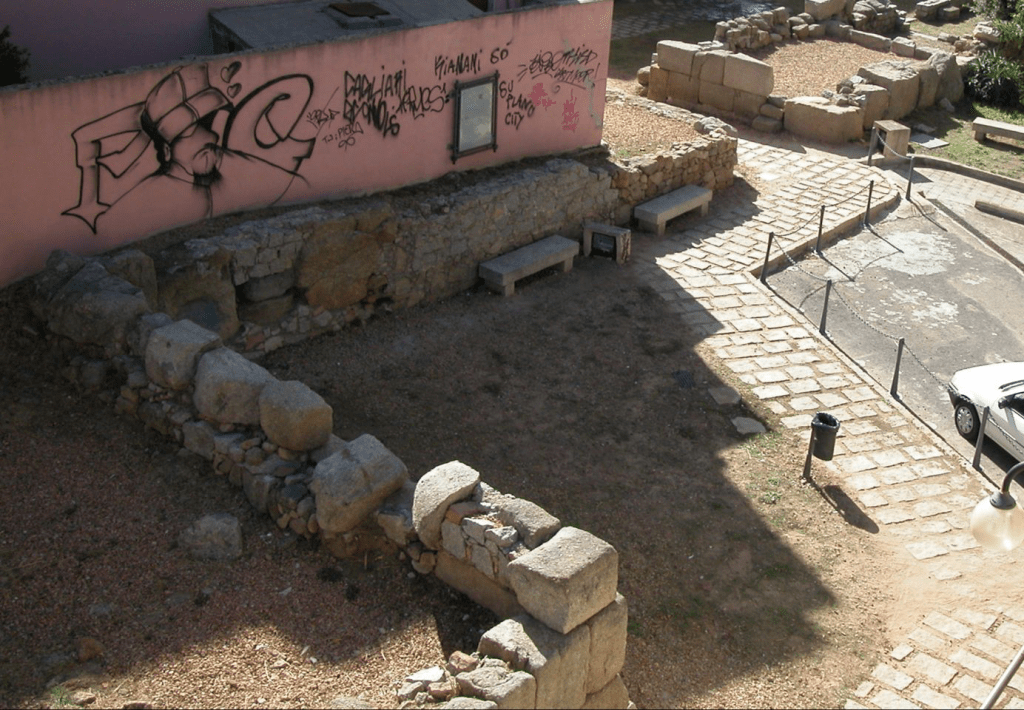
A short distance away, in the square of the residential complex on Via dell’’Acquedotto, through two glass pyramids it is possible to see the remains of a further portion of the walls where Roman coins from the end of 2nd century AD were found, mainly of the emperor Commodus.

A water storage tank with waterproof lining (now filled and covered for preservation) was found in the tower. The walls are just out in the open, so they can be visited at any time. There’s a small informational sign, with a translation in several languages, at the south end of the walls.
ROMAN FORUM The remains of the Forum, at the intersection between the central Corso Umberto and via Dante, are at a short walk from the Archaeological Museum and they are signaled by a panel. They were brought to light during excavations in 2006. The walking surface in granite slabs now visible is part of the flooring of the forum.
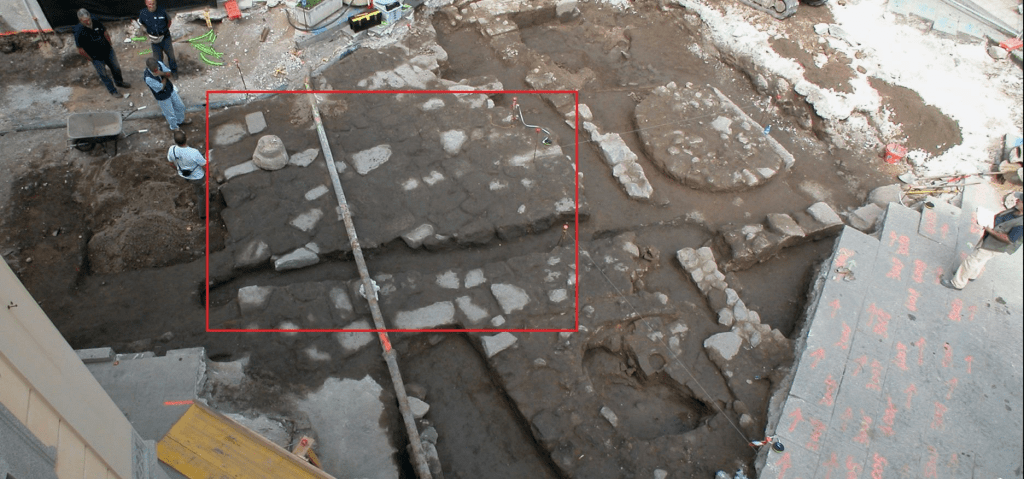
The Olbia forum, built during the reign of the Flavian dynasty of the emperors Vespasian, Titus and Domitian, faced the ancient port and extended from the current Town Hall to Villa Tamponi.
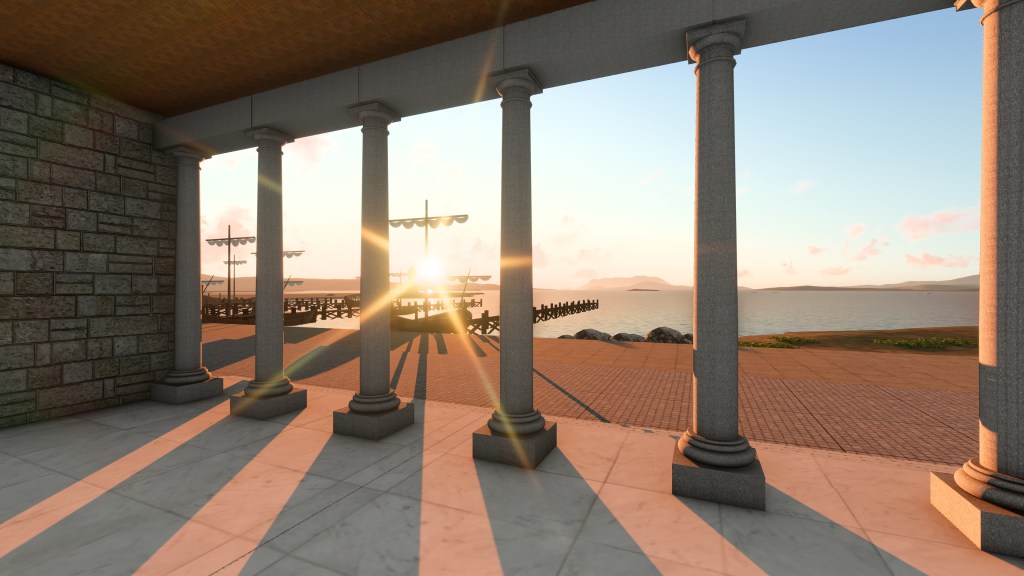
Along the western side there were two temples, one of which was dedicated to Venus and perhaps already existed in the Phoenician, Greek and Punic phases of the city.
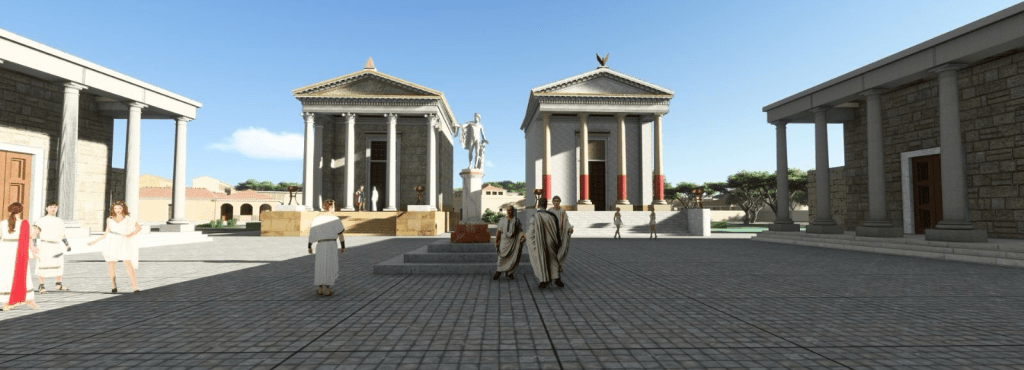
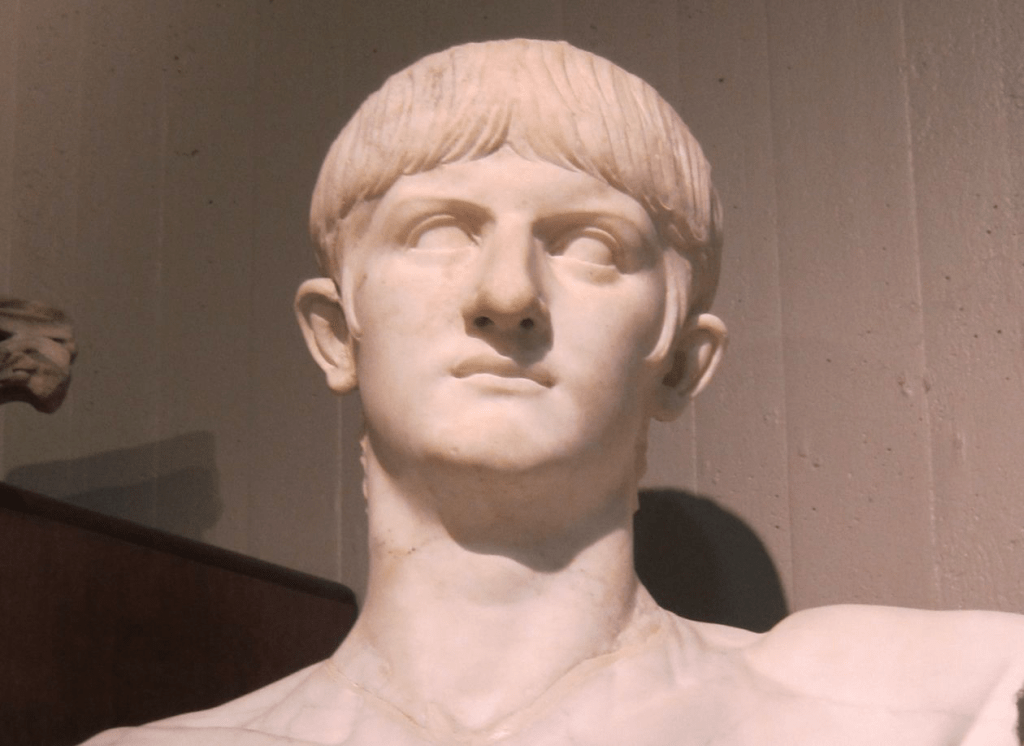
They later survived as the churches of Santa Maria del Mare and Sant’Antonio Abate, located at the beginning of the current Corso Umberto. Not far from here, in via Giuseppe Garibaldi, in 1911 a bust of Nero was discovered that is now in the Archaelogical museum of Cagliari.
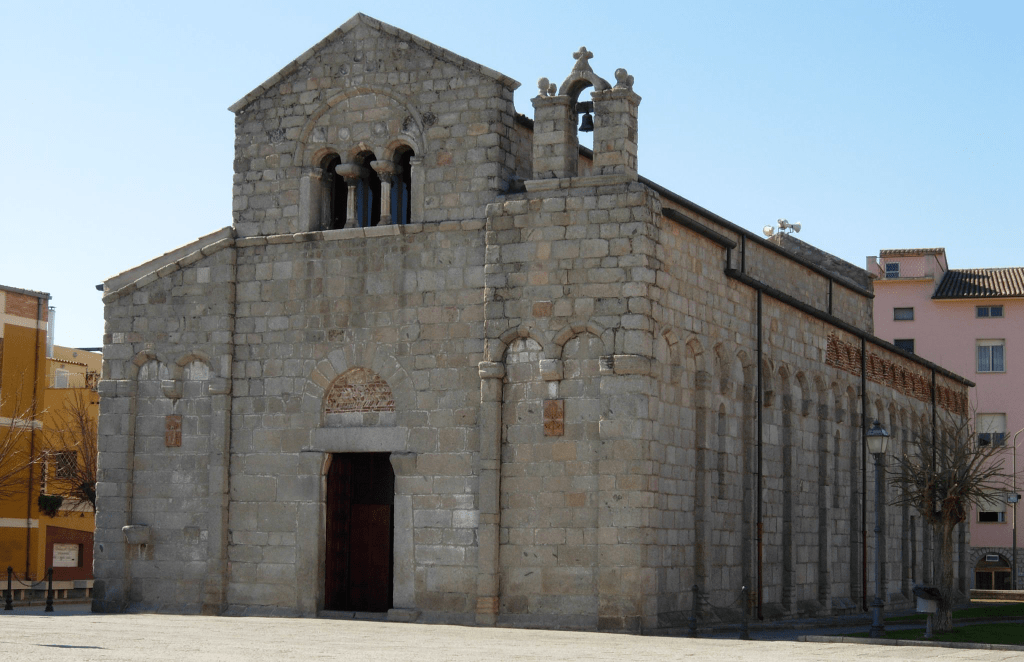
NECROPOLIS OF SAN SIMPLICIO AND RAMP TO THE TEMPLE OF CERES
Next to the car park under the square in front of the beautiful Romanesque church of San Simplicio, an archaeological site has been turned into a museum and can be visited according to the timetables displayed there.
The entrance to the archaeological area of the necropolis is located in the parking garage in via D’Annunzio. There are signs from the stairway that lead to the parking garage office, near the entrance, where it is possible to buy the ticket (5 euros) and gain entrance to the archaeological area. You can see two wells from the Greek phase of the settlement, with the amphorae found inside them, a series of Roman tombs from the 2nd century BC, in the Republican era, with the original funerary objects: jugs and fragments of terracotta statuettes of the goddess Ceres.
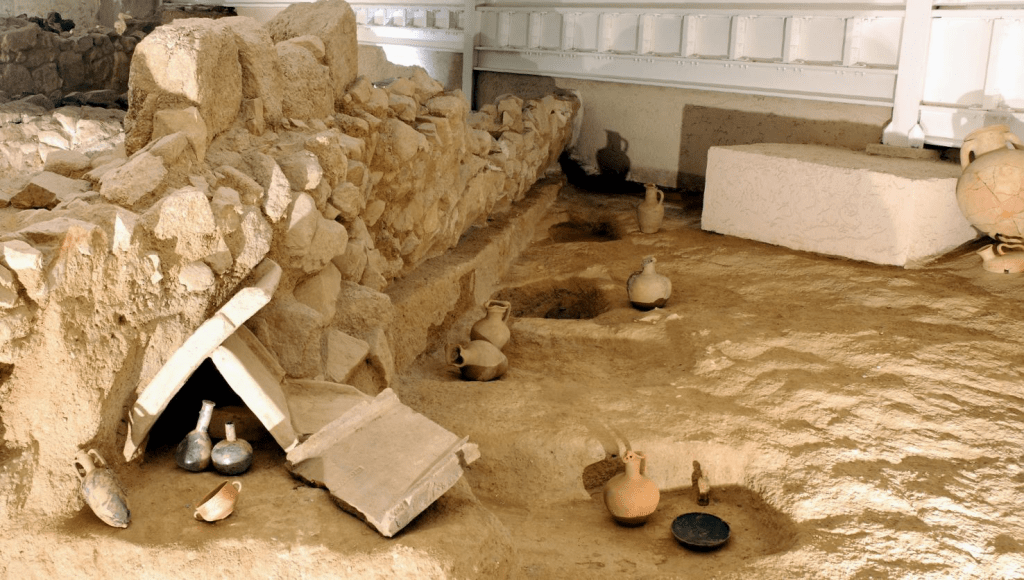
The burial area, in fact, was built under the temple of the goddess Ceres and the foundations of the access ramp to the sanctuary is still visible. It is the temple from which comes the architrave with the dedication of Atte to the goddess, now at the Monumental Cemetery of Pisa.


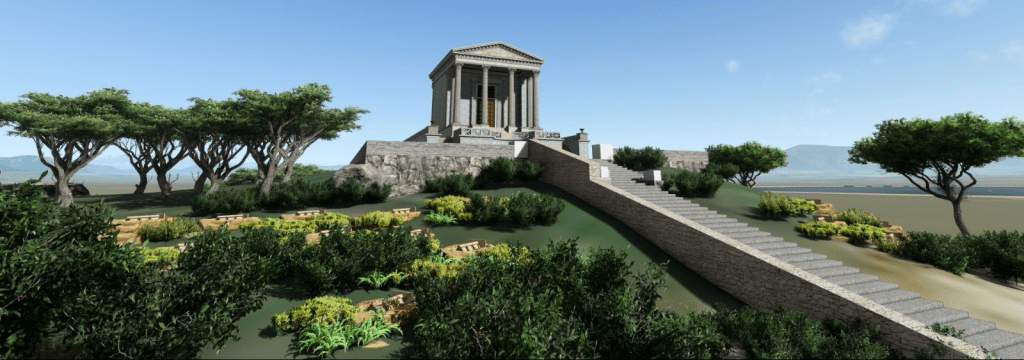
Burials from the imperial age (in total there were 450 Roman tombs) are also visible. The main finds from the excavation are shown in 4 display cases. The panels with text and images illustrate the history of the site in context with that of the city.
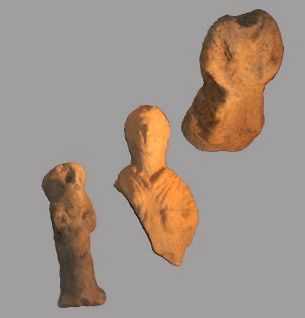
Among other things, there are some display cases containing a selection of restored materials from the excavation.
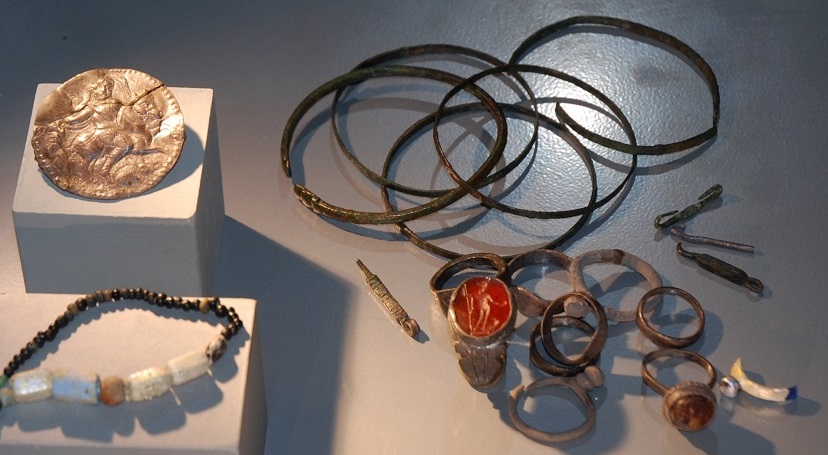
Of particular importance is a rich collection of rings and jewels from the so called ‘tomb of the Lord of the Rings’. Among these stand out a ring with a carnelian gem, on which a human figure is engraved, mounted in silver, and a silver disc with the equestrian figure of the emperor Constantine.
REMAINS OF THE AQUEDUCT
The Roman aqueduct of Olbia is the best preserved in Sardinia. Built in the height of the imperial age (between the 2nd and 3rd century AD), it transported the waters from the springs of Cabu Abbas, a hill north of Olbia, to the thermal baths of the ancient city along a 3.5 km route.
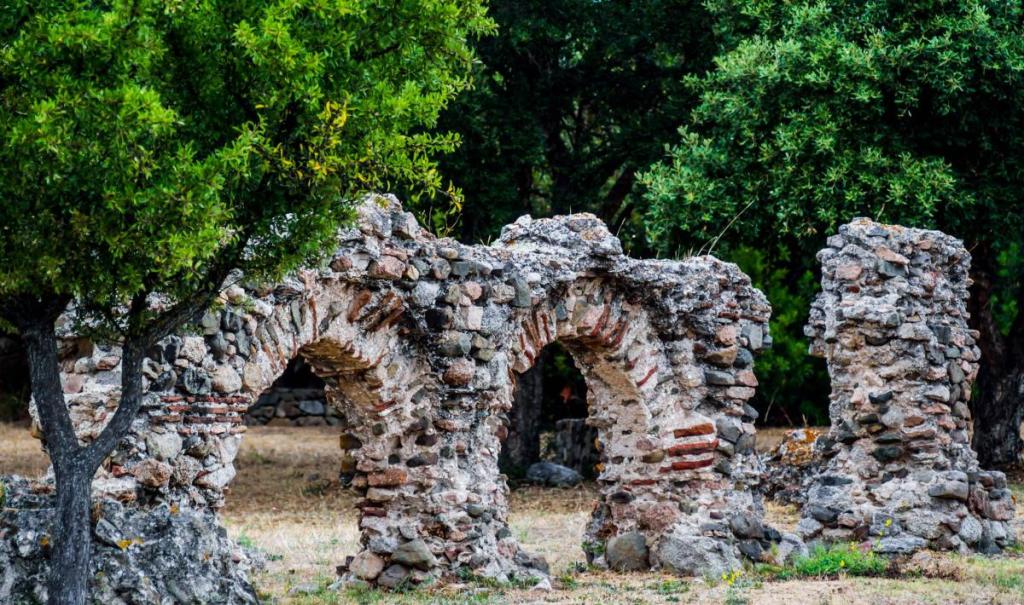
In Sa Rughittula fraction, in via Mincio 62, between the road and the railway line, there is a portion 130 meters long, in which two entire arches and a limary pool stand out. In front of the aqueduct, a large cistern in cement is visible, perhaps intended for the water needs of a villa or a large estate. The interior is covered with a thick layer of cocciopesto, useful for waterproofing.
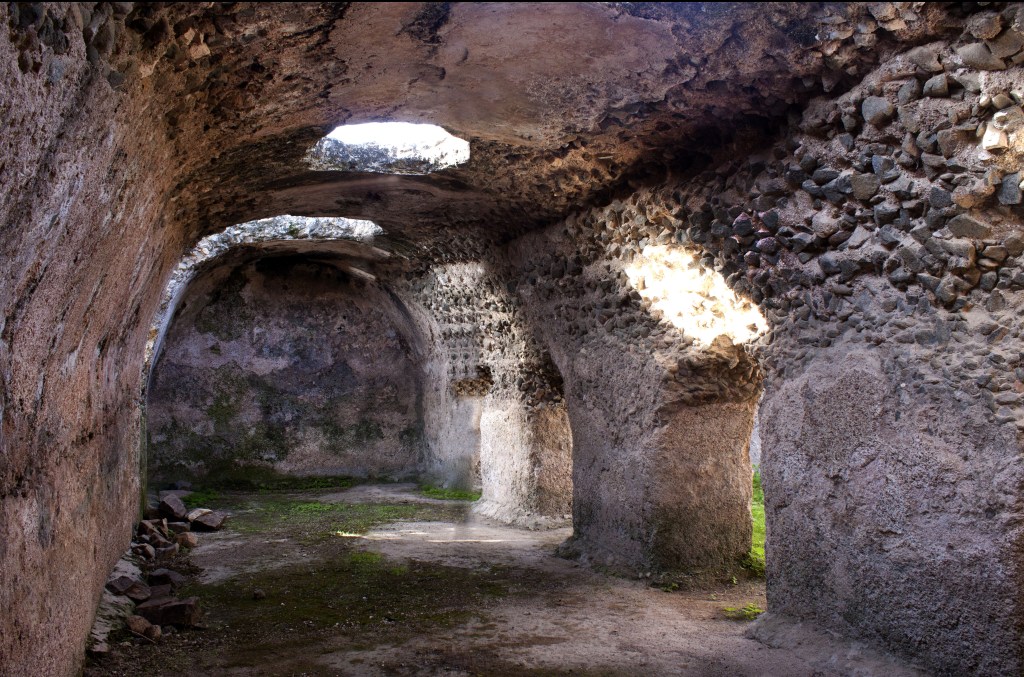

Other remains of the Roman aqueduct are visible in via Alessandro Nanni and in at the intersection of Viale Aldo Moro and via Canova.
S’IMBALCONADU ROMAN FARM The archaeological area of S’Imbalconadu – with the remains of a Roman farm from the Republican era – is located at approximately 3 km. of the provincial road SP24 that leads from Olbia to Loiri. Cross the Loddone bridge and you will find it on the right.
The building stood on a granite hill on the right bank of the Padrongianus river.
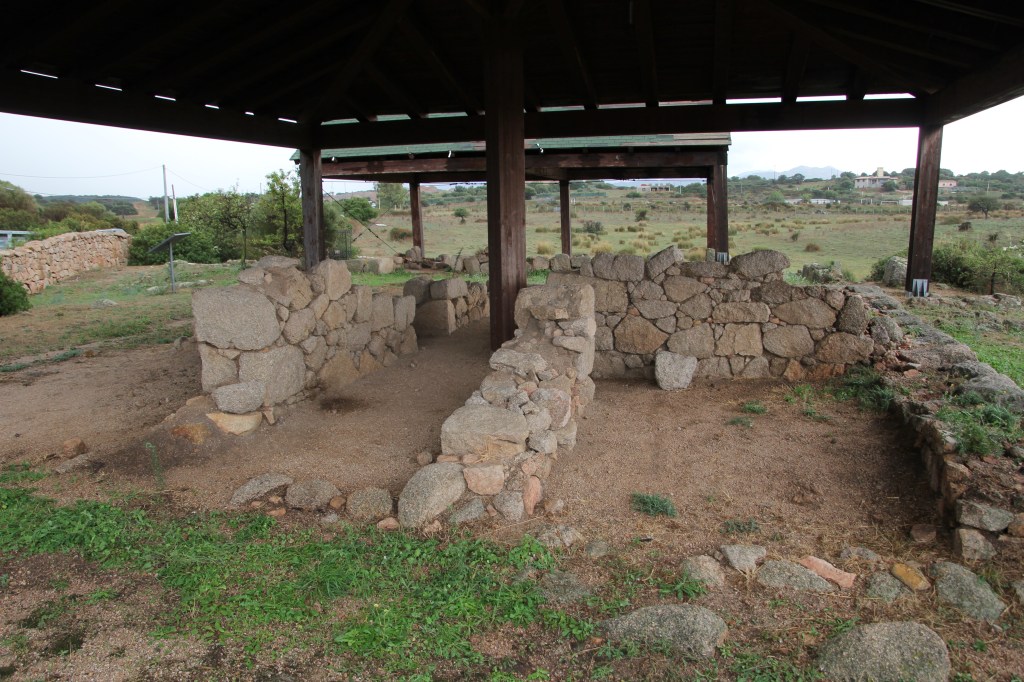
The complex is presumed to have been active from 125 BC until 75 BC. It consists of a central body surrounded by a large courtyard – closed in turn by a rectangle of structures (mostly warehouses) with a length of approximately 33 metres on the West and 30 metres on the South. The masonry technique is based on linked granite walls with mud mortar. The brick walls rest on foundations over a metre deep that reach the rocky surface of the hill. The access is from a paved corridor on the southern side, under which ran an underground probably for white and black water.
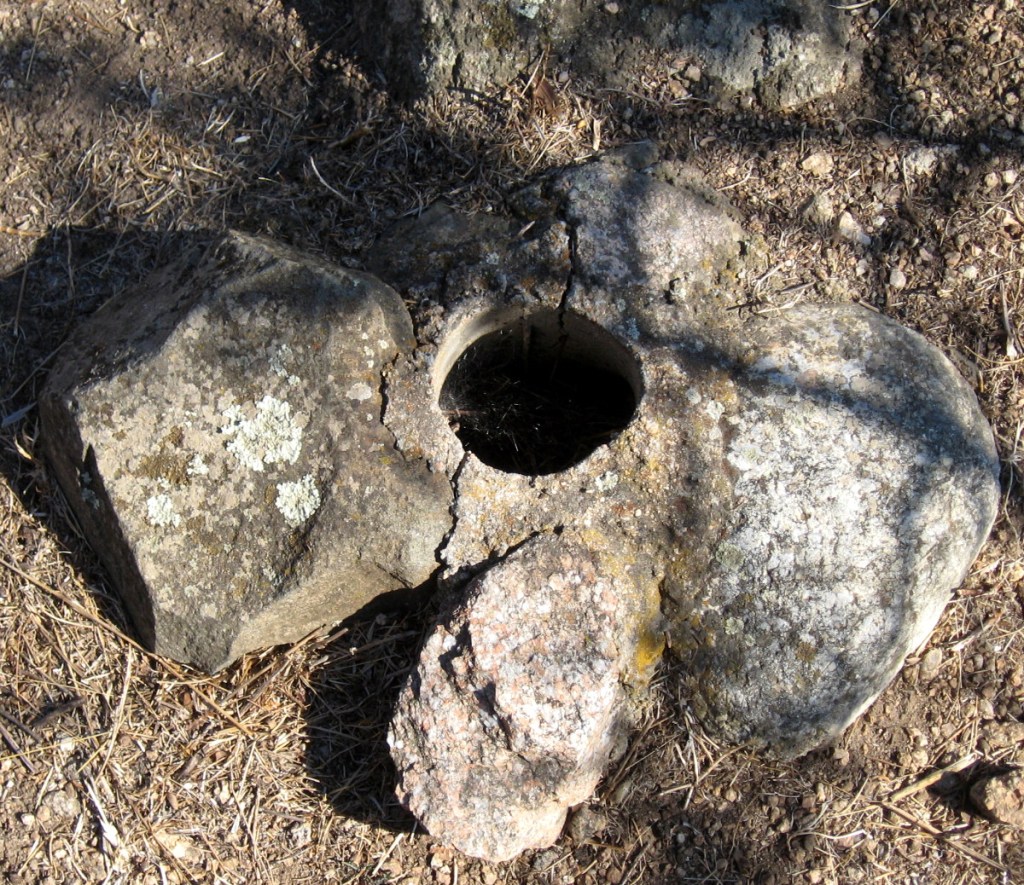
About halfway along the route, there is a ceramic container which probably served as a latrine. The rooms located immediately to the left of the entrance house probably linked to the processing of oils or wines. In fact, in relation to these, a hole for a poplar pole and a granite block were found and were hypothesized as elements of a press. The rooms located immediately to the right of the entrance were presumably dedicated to the grinding of cereals. The central body, supposed to be the actual home of the farmer and his family, originally would have had at least the upper floor and a terrace. The rooms on the ground floor were equipped with wooden doors: there was a kitchen and a sort of living room where food was consumed while the upper floor – no longer visible today – of the same layout as the ground floor, probably housed the bedrooms.
ACKNOLEDGMENTS – We kindly thank archeologist Rubens D’Oriano, one of the top experts in the history of Ancient Sardinia, for his precious help
‘Fun fact’ – The Roman Navy, the Masters of the Seas
Ancient Rome is famous for the legions, but the navy had also an essential role in establishing, expanding and projecting its power and influence, just like the Georgian navy was crucial to the dominance of the British Empire in late eighteenth century. Its fleet controlled oceans and rivers to eliminate any threat to Rome.
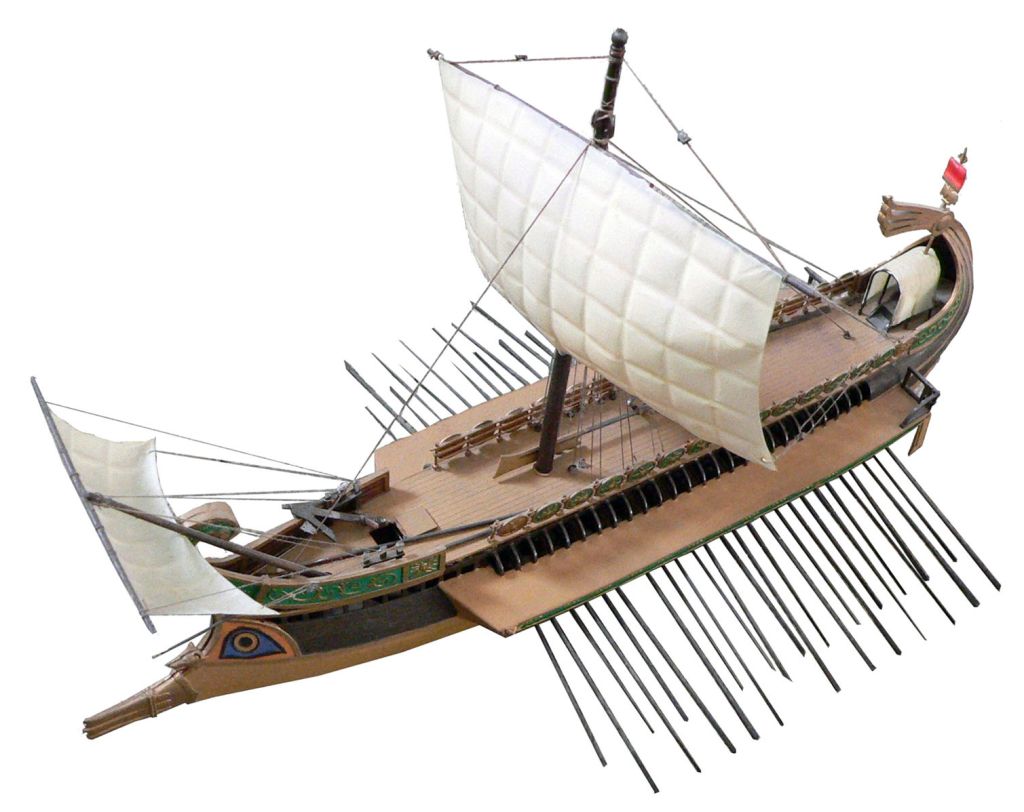
From oceans to rivers, fleets of large and small warships patrolled the waters, eliminating hostile threats and keeping trade and passenger routes safe.
At the height of its power, the Roman navy employed tens of thousands of sailors. In the beginning, however, the Romans were not a maritime superpower. It would take a bloody and brutal war against a superior enemy for the Roman navy to be born. In the third century BC Romans were defeated by the Carthaginian navy, with superior seamanship and numbers, at the Battle of the Lipari Islands, north of Sicily.
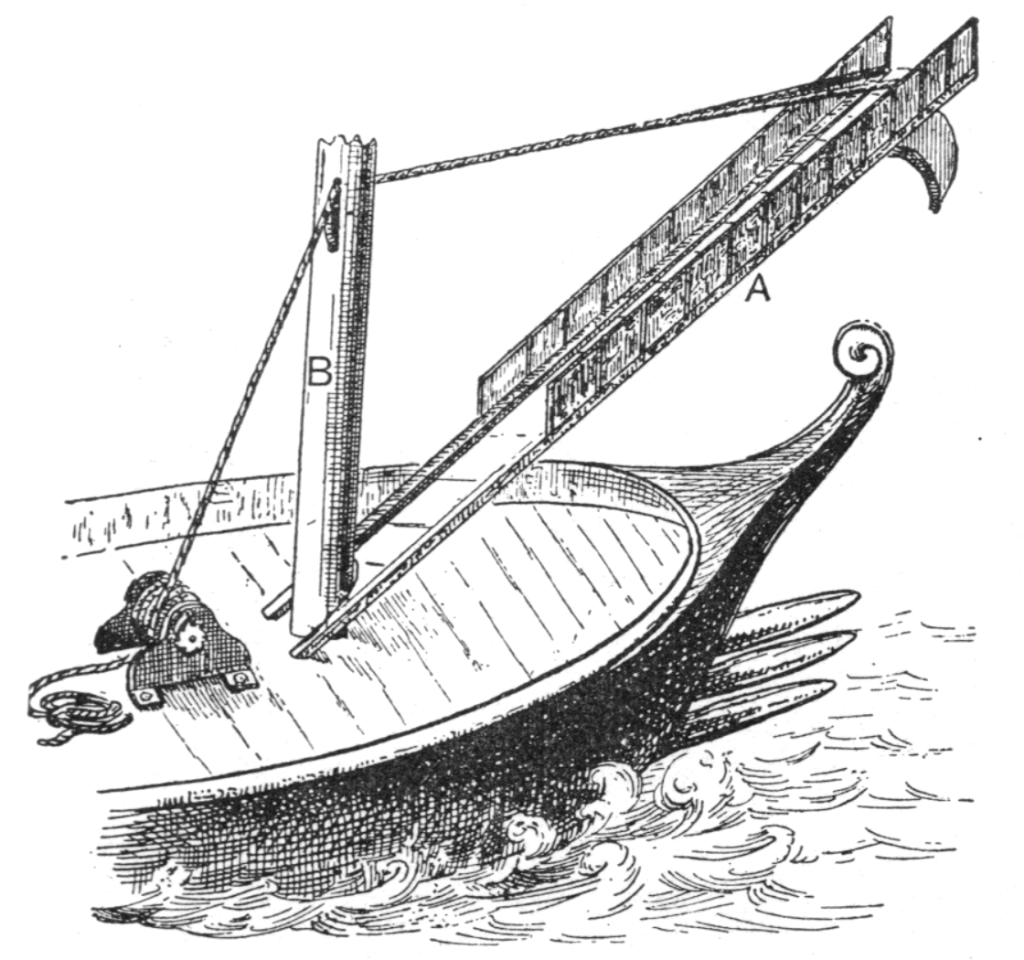
Roman engineers then came out with a genial idea, to transform a naval battle into a land battle, and they invented the corvus. It was a wooden boarding ramp with a long metal spike at the bottom: once the Roman warship rammed into an enemy’s hull, the corvus would be lowered to lock the two ships together and allow sailors to fight like legionaries.
In 256 BC Romans won the Battle of Cape Ecnomus, in Southern Sicily, one of the largest naval engagements in history: 300 Roman ships defeated a 350-strong Carthaginian fleet, sinking 30 and capturing 64 warships.
A year later, a heavy storm devastated a Roman invasion fleet, sinking 384 ships.

In 241 BC the decisive Battle of the Egadi Islands, in Sicily, was fought between 200 Roman ships and 300 Carthaginians, more than 100.000 warriors clashed in the biggest and bloodiest naval battle of all times. It put an end after 23 years to what will be known as the First Punic War and the Roman victory marked the beginning of its irresistible expansion. Many rostra (the rostrum was a ram at the underwater front tip of the ship used to sink enemy vessels) have been found from that battle: the Roman ones were stamped with “Lucius Quinctius the son of Gaius, the quaestor, approved this ram.” In contrast, the Carthaginians were inscribed with “We pray rostra Baal that this ram will go into this enemy ship and make a big hole.”
The next big threat to Roman control of the Mediterranean did not come from a navy: by 102 BC, more than a thousand pirate ships were preying on the Mediterranean shipping lanes, threatening vital grain imports for Rome, and more than 400 coastal towns had been sacked. In 67 BC the Senate sent Pompey the Great with a large fleet to target pirate coastal strongholds. Within a year, thousands of pirates were killed, crucified or sold as slaves. But many others were pardoned and resettled to inland areas with land for farming, or even employed in the Roman navy.
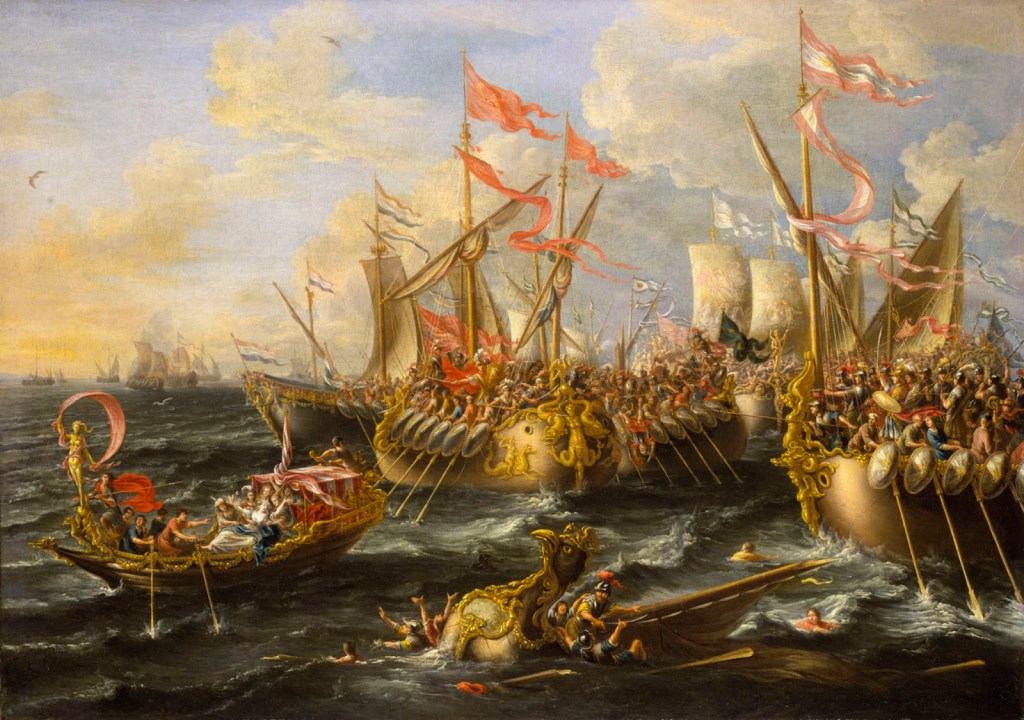
Another great Roman at sea was the eclectic Marcus Vipsanius Agrippa, the architect of the Pantheon who was also the son-in-law, lieutenant and admiral of Octavian, the future Emperor Augustus: in 31 BC at the promontory of Actium, on the Western Greek coast, the famous naval battle fought by Octavian against Mark Antony and Cleopatra decided the fate of Rome. Agrippa with his smaller warships outmaneuvered and blocked Antony’s large quinqueremes.
The Mediterranean Sea was now a Roman lake and the Imperial navy was reorganized with two large fleets: at Misenum, on the Gulf of Naples, and Ravenna, in the Northern Adriatic.

Naval bases were later established in Alexandria, in Egypt, on the Atlantic, in the English Channel, on the Black Sea, and on the Danube, Rhine, and Euphrates rivers. The Romans who joined the military Navy – sailors were mainly poor people from the Eastern Mediterranean while the high ranking posts were filled by the elites – saw themselves as soldiers. In their tombstones inscriptions they were referred as “legionaries”. It meant that Rome armed forces were unified while fighting for the Empire over land and sea. The tide turned in the V century AD, when the Vandals successfully challenged the navy of a declining empire, opening the way for its fall.
Useful informations for Olbia
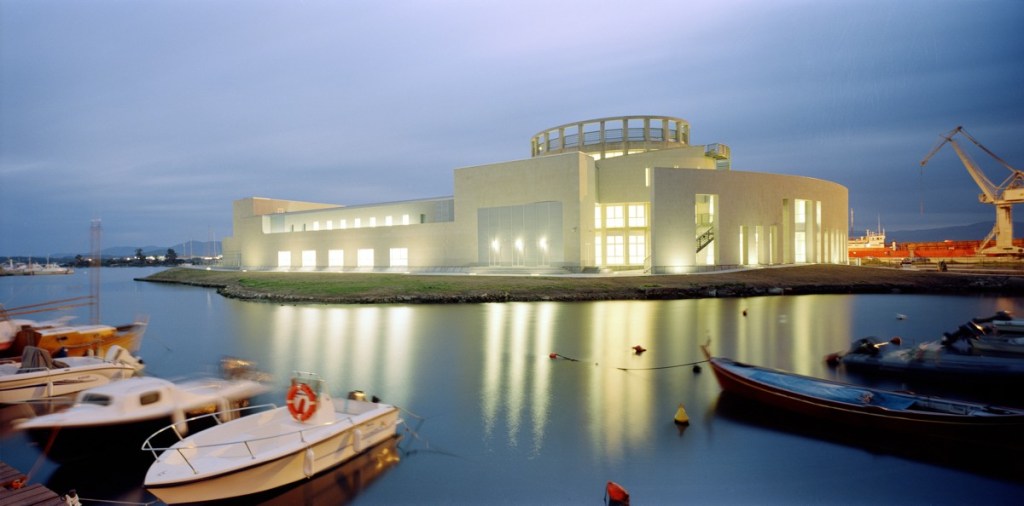
Archaeological Museum of Olbía Via Isola Peddone, Olbía / Opening Times may change during the year, it is advisable to contact the museum before the visit. See also HelloOlbia
Free entrance. +39 0789 28290
Necropolis and archaeological area of San Simplicio Via Gabriele d’Annunzio/Piazza San Simplicio, 07026, Olbia +39 0789 52206 info@olbiaturismo.it / Opening days are usually Monday, Wednesday and Saturday (morning only) but they may vary during the year so it is better to contact them before the visit. S’Imbalconadu Archaeological area – It is always visible from outside, for informations about visits:
info@olbiaturismo.it
+39 0789 52206/ +39 334 9809802
Our Tabernae, where to eat
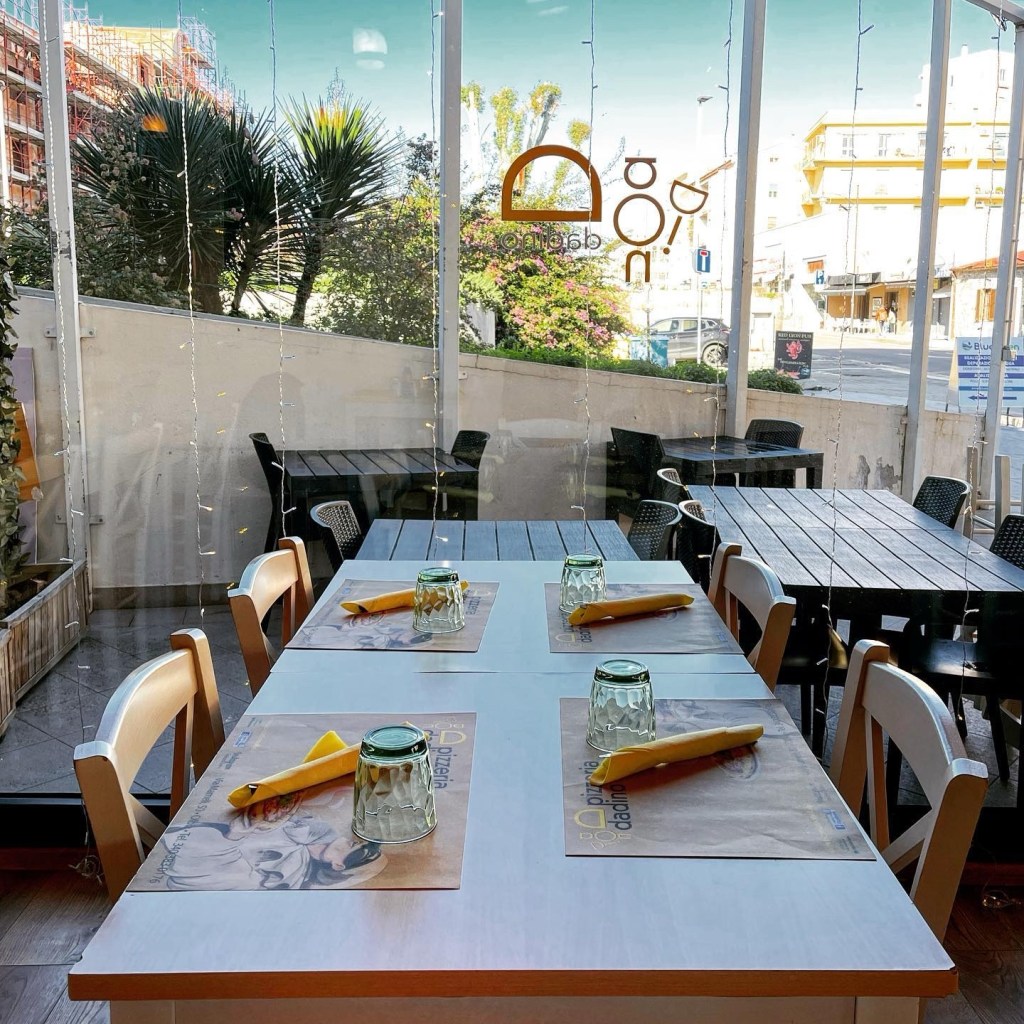
Pizzeria Dadino (pizza, fish and a lot more) Via Goffredo Mameli, 50 – Olbia +393403830176
 Italy as the Romans did

Leave a comment