- The ‘Must see’ – The House of the Surgeon
- History and Roman Legacy
- Ancient Rome Itinerary
- Fun Fact – Julius Ceasar’s dice
- Useful informations for Rimini
- Our Tabernae, where to eat
The ‘Must see’ – The House of the Surgeon
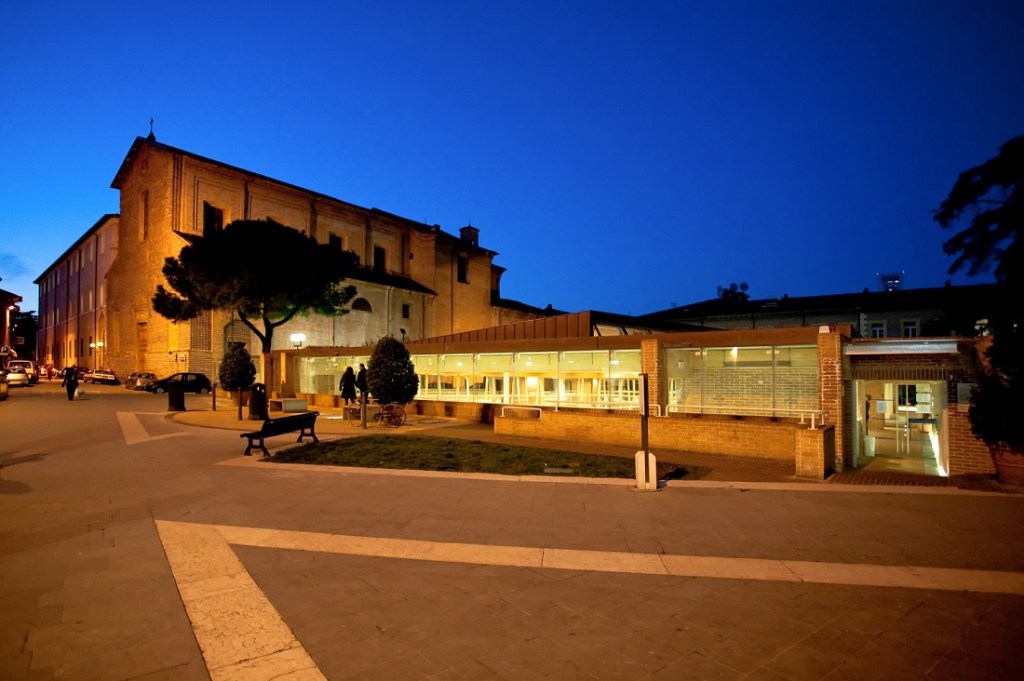
Piazza Luigi Ferrari is a lively square in the center of Rimini, on the Adriatic Coast, not far from the central station, where local people often meet for an ice cream or ‘aperitivo’. In the middle of the widening there is a low structure that can almost go unnoticed but that hides an archeological treasure, a ‘little Pompeii’ in the heart of the city: The Surgeon’s House.
In 1989, during work on municipal gardens, excavations brought to light the house and the remains of an Imperial age dwelling. The domus, open to the public since 2008, is extraordinary for the well preserved frescoes and mosaic floorings that, along with the objects found, allowed to reconstruct the identity of the owner and his job: a doctor. What was found is one of the richest surgical and pharmaceutical equipment of ancient times. Parts of coffer ceilings and walls with polychrome frescoes with floral and animal motif were found, there was even a view of Ariminum harbor.
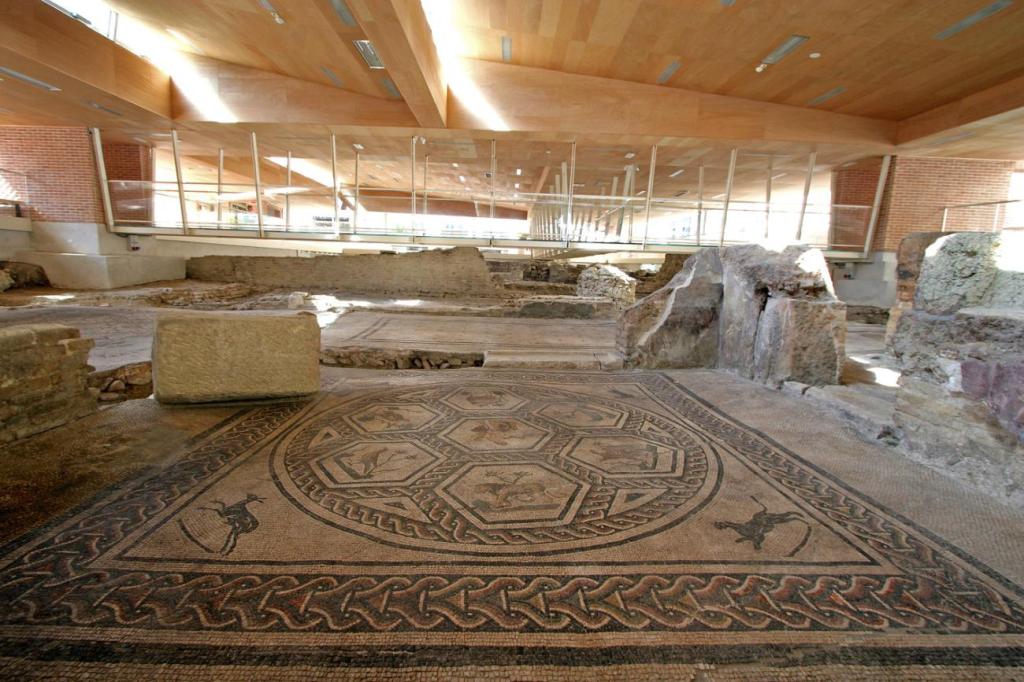
The Surgeon’s House is located in the northern sector of the excavation area and it represents the main structure: the mosaic floors can still be admired in the domus, while other mosaics are preserved in the archaeological section of the City Museum. There are also kitchen vases and other tableware, 80 coins that were left on the floor supposedly during the fire and above all 150 surgical instruments, the largest array in the world of its kind for number and typology.
This taberna medica domestica (house with a medical practice) and its items have miraculously been preserved after a big fire during raids by Alamanni, a Germanic tribe, around 260 AD. Like in Pompeii, many furnishing, ornaments and mosaics ‘survived’ under the rubble.
Eutyches was a surgeon, probably of Greek descent, who lived in Ariminum in the second century AD. He was a very refined man with intellectual learning and fond of art. He specialized in wounds and bone fractures and he had probably worked previously in a military valetudinarium, a sort of hospital that treated legionaries ill or wounded in battle, at the outskirts of the Empire.

It was emperor Augustus who established the first professional military medical corps, mainly formed of Greek doctors attracted by Roman citizenship and the generous pensions that came with the job. Their field surgery units provided sanitation systems and field surgery units and soon became one of the strengths of the Roman army.

Of the two floors of the house, today only the first floor is visible. From the enormous crystal glass covering and especially during the visit you can see the entrance, the long aisle, the dining room (triclinium), a bedroom (cubiculum), two living rooms, a small thermal area and a latrine.
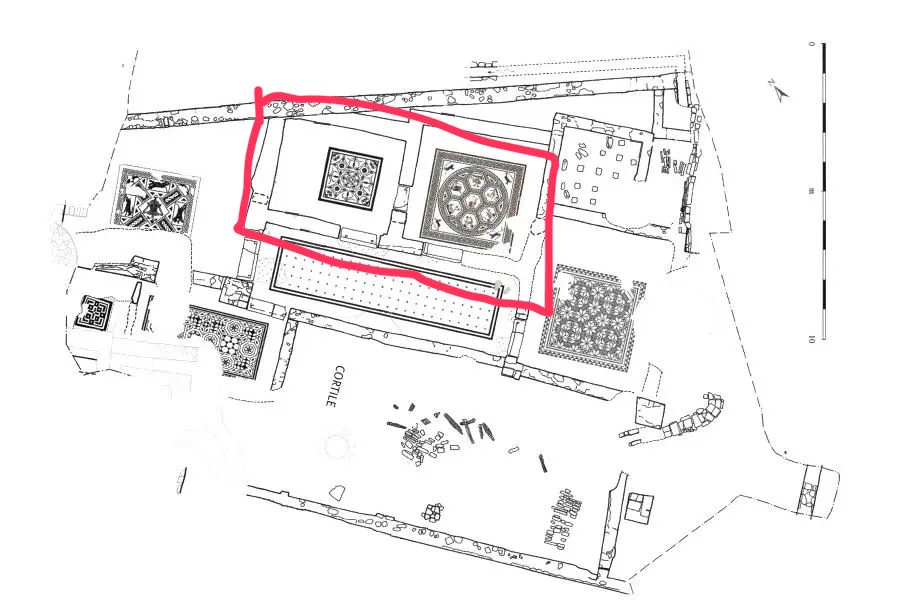
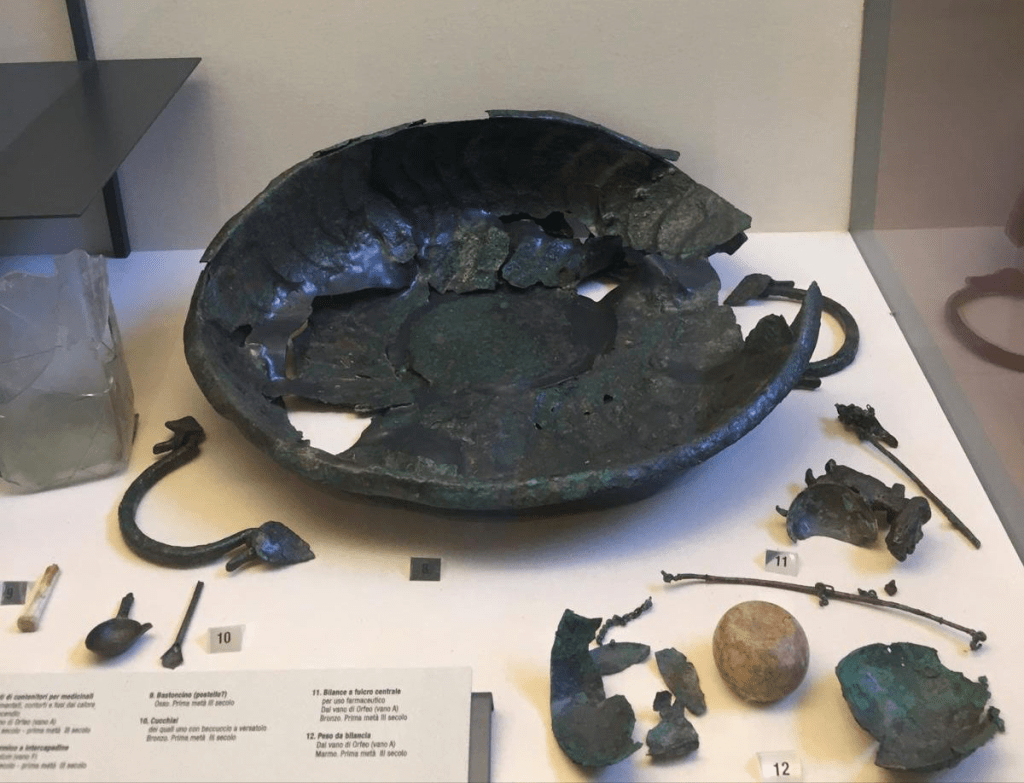
The most interesting space is the taberna medica, a sort of modern infirmary where the surgeon visited and operated his patients, facing an inner garden and with independent entrance. It is in this room, connected to the cubiculum, that 150 bronze scalpels, pliers, forceps, saws and slabs used as a support for amputations were found.
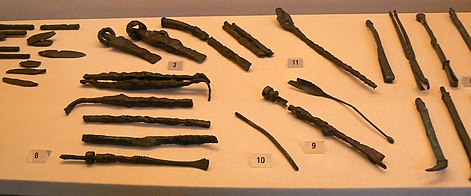
There were mainly instruments to be used for bone traumas and wounds and a rare and precious iron for extracting arrow heads from bodies, the Spoon of Diocles, made of a long iron handle with a sharp spoon-shaped tip, with a hole used for arrow-head extractions.
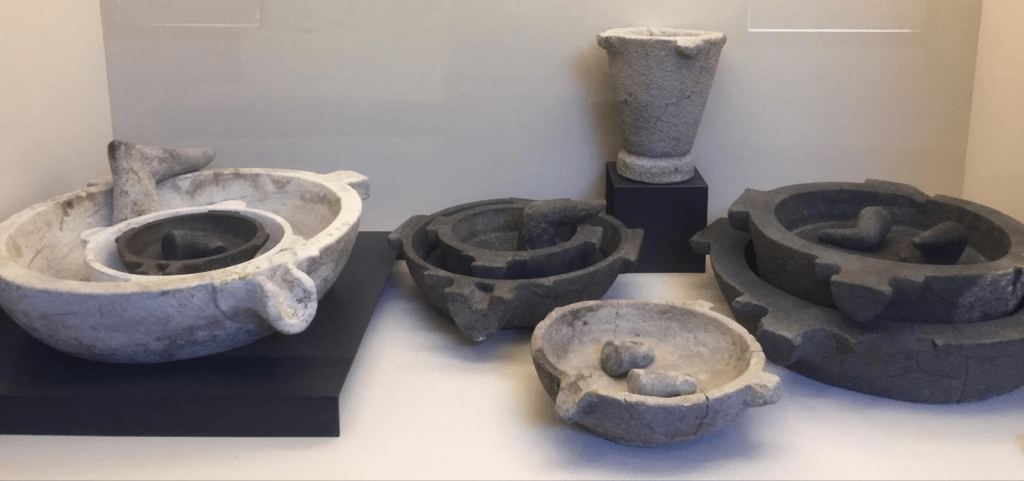
There were also mortars, scales and containers for the preparation and preservation of medicines with their function written in Greek.


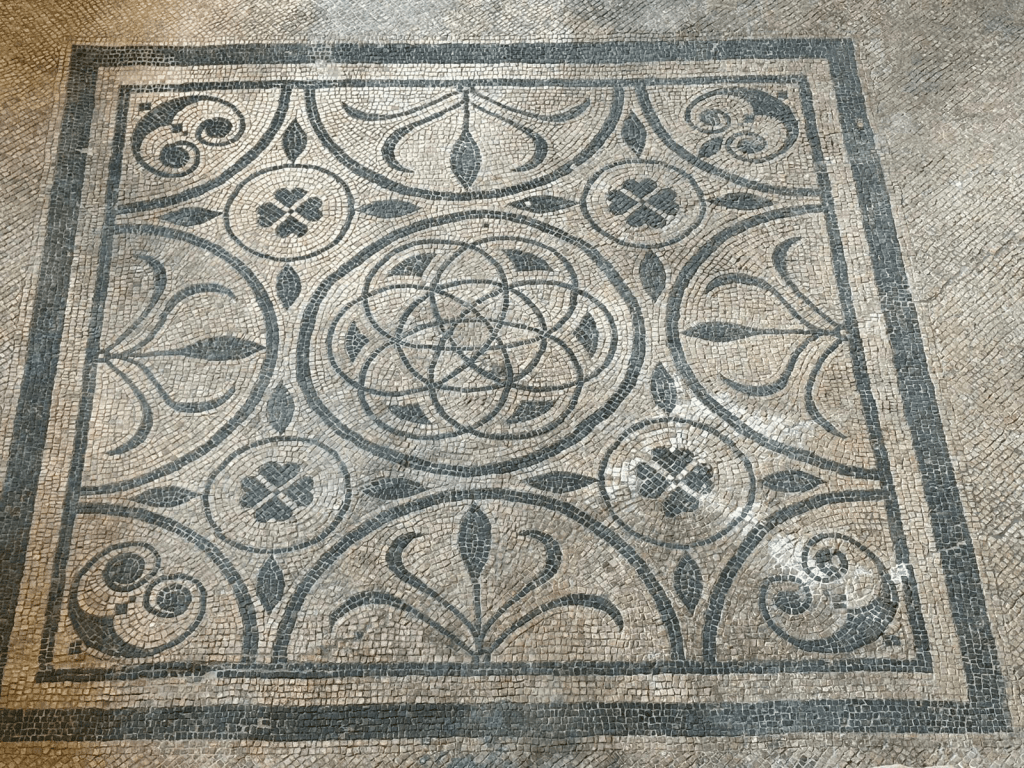
The room has at its center a wonderful mosaic carpet of Orpheus playing the cithara and taming wild animals with his music. He is surrounded by an eagle, a parrot, a lion and a quail, with four fawns at the corners. Orpheus was a popular subject in classical art and was also used by early Christian art as a symbol for Jesus Christ since he is believed to have defeated death. In this case he probably represents a reference to the doctor himself as he ‘tames’ his patients sufferings.


In the cubiculum an inscription has been found, probably scratched on the wall by a patient: “Eutyches homo bonus“, Eutyches good man, that may also refer to his strong religious faith.

The cubiculum was probably used for patients who needed a bed after they underwent operations in ‘day hospital’.
A bronze votive hand was found, a sign of devotion to Jupiter Dolichenus, protector of soldiers.

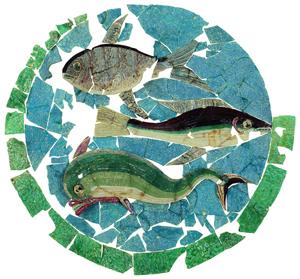
In the Triclinium, the dining room, a sophisticated glass paste panel was unearthed. It was imported from Greece and it showed three brightly colured fish, a gilthead bream, a mackerel and a dolphin, in a blue sea. It must have been placed on a marble shelf and it reflected the Adriatic sea, just a few steps way.
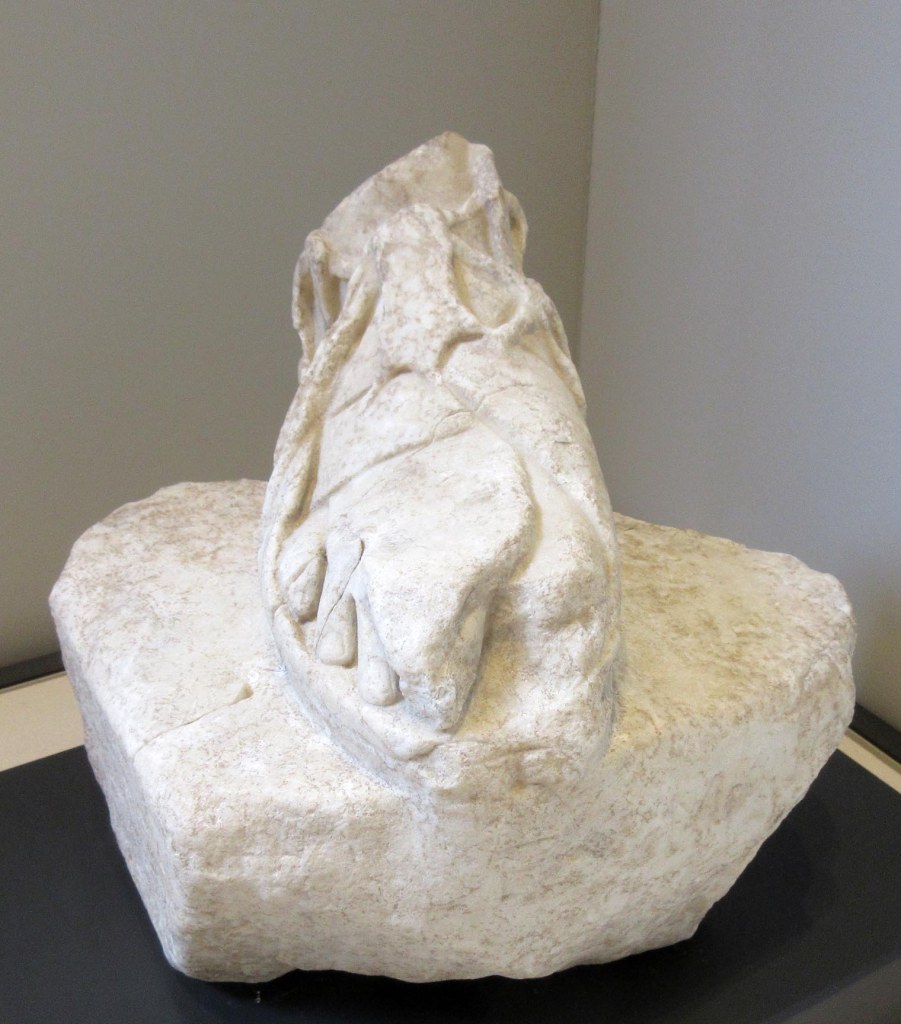
In the garden a large marble basin and the foot of a statue of the Epicurean philosopher Hermarchus were unearthed. All that suggests the adherence to Epicurean philosophical ideals of Eutyches as well as his Greek origin.
After the fire that destructed the House, new defensive town walls were built that partially incorporated the site. The area was abandoned until the transfer of the Western Roman Empire capital from Milan to Ravenna, on the Adriatic coast, in 402 AD.
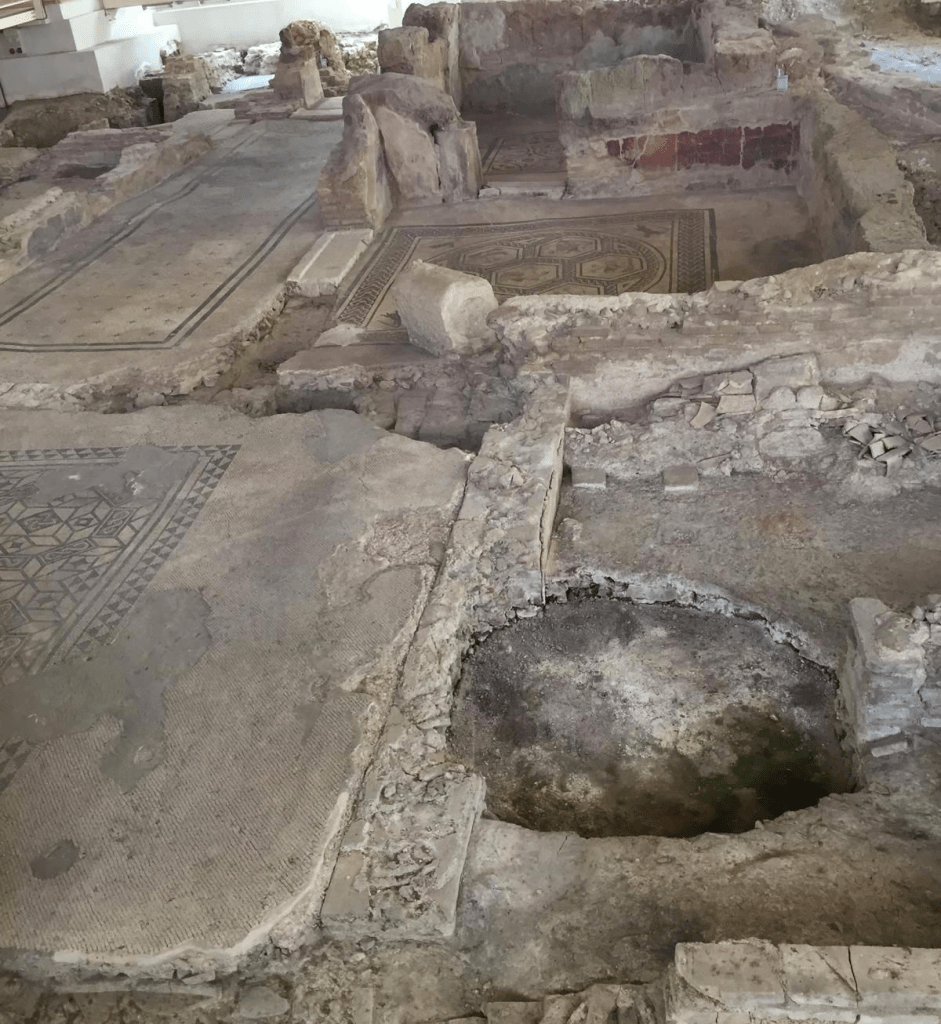
A luxurious residence was then built in what is now the southern part of the excavated area: it had a large courtyard with canals and a nymphaeum, rooms decorated with geometric patterned polychrome mosaic flooring flanked by an angular corridor.
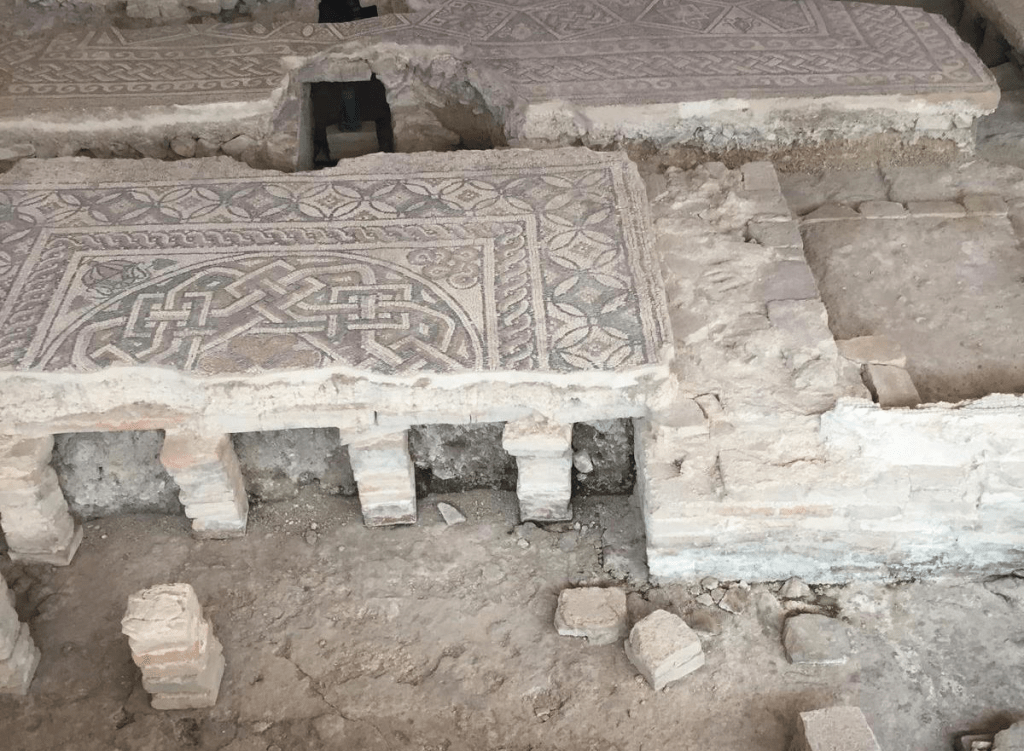
A room heated with hypocaust and a large roundedhall was used as a reception room by the rich dominus.
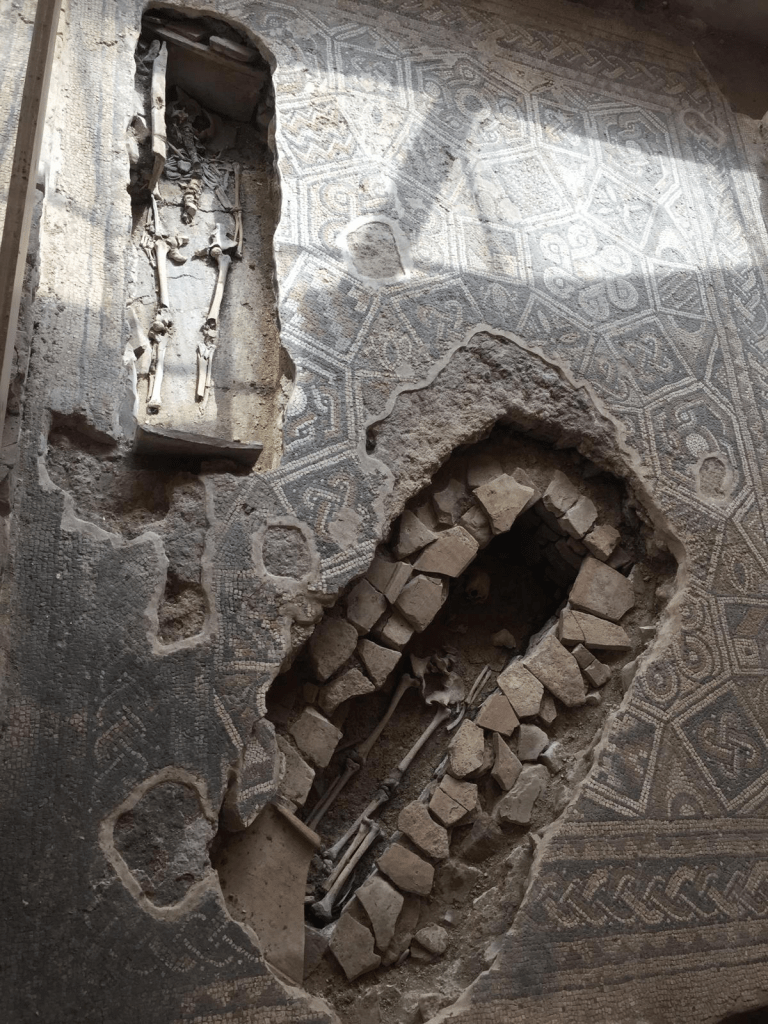
This late antique Palace declined in the 6th century at the time of the war between Goths and Byzantine Greeks and after its destruction the area became a small cemetery and a certain number of tombs can still be seen on the site.
The visit at the Domus should continue at the nearby Museum of the city Luigi Tonini that hosts a very interesting archaeological section, inaugurated in 2010. The first nucleus of the civic collections was the Lapidarium with 68 inscriptions, ranging from the 1st century BC to the 4th century AD. It includes funerary steles, ornamental basements and other elements like the administrative act concerning the restriction of the Roman roads promoted by Gaio Cesare.
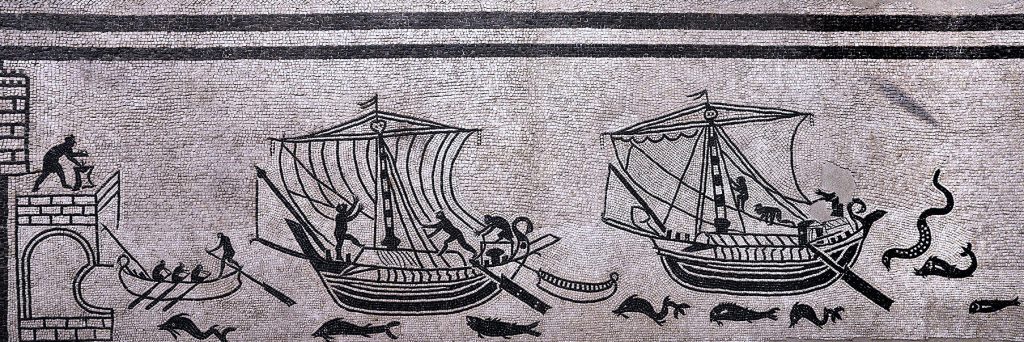
The 40 rooms of the archaeological section are in the basement of the Jesuit College. There is an enchanting selection of Roman mosaics, including the famous ‘boat mosaic’ from the domus of Palazzo Diotallevi and the ‘Anubis’ mosaic, along with treasures of the House of the Surgeon such as the polychrome glass-paste painting of fish and the surgical set of antiquity.
History and Roman Legacy
Rimini was founded by ancient Romans in 268 BC as the Latina Colonia Ariminum (named from its river Ariminus, today’s Marecchia) after the local tribes, the Umbri, were defeated and in the Gallic War. Its position was strategic on the shore of the Mare Superum (Adriatic Sea) and between two rivers; to the north Ariminus (today’s Marecchia) and to the south Aprusa (today’s Ausa).

At the beginning it was built as a fortified town (castrum), with decumanus and cardo and fortified walls, but it soon became a hub between north and south of the peninsula, directly connected to Rome through the via Flaminia that ended in the city. The via Aemilia connected it with Placentia and the via Popilia connected Ariminum to Adria and the northern regions. Its port hosted a Roman military fleet but was also very important for trade, in the Adriatic and along the rivers.
In the 3rd century BC Ariminum faced the the sea but today the center of Rimini is one Km. away from the beaches.
Ancient Rome Itinerary
The ideal start of your Rimini ‘Roman tour’ is at the Information Office in the Visitor Center of Rimini where you may see ‘Ariminum caput viarum’, a multimedia exhibition that allows the visitors to learn, share and interact with the cultural heritage of Roman Rimini through the aid of technology and multimedia.

The appearance of the present-day historic city center of Rimini coincides with that of its foundation. A grid-like arrangement of intersecting streets laid out at right angles to one another delineates this area, starting from its two main axes, the Cardo Maximus (today Via Garibaldi – Via IV Novembre) and the great Decumanus (the present day Corso d’Augusto).

Paved roads, bridges and luxurious residences enriched the urban fabric of this beautiful city on the Adriatic coast.
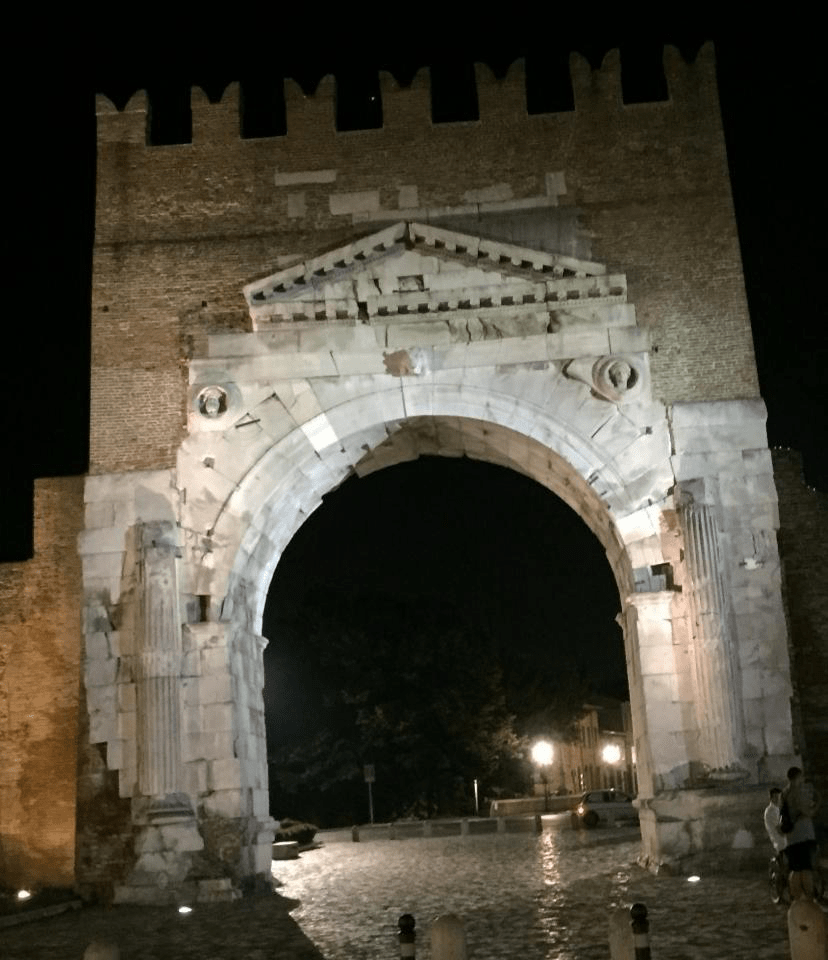
At both ends, triumphal monuments were erected: on one side, the famous Arch of Augustus, the oldest and best preserved of its kind in of all of northern Italy (27 BC). The arch was built as an open gate because there was no need for defences during the Pax Romana, the long period of peace brought by the reign of Augustus.
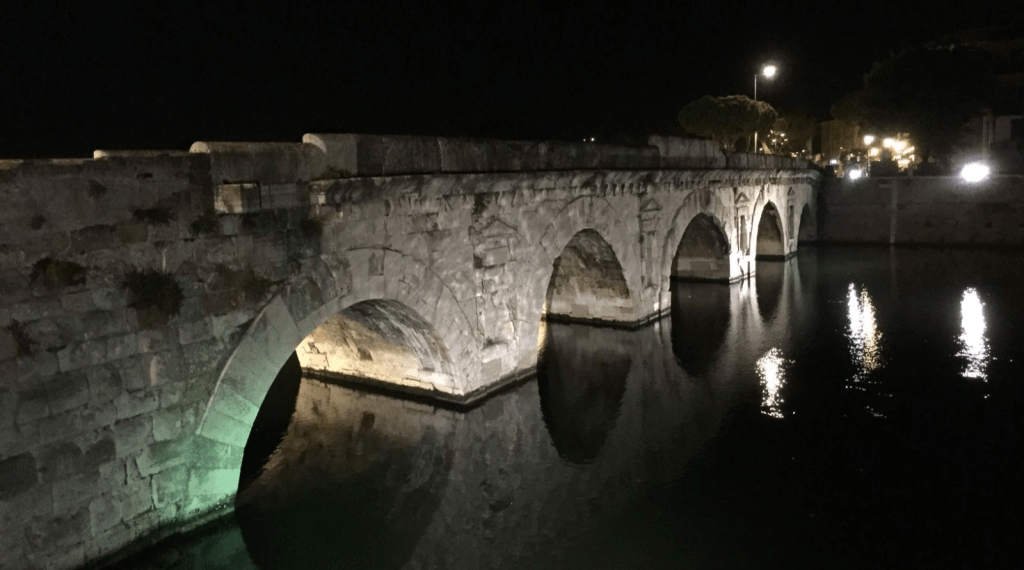
On the other end of the city, over the waters of the ancient course of the Marecchia (now on the sea since the river course was diverted) is the majestic Bridge of Tiberius (begun by Augustus in 14 AD and completed by Tiberius in 21 AD), the starting point of both the ancient Via Emilia and the Via Popilia. The best point to admire the five candid arcades in Istria stone is a small clearing with benches under a maritime pine. On the bridge there are decorations with symbols of the civil and religious powers of the Emperor.
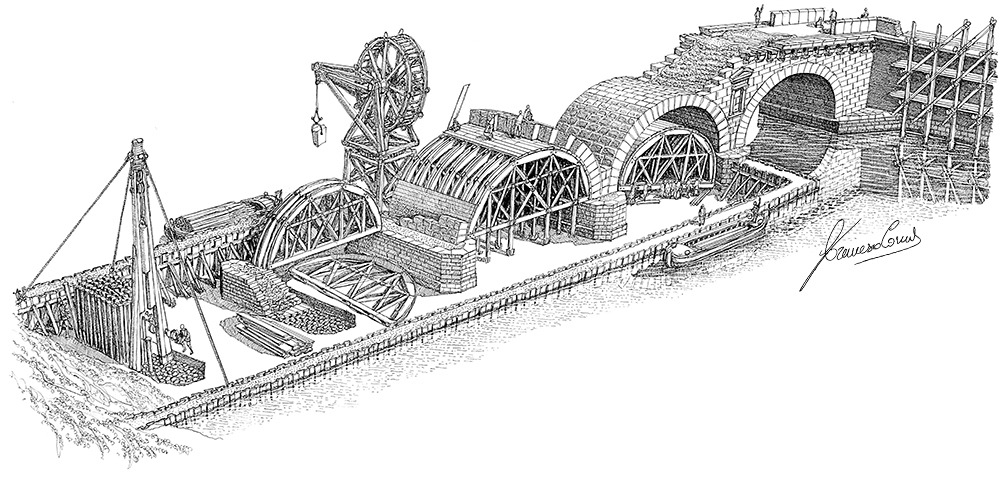

The Roman technique to build these bridges was to isolate the river bed with a dam and then long stout wooden in poles were stuck in the ground as a foundation for the pilons. It is also called ‘Pont de ‘e Dievul’ (devil’s bridge in local dialect) referring to the myth of his indestructibility. It is said that Tiberius took 7 years to finish the bridge started by his father. Since the works struggled to advance, the Emperor turned to the God of Darkness who accepted to build an indestructible bridge in one night but in exchange he would have taken the first soul that would have crossed it. Tiberius chose that the first to pass would be a dog and this enraged the Devil who tried to knock down the bridge, in vain. Only two notches remain resembling the imprint of goat feet on the balustrade of the bridge.
The bridge risked destruction in Second World War when it was mined by the Wehrmacht but a German official at the last moment revoked the order to bring it down.
ROMAN FORUM – In the city centre, in what is now Piazza Tre Martiri, are still visible remains of the Forum, the heart of the public and economic life of the city in the ancient Roman period. The archaeological discoveries from that time are displayed in sections that have not been covered by modern paving.

These ruins show how, during the Age of Augustus, this area was completely paved and decorated with honorary monuments, statues and inscriptions in memory of emperors and benefactors of the community.
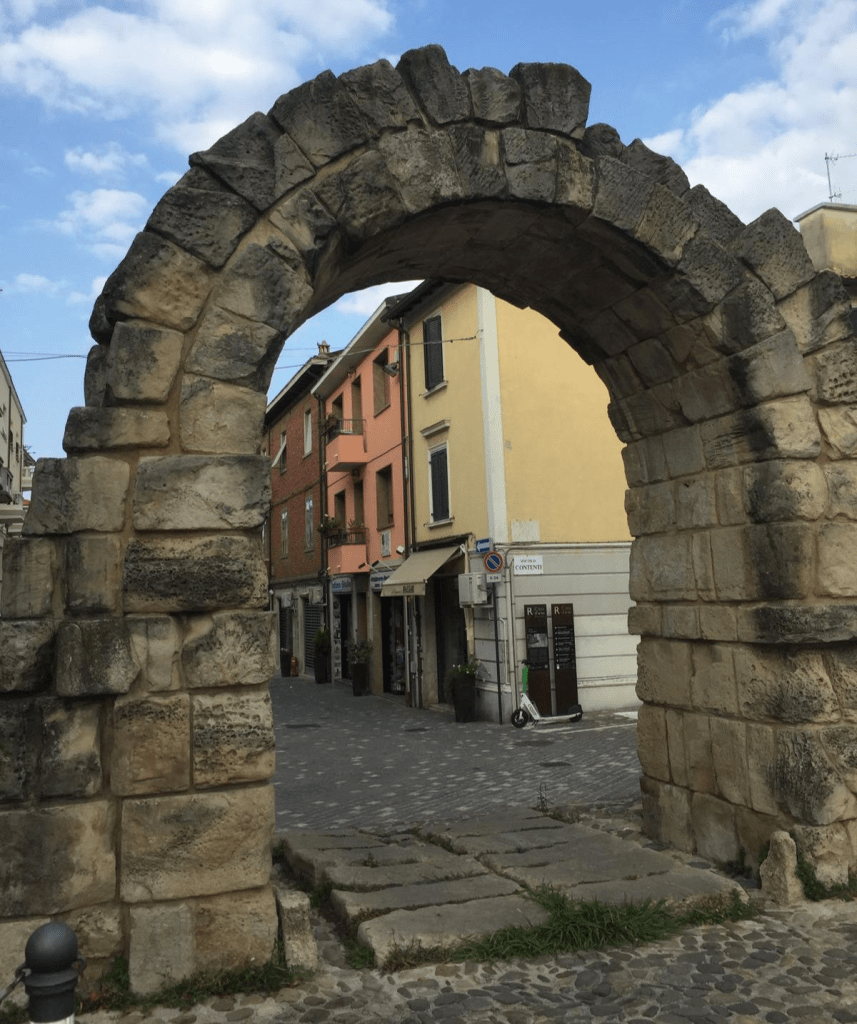
However, the public monuments of Rimini’s Roman past were not limited to streets, bridges and arches: mention must be made of the Montanara Gate, built in the 1st century BC probably under Sulla, still visible at the end of the Cardo Maximus, in Via Garibaldi.
HADRIAN AMPHITHEATRE – Not far from the ancient coastline, during the period of Emperor Hadrian (second century AD) stood a great amphitheatre, large enough to contain over 12,000 spectators: only the Colosseum in Rome was larger at the time.
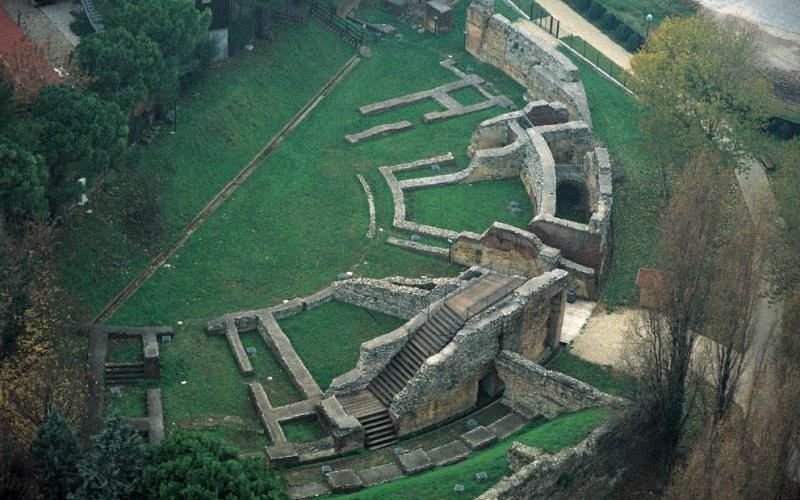
Rediscovered at the end of the 19th century, today two arches of the exterior portico and part of the arena and cavea still remain. According to tradition, in 49 BC, after crossing the Rubicon river with his army, Julius Caesar is said to have uttered his legendary words Alea iacta est, the die is cast, in front of his men in the forum of Ariminum.
Fun Fact – Julius Ceasar’s dice
On the 10th of January of 49 BC, after crossing the Rubicon river with his army on a damp and chilly night, Julius Caesar is said to have uttered his legendary words Alea iacta est, ‘the die is cast’, the dice have been thrown, in front of his XIII legion Gemina on the forum of Ariminum.

The Rubicon was a river that marked the boundary between the Roman province of Cisalpine Gaul (northern Italy) and the Republic of Italy. Crossing it meant that there was no turning back: he was governor of Gaul but it was against the law to cross into Roman territory with an army. His decision, therefore, meant a direct challenge to the authority of the Senate (that on the 7th of January had issued a decree that made Ceasar an ‘enemy of the State’) and of fellow statesman and general Gnaeus PompeiusMagnus (Pompey).

Ceasar was beginning a civil war that would bring the end of the Roman Republic and the birth of the Roman Empire. In 49 BC he was a very popular military and political leader who had expanded the borders of the Roman Republic through what are today France, Spain, and the island of Britain but his glory created jealousies in Rome. The crossing deflagrated a civil war against Pompey and the Optimates that would be fought in Roman provinces and in the Mediterranean Sea. The historian Appian wrote that Caesar uttered his phrase “The die is cast” speaking “like a man possessed”. Suetonius, in his De Vita Caesarum, quotes him as saying: “Even yet we may draw back: but once cross yon little bridge, and the whole issue is with the sword!”. A solitary man on the precipice of History, as he has been described. In 42 BC Octavian merged the Province of Cisalpine Gaul into Italia and the Rubicon river ceased to be the extreme northern border of Italy.
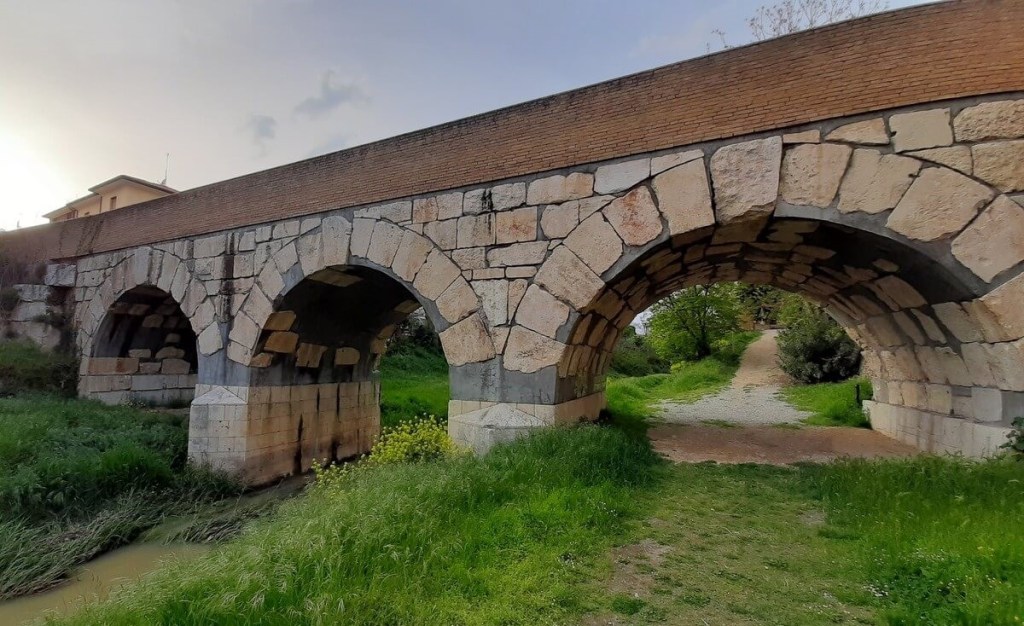
The shallow river, has been identified in 1991 as today’s Fiumicino (which crosses the town of Savignano di Romagna, renamed Savignano sul Rubicone by Benito Mussolini, halfway between Rimini and Cesena, along the Via Aemilia). The Tabula Peuntingeriana, a medieval copy of a Roman road map, puts its distance at 12 miles from Ariminum.
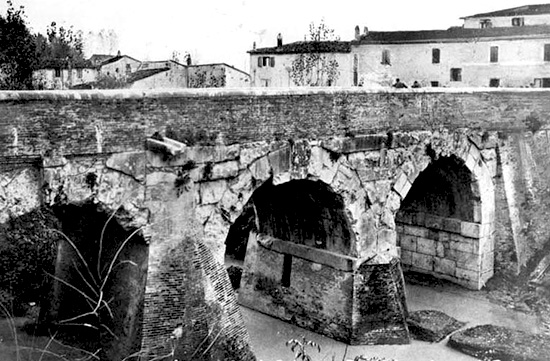
In Savignano there is a Roman bridge that probably was built in the era of Augustus or Tiberius where the wooden bridge (ponticulum) crossed by Caesar was. It was mined by the Germans in 1944 and its reconstruction was completed in 2005. In Piazza Tre Martiri, in Rimini, the former Roman Forum that was the political and commercial heart of the Roman city, a memorial stone erected in 1555 marks the place where Caesar harangued his troops.
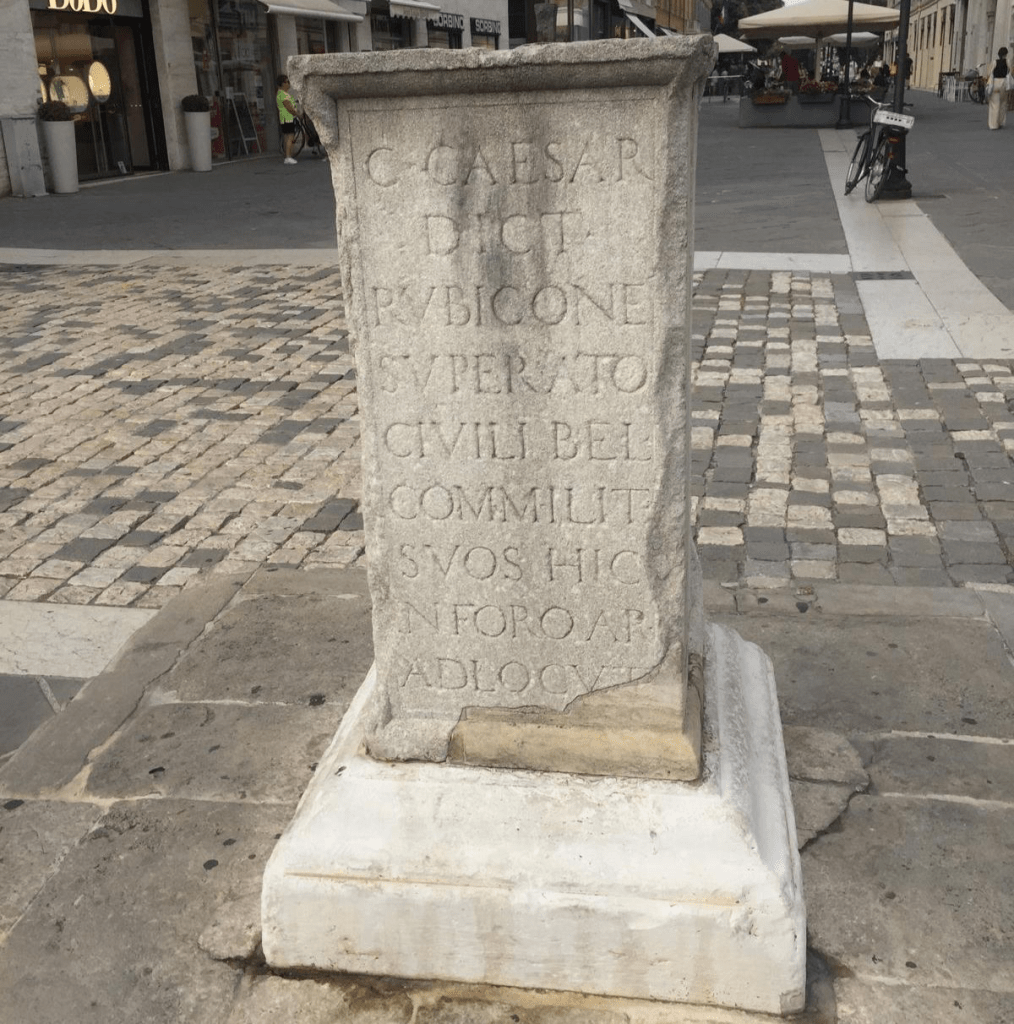

It reads: “Gaius Ceasar, dictator, after crossing the Rubicon during the Civil War, addressed his fellow soldiers here in the forum of Ariminum”. In a corner of the square there is a statue of the great general. It is a copy of the bronze statue that Mussolini (who was born in the same region, Romagna) donated to the city. The square, situated at the intersection of cardos maximus and decumanus maximus, was formerly Piazza Giulio Cesare but its name was changed in honor of the Partisans who were hanged there in August 1944.
Useful informations for Rimini
House of Surgeon – From 1st September to 31st May
Tuesday to Sunday: 10.00 am – 1 pm and 4 pm – 7 pm
Closed on working Mondays From 1st June to 31st August
Tuesday to Sunday: 10.00 am – 1 pm and 4 pm – 7 pm
From the end of June open every Wednesday and Friday also from 9 pm to 11 pm
Closed on working Mondays
full ticket € 7
reduced ticket € 5 (over 65, groups min. 12 people, university students, EU citizens between 18 and 25 years)
guided tours for groups of adults € 3
groups students € 2
It is possible to book guided visits.
On request, guided tours for groups, max 25 people, are organized to visit the archaeological site and the City Museum, at a cost of € 40 for the whole group (additional to the admission ticket).
Reservation is required by calling the City Museum (tel. +39 0541/793851) at least 2 days before. Civic Museum Luigi Tonini
Winter opening times:
From Tuesday to Sunday and holiday: 10.00 am – 1.00 pm and 4 pm – 7 pm
Closed on working Mondays
Summer opening times:
From 1 June to 31 August
From Tuesday to Sunday and holyday: 10.00 am -1.00 pm and 4 pm – 7 pm
Closed on working Mondays
On July and August also on Wednesday and Friday evening: from 9 am to 11 pm. Tickets: €7.00. Reducted: €5.00
The Museum is open to the public during Easter,Christmas and on special holidays like Ferragosto (August 15)
Our Tabernae, where to eat

Trattoria Sangiovanni – Very close to the Arch of Augustus, it serves excellent pasta, sausages and meat. Via Flaminia, 11 Rimini ( 0541 780394 – Reservation is recommended)
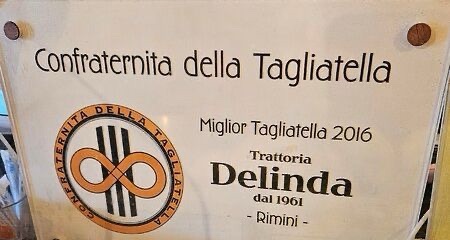
If you have ‘horses’…in 10-15minutes, away from tourist places you can reach Trattoria Delinda with genuine cuisine and fantastic ‘tagliatelle’ (Via Marecchiese 345, +39 0541 727082 reservation recommended).

 Italy as the Romans did

Leave a comment